


“This was a film that needed to be made, so thank you,” said award-winning Indian filmmaker Anand Patwardhan, who helped bring After Sabeen to Indian audiences and whose own film ‘Reason’ highlights such killings in India.
It is a neat division and the first part of 70 pages is the Kotia-Ketaki memoir. In the second section, Chandana picks up the narrative and weaves the micro family history of the Jonas family with the macro events of the late 19th century and her grandmother's journey that brought her to Santiniketan in the 20th century.
Today, the tape-jama survives on the margins of a rapidly changing marketplace. It is still found in local bazaars, though no longer a default festive purchase for children. Yet its significance lies beyond its material presence. The garment endures as a symbol of memory—of simpler times, of long summer afternoons, and of a cultural ethos shaped by resourcefulness and tradition. Its soft cotton folds carry stories of Bengal’s textile heritage, its artisanal practices, and its ability to absorb and reinterpret external influences. In doing so, the pinny becomes more than a childhood dress—it is a living archive of history and identity.
According to the latest (2024) survey by the International Mother Language Institute, 45 languages have been identified as existing now in Bangladesh out of which there are 11 indigenous languages including Lushai (Mizo)—that have become critically endangered. Based on UNESCO data, a handful of languages which have made it to the endangered list in Bangladesh are in such a forlorn state that only 5-12 older folks from respective communities can still converse in them.
And perhaps the greatest truth is this: when veterinarians do their work properly, the world stays normal. People drink milk without fear. Farmers sleep without panic. Markets remain stable. Outbreaks do not explode into disasters. Children grow up safer. Communities remain healthier. The world continues smoothly, unaware of how close it often stands to crisis.
“This was a film that needed to be made, so thank you,” said award-winning Indian filmmaker Anand Patwardhan, who helped bring After Sabeen to Indian audiences and whose own film ‘Reason’ highlights such killings in India.
Ultimately, it comes down to standing firm for what is pure and ethical, and standing against what is impure and unethical in our society today. Such conflicts can be resolved only at the level of higher understanding — the very foundation of what may be called Higher Morality.
What makes the book powerful is its refusal to romanticize either side of the debate. It acknowledges that local language education, when disconnected from global opportunities, can also reproduce exclusion. But it also warns against treating English as a silver bullet, instead framing it as one tool among many for dismantling structural inequalities. The book’s central contribution is to show, through stories and analysis, how subaltern learners themselves are redefining English, not as a colonial burden but as a means of agency, solidarity, and leadership.
India’s museums and heritage institutions are at a crossroads. The digital age offers incredible tools to preserve and promote culture, but it also demands clarity, intention, and collaboration. The future lies in building a community of professionals who understand both the value of tradition and the power of technology.
If you have ever felt the dopamine rush from a like or comment, or have scrolled past your bedtime, you are one of the millions entrenched in this system. According to recent studies, the average person spends two hours and 24 minutes on social media daily. Each interaction—whether it’s a curated ad, a filtered photo, or even a friend’s post becomes material that subtly shapes how we see ourselves and the world around us.
So, what is the smell of autumn about? Is it the change in weather, from an otherwise hot tropical condition or is it the festivals, the food, the lights and the colours? What is it that really makes this feeling so special? Perhaps it is a realisation of moments of loss and happiness and a sense of comfort - all strung across the same thread
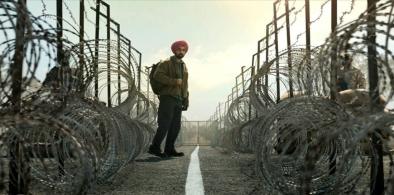
Our daughter, Ileana Ann, was born in Dubai. However, now, at two years old. She’s being taught to know the anthem of India better than “Dil Dil Pakistan”. Just beginning to string together words, tottering between rooms with a giggle that sounds the same in any language. Born with a passport that bears the tricolor — yet half her heartbeat echoes from across the Wagah border.
Over the decades since the 1950s many Indian Armed Forces band masters composed numbers based on Indian folk music sourced from different parts of the country. After almost five decades, there has been slow phase-out of Western tunes and more works by Indian composers, many of whom are from within the armed forces themselves.
We are aware that the change in information is proportional to the total accumulative existing knowledge on a particular subject and hence this leads to its exponential growth. Yet no matter how much the processing power of AI is, it will still remain bound by the existing knowledge and the environment which produced it.
Together, these voices converged on common ground: universal education, ecological cooperation, equitable trade, soft borders, and a revitalised SAARC that works for people rather than politics. Or, as one participant Ayesha Ahmed Quadri from India put it: “In the hands of South Asia lie the seeds of unity, compassion, peace, humility, and growth, ready to blossom beyond borders and history.”
The poetry, essays, and the audio-visual montage accompanying Sarwar’s reading in California Plaza sought to bear witness to the long-term consequences of Radcliffe’s disinterested cartography. Nearly 80 years later, the India-Pakistan border still crackles with tension. Wars, cross-border strikes, and conflicts continue to scratch the scabs of Partition.
This effort is especially moving, considering the magnitude of lives lost in the Kargil conflict. In the 77-day Operation Vijay, India lost 527 soldiers—more than the casualties in the 14-month-long 1947–48 Jammu & Kashmir war, the 23-day Indo-Pak war of 1965, or even the 13-day 1971 war that led to the liberation of Bangladesh.
While a deep and brooding darkness engulfed Guru Dutt in the last few years of his life, a glowing light is now being focused on his amazing body of work – from Baazi (1951) to Baharen Phir Bhi yengi which was incomplete when the filmmaker died and was completed by his team and released in 1966.
Political parties, of course, have their numerical calculations in place, making ground-level behavioural changes irrelevant. Even in the past, it rarely mattered. Vote-bank politics continues to dominate, leaving the bhadralok—Bengal’s genteel middle class—in a quiet, uneasy dilemma.
Salilda was 27 when he achieved this break in 1952-53. Till his last day he never looked back. He composed music in 143 films, 75 of them in Hindi, 41 in Bengali and 27 in Malayalam. Besides, he composed music in 13 languages. He was adept at playing flute, piano, esraj and harmonium.