
Snowfall in Kashmir

Snowfall in Kashmir: Beauty, Burden And The Test Of Our Humanity

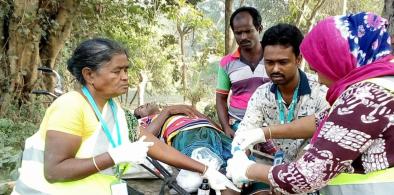
The biggest victims of heavy snowfall are often invisible in public conversations.They are the daily wage workers. laborers, construction workers, street vendors, load carriers, and small service providers who depend on daily earnings to feed their families.When snow blocks roads and markets shut down, their income stops immediately. There is no work from home for a daily wager. No paid leave. No savings cushion for many. Each snowbound day means an empty kitchen, anxious parents, and children who may go to bed hungry. Winter for them is not scenic; it is a season of survival.

India’s 77th Republic Day Parade: Blend Of Tradition And Modernisation

Breaking from the tradition of only marching columns, the Indian Army showcased a "phased battle array" for the first time, mirroring real combat-zone deployment. This included a sequence of new military, technological, and specialized units, highlighting the country's defence self-reliance and modernization. 

Capturing The South Asian Reality: The Shelter And Storm Of Arundhati Roy’s ‘Mother Mary’

In a world that often tries to simplify what’s complicated, Mother Mary Comes to Me captures the South Asian reality where a woman’s power is often carved out of the very detachment that causes pain. Arundhati Roy’s latest work maps a difficult legacy where a mother’s refusal to be a vessel for others, however costly to those around her, unwittingly clears the path for a daughter to reclaim herself. 

Ikkis: An Ode To A Valiant Indian Soldier

The story of Arun’s role in the Battle of Basantar did not end on that day, or even after the cease fire of this two weeks war, resulting in the demise of East Pakistan and the announcement of the newly liberated Bangladesh. Major Khwaja  Mohammad Nasir, then a Squadron Commander of 13th Lancers, the regiment pitched against Poona Horse, who came bandaged the next day to collect the dead bodies of his fallen comrades, wanted to know more about “ the officer, who stood like an insurmountable rock” and whose troop of three British World War II vintage Centurion tanks  was responsible for decimation of his entire squadron of  fourteen American Patton tanks.

More on Medley

Save trees to protect the economy, culture and human lives

Hyderabad will be lifeless without its tree cover. The city needs its green cover, oxygen, and natural look to sustain economic activities. According to the World Economic Forum's recent Nature Risk Rising Report, more than half of the world’s GDP ($44 trillion) is highly or moderately dependent on nature. 

Race for AI Solutions: Need to Temper With Responsible and Ethical Approach

There is significant pressure to implement AI solutions fast in response to market demand, but there are also hazards associated with using the incorrect technology or doing so carelessly. Due diligence on AI is a strategic precaution, not a delay tactic.

George Keyt: Icon of cultural modernism in South Asia

The latest study of Sri Lanka’s most internationally acclaimed painter offers a detailed portrait of the artist, shedding light on previously overlooked aspects of his life and work. What emerges is a vision of George Keyt who continues to be celebrated for his bold fusion of Eastern themes and Western techniques

The bite that shouldn’t kill: Need to eliminate dog-mediated human rabies deaths by 2030

So what should you do if you get bitten, even by a vaccinated dog? The answer is simple: treat every bite seriously. Wash the wound thoroughly with soap and water for at least 15 minutes. Apply an antiseptic, and seek medical attention immediately. Do not rely solely on the dog’s vaccination status. Rabies is unforgiving. Once symptoms appear, there is no cure

Reawakening Our Humanity: Celebrated in Words, Abandoned in Deeds

In an age of rising division and dwindling empathy, Debasish Bhattacharyya's stirring reflection challenges us to reawaken our shared humanity—not in grand speeches, but in everyday actions. Through the extraordinary journey of Thor Pedersen and a sobering critique of global indifference, this piece is both a wake-up call and a call to care.

How a national art gallery was born in Islamabad: A lesson in perseverance and tenacity

A recently published coffee table book by architect Naeem Pasha documents the social and cultural forces behind the nearly-30 year long process that culminated with the inauguration of Pakistan’s monumental National Art Gallery in Islamabad

Madhur Bajaj: The lesser known Bajaj who raised Aurangabad’s profile

His tenure at SIAM was characterized by a commitment to excellence and innovation. Notably, he played a pivotal role in developing India’s first Automotive Mission Plan (2006–16), which laid the foundation for the country’s robust automotive industry

The house on Faiz Road: Once home, now history

For me, a Pakistani, this road in Delhi holds special significance, because my father lived here, growing up in a house on this road before Partition, when Karol Bagh was a predominantly Muslim area. In fact, most of the houses here once belonged to his extended family. Even the masjid on the road, I believe, was built by my father’s Bare Abba — Agha Abdul Aziz, his father’s elder brother.

Motivating India's youth: Why students remain largely disconnected from the India story

Our present Indian society has very little respect for teachers. Today in India teaching as a profession is generally looked down upon. Unless that changes, we will not get great people to teach.   Today in India the situation is such that when people do not get good jobs in industry or other trades, they go into teaching.  For most people it is just another job for making money.

'A chorus of voices poised to ignite transformation' through art

How does a Mumbai-based curator create an act of peaceful yet powerful protest in New York? By taking a space long dominated by the patriarchal system and filling it with artists and poets whose work goes beyond traditional feminism. Most of the artists in the show were born in other countries. Including the South Asian diaspora of Pakistan and India

Selective historiography of communal historians fueling divisive politics

Was Aurangzeb anti Hindu? One can say that Aurangzeb was neither Akbar nor Dara Shikoh. He was orthodox and did not welcome Hindus and non Sunni sects of Islam at one level. At another level he was master of alliances as he had a number Hindu officers in his administration. As medieval historian, Prof Ali Athar, points out Aurangzeb had the highest number of Hindu officers in his administration (33%).

Gananath Obeyesekere: A scholar who plumbed the depths of the unknown

It is axiomatic that whatever greatness he accomplished would have been highly unlikely if he stayed in the local university system in Sri Lanka, which reached a state of mediocracy after 1956.  Gananath Obeyesekere enters the pantheon of Global Sri Lankans such as CG Weeramantry, CF Amerasinghe and Stanly Tambiah whose greatness is still revered by the world

The rising threat to women journalists in South Asia

With limited data on women journalists pursuing legal action in both India and Pakistan, predatory behaviour continues to escalate. Regional governments must stop using online harassment as a political tool as it not only takes a psychological toll but also makes it difficult for journalists to do their jobs effectively. Taking serious steps to protect them must be treated as an urgent priority.

Value Creation: Path to zero complaints for companies and organizations

The 8th Global Conference on Creating Value will be held in London, UK at the Imperial College in October 2025. The 7th was held in Sao Paulo, Brazil on October 2-4, 2024. The first was in the UK, the second in New York, the third in Paris and the fourth (virtual) from Florida, the fifth in Japan, the sixth in Washington DC.

Building a more emotionally resilient generation: Netflix series on adolescence offers a lesson for every parent, teacher and policymaker

Adolescence is a stark reminder that fostering emotional resilience, rather than repression, is vital for a healthier society. Schools and parents must prioritize social-emotional learning, equipping adolescents with emotional regulation, empathy, and communication skills. Trained teachers and counselors should offer early intervention for emotional distress.