
Congress CM candidate Gaurav Gogoi and Assam CM Himanta Biswa Sarma campaigning

Assam Elections: Of Identity Politics, Development Spectacles and Voter Disillusionment

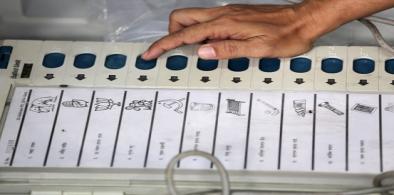
There is also a subtle but perceptible fatigue with the continued reliance on polarisation as a political tool. Identity-based mobilisation, while effective in the short term, risks diminishing returns when overused. If these undercurrents - internal dissent, governance gaps, and narrative fatigue - begin to converge, they may not immediately overturn electoral outcomes, but they could signal the early stages of a more substantive political challenge to the BJP

AI171 Crash Probe: India Owes the truth to the 260 who Died and Their Families

Prime Minister Narendra Modi will be cognizant of the fact that the crash occurred in Ahmedabad, in his home state. People will come to their own conclusions as to whether they saw Modi standing up to American pressure or give in. India has not forgotten the Bhopal Gas Tragedy, that Warren Anderson and Union Carbide Chemicals went scot-free, that India settled for a meagre $470 million compensation – 25 years later – for the families of the thousands who died and the millions who were adversely affected.

Whither Commitment to Truth? How AI, Media, and Visuals Shape Our Sense of Threat

The social media takes advantage of the reward systems in the brain, especially the dopamine circuits within the basal ganglia and the prefrontal cortex. Using signals of micro-engagement, including the duration of time a user hovers over a video or the number of times a user rewatches a clip, algorithms develop a feedback loop that over time redirects the feed of a user to more intense or provocative content.

To Mediate - or not to Mediate: Not Necessary for India to be at Head of Table at Peace Talks

To step into the role of mediator in a conflict of this nature would inevitably test that balance. It would invite scrutiny, of intent, of tilt, of perceived bias. Even the most well-intentioned effort could be interpreted through the prism of existing relationships. In such a situation, neutrality is not merely a matter of policy; it becomes a matter of perception, and perceptions are notoriously difficult to manage.

More on Perspective

Tharoor - caught between two stools

However, a point will come soon when he has to make a choice and that choice is not necessarily the BJP even in the unlikely event of him being offered the position of India’s foreign minister in place of Subramanyam Jaishankar. The choice is also not necessarily leaving the Congress Party even if it means being treated cavalierly. The problem with him is that his entire appeal comes from his seemingly defiant equidistance from both the main parties. 

The Dalai Lama: A Global Beacon of Peace and Compassion

What stands out amidst this global indifference is the Dalai Lama’s unwavering grace. He harbours no ill will—not even towards China. In a world increasingly defined by conflict, coercion, and fractured diplomacy, the Dalai Lama remains an embodiment of moral strength and compassion, committed to the principles of non-violence and interfaith harmony.
 

Post Op Sindoor India Needs A Strategic Course Correction

There is increasing evidence that Trump has offered Pakistan advanced military equipment and financial aid in exchange for strategic cooperation—particularly access to airbases and logistics. How this plays out remains to be seen. India, meanwhile, finds itself once again let down by the U.S. Trump appeared unable to tolerate that India succeeded in neutralising Pakistan’s military and terror assets without American help and refused to validate his false claims of mediation.

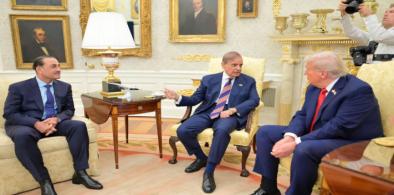
Trump’s lunch with Pakistan’s army chief is imbued with deeper meaning

The optics of the lunch are certainly not to India’s liking, but its consequences may not turn out to be as unsettling as might be apprehended in certain quarters. It surely gives Pakistan a profile in Washington that it was craving to have.

After Eliminating Extreme Poverty, India Should Focus On Livelihoods and Jobs

India will soon need to focus on reducing relative poverty and inequality too since the spoils of high economic growth cannot be cornered by a small few at the top. The elimination of extreme poverty in the next five years is a good shot in the arm, but in the journey toward a developed nation India has much work to do.

India Needs A National Comprehensive Narrative Strategy To Shape Global Opinion

While New Delhi was responding to Islamabad’s military provocation, Pakistan’s narrative machinery moved with sophistication, especially within Western media ecosystems. Coordinated messaging from Pakistani Foreign, Defence and Information Ministers, amplified by diaspora networks and international broadcasters, often outpaced India’s more formal communication approach. Moreover, several Western media outlets, operating on incomplete information, questioned the legitimacy and proportionality of India’s actions

Western double standards over the rise of extremism in Bangladesh

On the streets of Dhaka, terror reigns, as well as across the country. Anti-establishment students are roughed up for speaking out. Extremist mobs roam with impunity. Police stations are besieged and overrun, as in the shocking Shahbag incident. Women are threatened into silence. Hindu families are forced to cancel weddings under threat of religious violence.

India’s Credit Puzzle: Rising Defaults and the Fragile Promise of Financial Inclusion

In a consumption-driven economy like India, expanding credit access—through microfinance NBFCs and fintech lenders—is crucial. However, regulators aInd policymakers must closely monitor this space to avoid large-scale defaults. While underserved consumer segments depend on such loans for upward mobility, repayment capacity must not be overlooked. Sustainable livelihoods and employment generation will be essential to ensuring both credit access and creditworthiness.

Is Bodh Gaya's Mahabodhi Temple Being Brahminized?

We are living in strange times where religion is being blatantly used in pursuit of a political agenda. The Buddha temple is being led on a Brahminical path; Sufi shrines are being Brahmanized. The agitation by Buddhist monks to restore their sacred place to their norms and beliefs is one such example of opposition to impose values that run counter to those of equality and non violence  preached by Lord Gautam Buddha.

India has all the ingredients to become a happy nation

The Happiness Survey reveals mega cities have increased stress levels despite employment opportunities. Overcrowding, social disconnection, and environmental issues disturb the urbanites. Small cities and villages report higher happiness due to stronger social bonds and lower cost of living.

Is It Appropriate For India to Use Rice as Feedstock for Ethanol Production?

India should also explore other avenues to reduce crude oil imports. Ethanol production can be increased through alternate, non-food feedstock like algae. Algae can grow on wastelands or coastal areas, requires no freshwater, and thrives on sunlight and carbon dioxide. Algae species contain around 20% oil, making them ideal for biofuel.

Can India ever catch up with China? Third-largest economy is stuck in middle-income trap

The first “I” of the World Bank stands for investment, which India must increase to 40 percent of GDP. It must also increase labour force participation of women from 35 to 50 percent.  The second “I” refers to infusion of new technologies, by linking with global value chains, by trade agreements, and reducing tariffs and barriers to foreign investment.  The third “I” is innovation, meaning enabling greater investment in research and development

Was Dr. Yunus’s Resignation Drama In Bangladesh Mere Bluff And Bluster?

The real motive behind Sheikh Hasina’s removal, as widely suspected, lies in her steadfast refusal to allow a U.S. military base on St Martin’s Island—an outpost that would give America strategic leverage over Southeast and East Asia. Her resistance to such neocolonial imposition sealed her fate.

Does Shashi Tharoor have a future in the Congress party?

If Tharoor is indeed disciplined, the Congress Party would have confirmed the popular perceptions of its aversion to intra-party democracy. The extreme form of punishment, of course, would be his expulsion, something that the leadership is unlikely to risk given its electorally vulnerable position. With 99 parliamentary seats, the Congress Party cannot afford to lose any of its members no matter how some of them may step out of the line occasionally.

Pahalgam Tragedy: Need To Stem The Rising Spiral of Hatred

The path forward lies in returning to the principles espoused by former Prime Minister Atal Bihari Vajpayee—Insaniyat (humanism), Kashmiriyat (the unique cultural identity of Kashmir), and Jamhooriyat (democracy). As Vajpayee aptly said, “Friends can change, but not neighbours.” The vilification of Pakistan by the Hindu Right, amplified by a hate-spewing media, has real consequences for Indian Muslims. It poisons the domestic atmosphere and jeopardizes social cohesion.