
Representational Photo

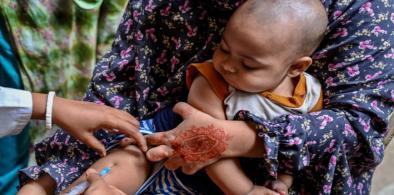
How Disrupted Vaccine Procurement Led to Bangladesh’s Latest Public Health Emergency

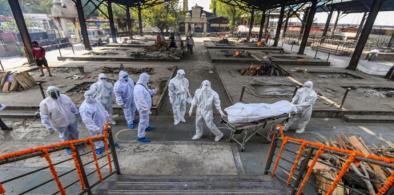
That silence is particularly striking because Bangladesh’s measles outbreak is no longer merely a domestic public health issue. It carries significant regional implications, especially for neighboring India, as India and Bangladesh share one of the world’s longest land borders, extensive population movement, and deeply interconnected economic and social networks.

Why World Needs Veterinarians More Than Ever: Animal Health is Critical to National Health Security

And perhaps the greatest truth is this: when veterinarians do their work properly, the world stays normal. People drink milk without fear. Farmers sleep without panic. Markets remain stable. Outbreaks do not explode into disasters. Children grow up safer. Communities remain healthier. The world continues smoothly, unaware of how close it often stands to crisis. 

Tree Planting in Cities Is Like Planting Healthy Air

Trees are also rain producers since the evaporation of water from their leaves changes the microenvironment and helps in rain precipitation. Increased rain can also reduce air pollution. Trees also help clean the air and environment by reducing dust, reducing noise pollution, absorbing pollutants like carbon monoxide, sulphur dioxide, nitrogen dioxide, etc. and fighting soil erosion.

India’s Emergence as a Global HealthTech and BioInnovation Powerhouse: Development of Global Significance

Today, in 2026, India stands at a historic moment in its healthcare and technological evolution. The convergence of biotechnology, artificial intelligence, digital infrastructure, and entrepreneurship has created unprecedented opportunities. India’s strengths in scientific talent, digital infrastructure, and cost-efficient innovation position it to become one of the world’s most important centres for healthcare innovation. However, sustained leadership will require continued investment, regulatory reform, and strategic vision.

More on Public Health and Wellness

India’s Silent Crisis: Ignoring Mental Health Can Prove Costly

According to the World Health Organization, neglecting mental health could cost India over $1 trillion in lost economic output over a decade. That figure isn’t just about hospitals or medication; it represents absenteeism, reduced innovation, and the quiet burnout that drains motivation from classrooms, startups, and boardrooms alike.

Is Geopolitical Necessity Shaping EU's Taliban Engagement?

EU–Afghanistan ties cannot be understood in isolation. Afghanistan sits at the crossroads of South Asia, Central Asia, and the broader Eurasian geopolitical landscape, meaning that any evolution in relations between the European Union and Afghanistan is closely tied to wider regional developments involving India, Pakistan, Central Asia, and even competing global powers such as China and Russia.

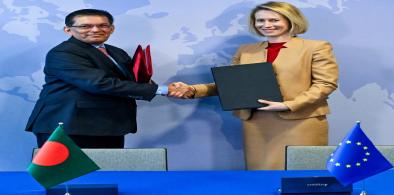
EU, Bangladesh Recalibrate Partnership Amid Changing Priorities, Global Flux

This deal also reflects a wider trend: South Asia is becoming more central in global strategy. Countries like Bangladesh are no longer just “developing economies”; they’re major manufacturing hubs, large consumer markets, strategically located between South and Southeast Asia. That attracts attention from the EU, China, India, and the US alike.

Why European Media Pays Little Heed to India

Long-time observers in Brussels on  EU-India relations opine that  there is no real lobby for India inside the EU institutions,  hardly any civil servants of Indian origin,  with  an embassy not really pro-active, and bilateral dialogues lost in bureaucratic red tape where nothing really moves without political push.  So the media remains disinterested.

EU–India Defence Dialogue Signals Strategic Convergence in a Fractured World Order

In an increasingly turbulent international environment, this partnership could contribute to shaping a more balanced, cooperative, and resilient global security architecture. For Europe, which can no longer rely solely on the assumptions of a stable rules-based order led by the United States, deeper partnerships such as that with India may become an essential component of a more realistic and pragmatic foreign policy.

After Trade, EU And India Move To Deepen Strategic Partnership In Science And Innovation

EU and India share a long-standing and steadily deepening partnership in research and scientific cooperation, grounded in values of academic freedom, innovation, and sustainable development. Over the past two decades, this collaboration has evolved from project-based exchanges into a strategic partnership that supports joint knowledge creation, capacity building, and the translation of research into societal and economic impact on both populations. 

EU–India FTA: Between Hype And Reality

Taken together, these realities suggest that the path from signing to enforcement may be far longer and more uncertain than the initial hype implied. While the EU–India FTA promises significant economic opportunities and strategic advantages, the deal’s ultimate success will depend on navigating the complex political dynamics within the European Parliament and responding to broader geopolitical considerations.

India-EU Free Trade Agreement: When Regulatory Engagement Becomes A Strategic Hedge

What the India-EU Free Trade Agreement implies about the future of international trade has wider ramifications. States are turning to regulatory coalitions as sanctions and tariffs increasingly supersede global rules. The deal with the EU is a form of strategic hedging for India.  It does not signal alignment against Washington. Rather, it shows recognition that diversification of markets and a regulatory framework is now necessary for economic security. 

EU and India : A Paradigm Shift In Conceptual Vision

The new EU-India partnership is bound to shape the new global order and impact developments in Asia,  Europe, Middle East and Africa. Analysts opine that major geopolitical disruptions, including the Russia–Ukraine war, China’s hegemonic policies and economic pressures are driving the need for substantial policy orientations to build a resilient and sustainable European economy. At the same time, rapid shifts in global trade—shaped by geopolitical tensions, regulatory change, and technological advances required new policy strategies for both Europe and India.

Growing Strategic Convergence Between EU and GCC: What It Means For South Asia

The growing strategic convergence between the EU and GCC is giving rise to a new interregional architecture that could redefine connectivity across Europe, the Gulf, and Asia. For South Asia, the implications are both profound and complex. The region now stands at crossroads: it can proactively engage with this evolving partnership — seeking a role in trade, energy, and security initiatives — or risk being pushed to the margins of the emerging Eurasian landscape.   

Europe Wants To Send Back Afghan Refugees: Principles At Odds With Practice?

This unexpected move stands in stark contrast to the EU’s own principles and established practice of not deporting asylum seekers to countries with gross human rights abuses.

Will The EU-India FTA - The World's Largest Trade Deal - Conclude This Year?

Next week’s Brussels meeting will try to sort out outstanding  differences,  including agriculture, tariffs on cars, wines and spirits, and India’s resistance to the EU’s Carbon Border Adjustment Mechanism. A new irritant has now been added - an India-Pakistan dispute over the two countries’ rival claims to Basmati rice. New Delhi wants to designate Basmati rice as Indian but if the EU does so, it risks  a row with Pakistan.

EU-India 'strategic partnership': Time to Wake Up And Smell the Coffee

One of the great failings in the EU-India partnership has been Europe's hypocritical attitude on values such as human rights it says it holds dear. The EU goes on preaching to the world about human rights, humanitarian law, ethical values etc but in practice Brussels provides financial support to authoritarian regimes in Africa, the Middle East and Asia, including China, to safeguard its own strategic and commercial interests.

EU-India high-level trade talks come at an advantageous moment for New Delhi

The New Delhi FTA talks come at a strategically opportune moment for India, which now holds the upper hand and may be in a position to extract key concessions from Brussels.

EU-India FTA : Don’t Rush The Deal

Analysts argue that India’s commercial ties should not be penalized for its 'strategic autonomy' in foreign policy. With the next round of negotiations scheduled for September, the episode has added a layer of diplomatic sensitivity to an already delicate balancing act.