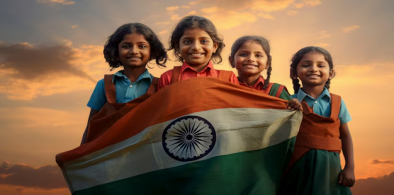
With free education for all between five to 16 years instituted since 1945, Sri Lanka boasts the highest literacy rate, nearly 99 per cent , in the South Asian region.
If diversity and unity are to guide the future, education must change.Most schools and universities today serve industrial monoculture and economic growth. They train the intellect — the “left brain” — to produce administrators and managers. Rational analysis is important, but it is only half of human potential. We also have a “right brain”: intuitive, holistic, relational. An education that neglects creativity, empathy and ecological awareness produces imbalance. It strengthens uniformity and weakens diversity.
At present all our robots and AI machines, etc. are being designed based upon the human body design. We are still struggling to design our computers and processors more efficiently, but they can never come any closer to the brain and human thought. The AI priests feel otherwise
The Nepal Premier League has undeniably changed the atmosphere in this Himalayan nation. It has brought light to Kirtipur nightlife, sponsors to scoreboards, and pride to fans starved of large-scale sporting events. It has also created pockets of income, moments of possibility, and glimpses of what a sports economy could look like.
It is a matter of shame for all of us that 78 years after independence we still have a major portion of our rural population living in primitive conditions. They lack electricity, clean cooking fuel, potable water and toilets in their homes. Somehow modern technology has not touched their lives.
With free education for all between five to 16 years instituted since 1945, Sri Lanka boasts the highest literacy rate, nearly 99 per cent , in the South Asian region.
It is the nature of the human brain that when we go deeper into anything then we all discover the truth and beauty in this world, and this process helps us understand the purpose of our existence and life.
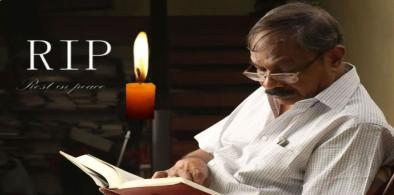
As I heard Ravindra’s colleagues reflect on his life, his work, and his character over time, I couldn’t help reflecting on where Sri Lankan cinema had been and what it could be. In the 1980s and 1990s, and even earlier, Sri Lanka had been a top destination for international productions. Steven Spielberg had come here with Harrison Ford. So had Gregory Peck, William Holden, Elizabeth Taylor, and Bo Derek.
My grandfather’s journey across Wagah is a story I have heard Karamat Sahib narrate many times. As I write, I can hear his raspy voice recount it to me, as he did when I joined him for the immersion of Kuldip Nayar’s ashes.
"Poor Economics" serves as a call to action for policymakers, development practitioners, and researchers. By demonstrating the power of small, well-designed interventions, Banerjee and Duflo inspire a more humble and patient approach to fighting poverty.
The high cost of living in capitals like Islamabad and Delhi and the rising summer temperatures due to climate change is increasing alternative energy expenditures. “Who said that renewable energy has to be in the form of big power plants like an elephant?” asks India’s ‘Solar Man’ , Prof. Chetan Solanki.
He was unfailingly generous in lending his name in support of the causes I and others reached out to him for, endorsing resolutions ranging from human rights and democracy to peace between India and Pakistan. In 2018 he joined many public intellectuals in urging Bangladesh to release the photojournalist Shahidul Alam. He was also among the public intellectuals including Amartya Sen who endorsed a letter calling on Pakistan to release the jailed publisher-editor of the Jang Group Shakilur Rahman, in 2020.
Yet, despite Nehru’s disenchantment with his Afro-Asian partners, there is no denying that China did its best to undermine India’s ascendancy in the developing world and that Indian frustration with its northern neighbour grew all the more resentful because of New Delhi’s role in helping Beijing develop its links with other Afro-Asian nations.
The vision of Agnikul is to bring space within everyone’s reach, aiming to enable launches from anywhere, anytime and affordably.
The Joy of Urdu’s focus on linguistic preservation, cultural enrichment, plus promotion of social justice, and positive change through bilingual presentations and discussions helps ensure that the richness of Urdu remains alive in modern times.
The preservation of sacred trees and tree groves is paramount in the fight against rampant deforestation in India. This is a unique practice that sadly is in decline; in the interest of cleaner air and healthy communities, it needs to be promoted and preserved, not only amongst the Indian population but worldwide.
The new influencing geopolitical factor, Ved observes, is the emergence of China as the regional, even global player, in the “Heart of Asia” in what can become the new avatar of the 19th century “Great Game”. The contexts have changed, but not the strategic interests of the players, old and new.
This historic expedition, the first of its kind, marks a significant milestone in India’s maritime history.
Quite a few years ago I had given a lecture at my alma mater IIT Kanpur. I asked the students if I had the power to grant them a US green card how many would like to migrate. In the auditorium of around 200 students most raised their hands. This pursuit of excellence can be helped by the constant exposure of students to lectures by achievers. Students at an impressionable age once inspired can do wonders in later life.
We must also insulate enterprises from pressure and extortion by local power elites, which adversely distorts factory pricing and ultimately adds a burden to the consumer price. This will also enable enterprises to maintain healthy returns within the fixed MRP system, especially for FMCG