
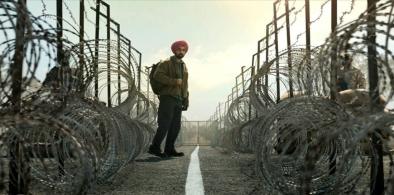
What is so threatening about letting a few hundred peace activists in a combined population of over a billion meet for a few moments at a heavily guarded border?
And perhaps this is precisely what many readers, particularly South Asian readers navigating fractured contemporary lives, have been missing without fully realising it: fiction willing to slow down long enough to notice the fragile, passing intimacies through which people continue surviving one another.
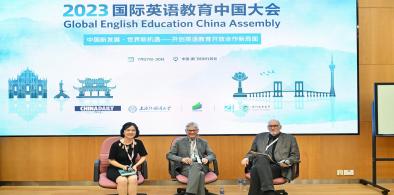
Thurman said that Tibet was not an individual nation-state question but something that goes far beyond that. “It is not about a people yearning for freedom from an invading state. It is about a very valuable society struggling to keep its centuries-old tradition of intellectual evolution alive.” He said that while he was hopeful that the problem would be resolved soon, “and during His Holiness’ lifetime,” it was hard to put a timeframe to it.
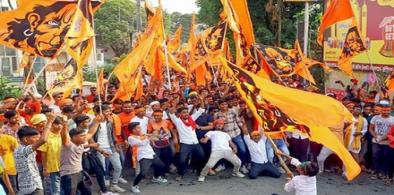
The perceived push from a political leadership that has roots in Gujarat, the split in the locally rooted Shiv Sena that was engineered, the resentment it brewed among ordinary citizens and the history of Maharashtra -- which was born on May 1, 1960 after a bitter struggle that split the erstwhile Bombay State into two distinct linguistic states of Maharashtra and Gujarat -- are all complex and contributory factors to the evolving political unrest in middle-class Mumbai.
I claim Tagore and Iqbal. I claim the music of Lata Mangeshkar and Mehdi Hassan.I claim the shared cultural inheritance of South Asia in all its richness and contradictions. History divided states. It could not divide memory. The food we eat, the stories we tell, the languages we speak, and the melodies that move us still carry echoes of a shared past.
What is so threatening about letting a few hundred peace activists in a combined population of over a billion meet for a few moments at a heavily guarded border?
With the wisdom gained through spirituality, we will use technology judiciously to use nature’s resources wisely and live sustainably. Living sustainably and in tune with nature will give us peace and happiness. This in a nutshell can be the new paradigm of development for the world.
Sharma joins the ranks of writers like Urvashi Butalia, Aanchal Malhotra, Vazira Zamindar, Anam Zakaria, and Kavita Puri who are contributing to the scant literature around Partition
Jiya was diagnosed with Autism Spectrum Disorder at the age of two. Jiya’s parents, Indian Navy MC at Arms II Madan Rai and her mother, Rachna Rai, a teacher, took her swimming to overcome taunts for her disorder by other children and even adults.
The friendship of javelin throwers Arshad Nadeem of Pakistan and Neeraj Chopra of India and the large-heartedness and nobility of their mothers has already warmed hearts around the region and the world. Another young athlete also holding up flags of both countries expressed similar sentiments.
In 2007, she was awarded Pope John Paul II Wellspring of Freedom Award for dedicating her life to upholding human rights and combating injustice.
With free education for all between five to 16 years instituted since 1945, Sri Lanka boasts the highest literacy rate, nearly 99 per cent , in the South Asian region.
It is the nature of the human brain that when we go deeper into anything then we all discover the truth and beauty in this world, and this process helps us understand the purpose of our existence and life.
As I heard Ravindra’s colleagues reflect on his life, his work, and his character over time, I couldn’t help reflecting on where Sri Lankan cinema had been and what it could be. In the 1980s and 1990s, and even earlier, Sri Lanka had been a top destination for international productions. Steven Spielberg had come here with Harrison Ford. So had Gregory Peck, William Holden, Elizabeth Taylor, and Bo Derek.
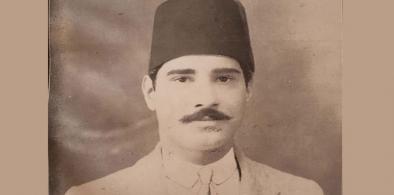
My grandfather’s journey across Wagah is a story I have heard Karamat Sahib narrate many times. As I write, I can hear his raspy voice recount it to me, as he did when I joined him for the immersion of Kuldip Nayar’s ashes.
"Poor Economics" serves as a call to action for policymakers, development practitioners, and researchers. By demonstrating the power of small, well-designed interventions, Banerjee and Duflo inspire a more humble and patient approach to fighting poverty.
The high cost of living in capitals like Islamabad and Delhi and the rising summer temperatures due to climate change is increasing alternative energy expenditures. “Who said that renewable energy has to be in the form of big power plants like an elephant?” asks India’s ‘Solar Man’ , Prof. Chetan Solanki.
He was unfailingly generous in lending his name in support of the causes I and others reached out to him for, endorsing resolutions ranging from human rights and democracy to peace between India and Pakistan. In 2018 he joined many public intellectuals in urging Bangladesh to release the photojournalist Shahidul Alam. He was also among the public intellectuals including Amartya Sen who endorsed a letter calling on Pakistan to release the jailed publisher-editor of the Jang Group Shakilur Rahman, in 2020.
Yet, despite Nehru’s disenchantment with his Afro-Asian partners, there is no denying that China did its best to undermine India’s ascendancy in the developing world and that Indian frustration with its northern neighbour grew all the more resentful because of New Delhi’s role in helping Beijing develop its links with other Afro-Asian nations.
The vision of Agnikul is to bring space within everyone’s reach, aiming to enable launches from anywhere, anytime and affordably.