Afghan women in burkha in markets

The Empty Chair at Islamabad: When Taliban Saw Women's Rights Subordinated by Islamic Law

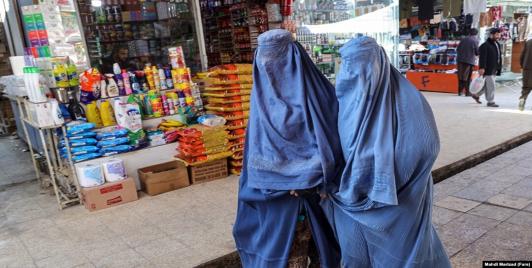
The Taliban, therefore, is not challenging whether Islam should shape women’s rights. Both the OIC and the Taliban begin from that premise. The disagreement is over what Islamic rights mean and, more importantly, who has the authority to define them. 

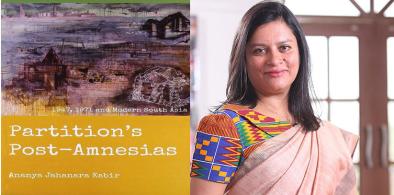
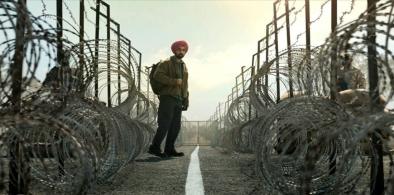
Who Defines Where Home is? Confronting Partition Trauma and its Aftermath Eight Decades Later

As of January this year, at least 296 Bangladeshis have died in border areas over the past decade, as India’s Border Security Forces (BSF) pushes “illegal Bangladeshis” across the border in the dead of night.

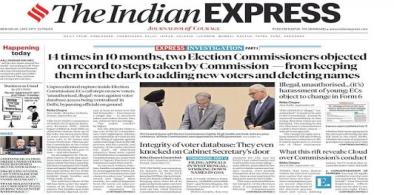
'The Election Commission Expose': A Seminal Moment for Indian Journalism

It is true that only a handful of newspapers have the resources and persistence to pursue big stories of the kind that came alive in the EC exposé. Nevertheless, to the extent that it inspires others to pursue even smaller news stories with steadfastness this could potentially redeem the otherwise sordid state of affairs in the Indian media.

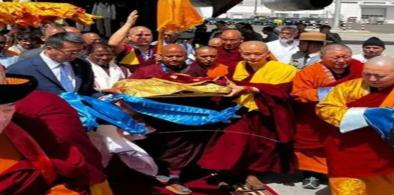
India-Mongolia Buddhist Partnership: A Civilisational Bridge Linking India’s Buddhist Heritage with Mongolia’s Contemporary Revival

The profound emotional connection was vividly evident in 2022 when, as the Indian delegation accompanying the relics entered the Gandan monastery, members of the crowd reached out to touch them, expressing their reverence for those who had come "from the land of the Buddha".

More on Soft Power, Culture, Society and Gender

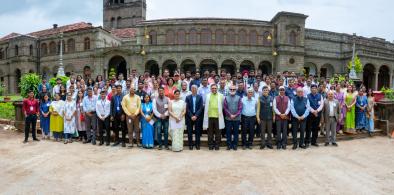
Empowering youth for carbon neutrality: Making campuses living laboratories for Net Zero

India's pledge to attain Net-Zero carbon emissions by 2070, articulated by PM Modi at COP26 in Glasgow, UK  underscores the nation's determination to combat climate change. In this context, higher education institutions take center stage for moulding future-ready policymakers.


A Bollywood film and a tragic tale: Poor road safety awareness remains region's blight

In India alone, some 150,000 people lose their lives to road crashes every year, with more than five times that number injured or maimed for life. Pakistan, Bangladesh, Nepal and Sri Lanka have equally dismal or worse statistics in the matter of road safety.

Mantra of happiness: Live in the moment

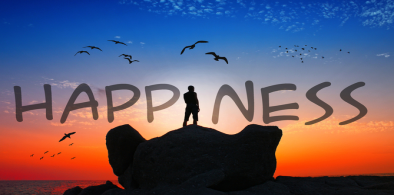
Too much planning brings misery because we cannot predict the forces of the future and hence have no control over them. This obviously leads us to worry about the outcome. We should therefore follow the American maxim; “We will cross the bridge when we come to it”.

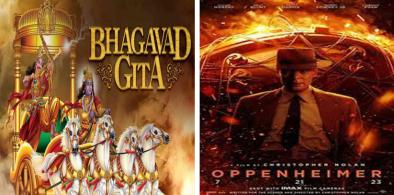
“Oppenheimer” and the Bhagavad Gita: How the Hindu scripture became the American physicist's moral compass

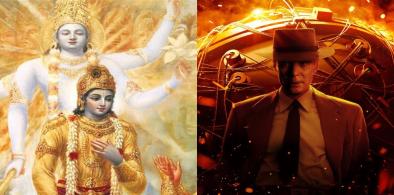
There was something profoundly moving to note that a deep philosophical insight given by Krishna Dvaipayana better known as Ved-Vyasa, the creator of the Gita and the Mahabharat, many millennia ago, should come to underpin the most defining event of the 20th century and beyond.

When folk culture gets commercialised, the visual language of nature gets lost

What we see in the problematic use of folk culture in Modern Indian art is the way the celebration of nature has been privatised and turned into a consumer item that becomes a part of the art industry. 

Partition stories and intertwined histories: Beyond religious hatred and political rivalries

The nation-states of Pakistan, India and Bangladesh categorise their citizens by nationality alone, with no room for emotion or relationship. People are separated from each other through violent narratives and intractable borders.

Why India's federal system holds over Pakistan's

The elite in Pakistan was not committed to pre-independence reorganization, and the lack of this linguistic federal adjustment created tensions that India survived.

Was Oppenheimer's Gita quote accurate?

In Gita (Chapter 11, Verse 32) Lord Krishna says that “I am the "Kal" (Mighty Time) – destroyer of the world”.  Oppenheimer said “I am become Death, the destroyer of worlds”, and this is extensively quoted.

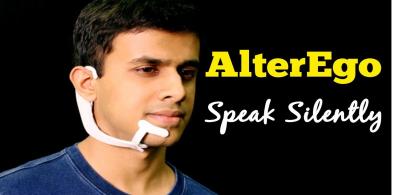
Is reading your mind now going to be a reality? Breakthrough device by Indian American student

The creation of the device has opened exciting possibilities in the field of brain-computer interface technology.

Cinema that defies norms and transcends borders in South Asia

The discussion highlighted how Pakistani movie and theatregoers lament the banning of Indian films in Pakistan and Indian audiences clamour for Pakistani dramas. Commonalities of language, music and culture developed over thousands of years cannot be erased, as elements in both countries are trying to do, rewriting history and marginalising ‘the other’.

Nine South Asian languages are now on Google’s AI chatbot Bard

The languages are Bengali (spoken in Bangladesh and India), Gujarati, Hindi (spoken in India and Nepal), Kannada, Malayalam, Marathi, Tamil (spoken in India and Sri Lanka), Telugu and Urdu (spoken in India and Pakistan).

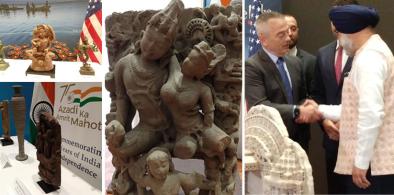
India gets back more stolen antiquities from the US

The operation targeting Kapoor began around 2011 after a tipoff from Indian officials and discovered a web of crime spanning India  Afghanistan, Cambodia, Indonesia, Myanmar, Nepal, Pakistan, Sri Lanka and Thailand.

Remembering W. Khan and his love affair with the harmonium

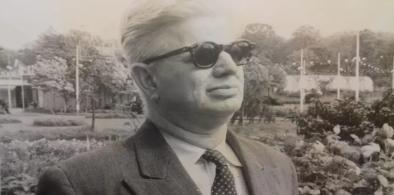
This 12 July marked the 100th birthday of an airline executive who died young – an accomplished Urdu poet and, above all, “an amazing practitioner of Indian classical music” who elevated the humble harmonium to a solo instrument

Dramatizing an ancient Sindhi folk tale with South Asian relevance

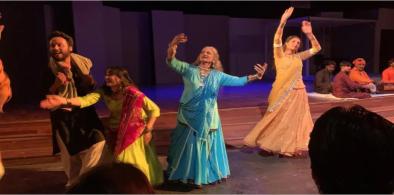
The River’s Daughter addresses urgent contemporary concerns about environmental destruction caused by the unethical practices of developers and extractive industries – issues that are relevant not just to Pakistan but all of South Asia.

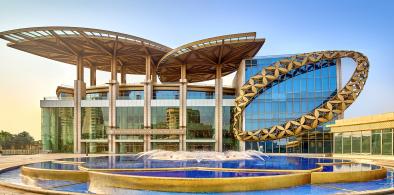
Will NMACC speak truth to power through the arts?

Will the cultural centre established by the Ambani’s support dissent and debate, and encourage freedom of expression, as is expected of a world-class arts and culture institute? Will it open its nine-star doors to Dalits and Adivasis, other than to put them on “display” as folk artists?