
Pakistan, Sri Lanka kick off joint counter-terrorism exercise ‘Shake Hands-II’ at Tarbela

Sri Lanka-Pakistan Ties in a New Era: Focus on Security Coordination, Military Education

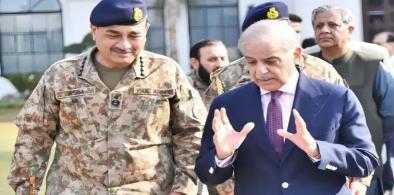
The newest symbol of Pakistan-Sri Lanka defence cooperation is Exercise Shake Hands-II, launched on April 27, 2026, in Tarbela, Pakistan. The two-week exercise brings together Pakistan Army’s elite Special Services Group (SSG) and Sri Lankan Special Forces. The purpose of the drill is to enhance interoperability, exchange operational experience and improve professional capabilities in counter-terrorism scenarios. 

India’s Tightrope: Why New Delhi Cannot Take Sides in the U.S.–Iran War

The question India needs to answer is not whether to side with Washington or Tehran. That framing is itself a trap. The question is whether India has the political will to build the energy independence, the institutional credibility, and the diplomatic infrastructure that would make such a choice genuinely unnecessary.

Deforestation Disrupting Ecosystems, Creating Habitat Loss of Wildlife in Pakistan: Needed Targeted Policy Interventions

Deforestation in Pakistan is a pressing issue with serious implications for wildlife and ecological balance. Habitat loss, human-wildlife conflict, and ecosystem disruption are already evident, and the situation will worsen without decisive action. While initiatives like large-scale tree planting are a step in the right direction, they must be complemented by strong policies, effective enforcement, and community involvement. 

Looming Energy Crisis in South Asia: Strait of Hormuz Disruption is Reshaping Benchmarks of Regional Leadership

South Asian states prioritise partners who can deliver immediately in times of economic and political uncertainty. Despite expanding economic ties with China, they continue to turn to India for vital supplies like diesel, LPG and crude oil. This is not only about proximity but rather reflects a level of trust built through repeated experience. China, in response to the crisis, chose to restrict exports of refined fuels such as gasoline and diesel to protect its domestic market. 

More on Spotlight

Politics in the digital abyss: How 'liquid modernity' is shaping populist discourse, particularly in South Asia

Imran Khan’s political journey in Pakistan highlights the transformative power of cyberspace in a liquid modern world. Initially dismissed by critics, Khan leveraged social media to build a narrative of hope and change.  Khan’s PTI has consistently outperformed traditional parties in digital engagement, mobilizing urban youth and the diaspora.

Decolonising the mind: South Asia yet to come out of its British colonial-era laws

If one analyzes the contemporary South Asian legal landscape, one can still see the influence of colonial-era laws and these laws are largely being used to oppress the common people. In Bangladesh, India, and Pakistan one has seen some colonial laws and their oppressive acts being changed and, in some instances, more oppressive ones taking their place. 

Manmohan Singh had an innate vision of India’s greatness

It was an extraordinary speech delivered in the midst of a crisis that had brought India to the precipice of insolvency. Laying out an exhaustive prescription for how he would go about fixing a sick economy, Dr. Singh was sensitive enough to give it a highly optimistic and sanguine touch.

Women beyond their Dalit identity: A feminist moment beyond caste in India

The practices of wearing vermillion on her forehead, a ‘mangalsutra’ (auspicious thread worn by married women in their husband’s name) around her neck, a ‘laal bindi’ (red dot sign that a woman is married) and changing her name to include the name and/or the surname of her patriarch. The claims of patriarchal superiority thus come to embodied in her body, identity, entity, and space. 

Pakistan Supreme Court ruling on May 9 riots has implications for civil-military relations

The Supreme Court’s decision reaffirms the pivotal role of the military in Pakistan’s national security framework. While civilian authorities are crucial, the military is often seen as the protector of the nation, especially during times of instability. The Court’s ruling underscores the importance of the military’s involvement in ensuring swift justice for those involved in anti-state activities, particularly when national security is at stake.

Atal Bihari Vajpayee: A prime minister who saw moderation in politics as a foundational principle

Vajpayee was known to speak slowly, sometimes with long pauses, because he chose his words with utmost care. But in those pithy but strong words lay Vajpayee's innate convictions about his 'idea of India'

One Nation, One Election: Staggered electoral cycle important safeguard of India’s federal structure

The leitmotif of ‘One Nation’ is strongly aligned with the BJP’s policy and rhetoric; consider the 2017 introduction of the Goods and Services Tax (‘One Nation, One Tax’) and the abrogation of Article 370 in 2019 (‘One Nation, One Constitution’). The ONOE falls within this inherent paradigm: an overpowering centre under the guise of administrative cost-cutting and electoral efficiency.

Kolkata rape and murder case: Confronting our collective failures

The medic rape-murder case, which captured global attention in an era dominated by the attention economy, had the potential to ignite systemic reforms, given the brutality of the crime. The movement, like many before it, held the power to expose the moral failings of the ruling party in the state. Yet, as so often happens, it faltered within a couple of months—or perhaps was made to falter. Herein lies an uncomfortable reality: we, the aam aadmi (common man), must share the blame.

Why Pakistan needs to reform and regulate its madrassas

Many critics argue that madrassas are breeding grounds for extremism. While there are undoubtedly instances of some seminaries being linked to extremist ideologies, it is essential to recognize that the vast majority of mudarrassahs are not involved in such activities. However, the lack of regulation leaves these institutions vulnerable to misuse. 

Bangladesh's passport purge: Worrying signs of authoritarianism, undermining of democratic principles

The interim government's decision to cancel the passports of 22 military officials is a stark reminder of the dangers of unchecked executive power. It violates the Constitution of Bangladesh, contradicts international legal standards, and disregards judicial precedents. Moreover, it reflects a troubling disregard for due process and the rule of law.

Is Colombo seeking to terminate the Indo-Lanka Accord?

The question that arises now is what will happen to the future of the Indo-Sri Lanka Accord, signed on July 29, 1987 between Prime MInister Rajiv Gandhi and President J R Jayawardne, under JVP’s rule? Dismantling the Indo-Sri Lanka Accord has been a long-standing desire of ultra-Sinhala nationalists in the deep south of the country. 

Will Bangladesh transition from Bengali identity to Islamic nationalism?

Bangladesh is one of the larger and populous countries in South Asia, with its geostrategic location in the Bay of Bengal and an impressive economic growth from its booming textile industry.  So restoring political stability and defeating the rise of Islamist forces is of utmost importance not only for Bangladesh but the whole region.  

Destructive protests damaging to Pakistan’s economy, governance and social harmony

Perhaps the most significant damage inflicted by PTI's recent protests has been the toll on Pakistan's fragile economy. Pakistan's economy is already struggling with inflation, unemployment and a mounting fiscal deficit. PTI's protests, which have led to mass shutdowns in key cities like Islamabad, Rawalpindi, and Lahore, have worsened the economic crisis.

Five years of change in Jammu & Kashmir: Challenges of sustaining the peace and economic growth

The repeal of Article 370 not only changed the political map of Jammu and Kashmir, but also introduced a new wave of promising economic growth. While challenges remain, the steps taken by the Indian government to increase investment and improve infrastructure indicate great potential for J&K to become one of the hubs of economic development in India.

Germany and India: Need for more soft-power engagement

Germany  is not just about holocaust, beer, football, cars or high-end technology. There are lots of things to explore and exploit, in the good sense of the term. Similarly, India has moved way beyond Bollywood, chicken curry or Holi and Diwali. There is much more to explore. By shying away from doing so, the myths will persist, the stereotypes will continue, the fears will enhance.