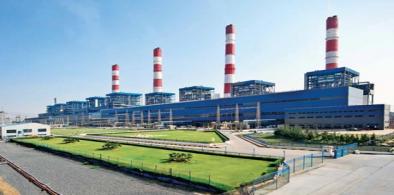



The successful operation of the Rooppur plant will underscore the commitment of Bangladesh to responsible and secure nuclear energy utilization
Unlike earlier jihadist cells dominated by Pakistani nationals, this unit deliberately recruits women from Indonesia, the Philippines, Uzbekistan, and other foreign countries. Reason behind recruiting non-Pakistani nationals serves a dual purpose: it complicates attribution and shields Pakistan’s security apparatus from direct accountability. Such operational sophistication reflects ISI’s continued role not merely as a passive enabler but as an active architect of jihadist adaptation.
South Asia has the potential to be a global digital leader. It has a young population and a booming tech industry. However, this potential will only be realized if the region is secure. We must treat cybersecurity as a pillar of national security, just like border defense. This requires better technology, smarter laws, and stronger regional ties. The digital threats of 2026 are fast and complex. To meet them, South Asia must be faster and more united. The time to build a collective digital shield is now, before the next major crisis occurs.
Yet the strategic costs are real. Reduced engagement in Bangladesh risks ceding influence at a moment when Dhaka is actively diversifying its partnerships. Hesitation over Chabahar weakens India’s leverage in Iran and Central Asia and underscores its vulnerability to US pressure even as it seeks a more multipolar foreign policy. The 2026–27 Budget does not signal a dramatic shift in Indian foreign policy. There is no abandonment of neighbours-first rhetoric or of connectivity-led diplomacy. What it reveals instead is a narrowing circle of feasible economic action.
The ideals of 1971 represent inclusivity, human dignity, and resistance to oppression. Baul and Sufi traditions reject radical views and promote humanism and coexistence. Islam in Bengal arrived largely through Sufis—from Persia, Arabia, and Central Asia—who emphasized spirituality, tolerance, and accommodation. These traditions resonated with local Hindu practices and gave rise to syncretic forms such as Baul philosophy. Rabindranath Tagore and Nazrul Islam embodied this civilizational synthesis.
The successful operation of the Rooppur plant will underscore the commitment of Bangladesh to responsible and secure nuclear energy utilization
History has shown that whenever Pakistan sought peaceful relations with India, India responded positively. This held true during democratic governments and even during dictatorships in Pakistan.
Muizzu’s regime in the Maldives in conjunction with Pakistan could be potentially sitting on China’s lap for decades, along with a pro-China government in Nepal, and Myanmar annyway drawn into China’s strategic sphere since the military coup in Nay Pyi Taw in February 2021.
While Pakistan continues to blame India for the bombings in Balochistan and Khyber Pakhtunkhwa, it fails to introspect on its own internal crisis stemming from its policies against its citizens and the military/political support being given to certain radical outfits or groups.
Due to the lack of established regard for the democratic system, elections held after the 1990s have been marred by political turmoil and civic unrest. The absence of a solid democratic foundation has hindered the institutionalization of democracy in national life and politics.
The China-funded Sinamale Bridge connecting the capital Male and the airport island Hulhule, is a boon to the Maldivian people, who readily relate to the project, and hence to China as a development partner. But China is seen only as a developmental supplementary to long-term friendly neighbour India and not as an alternate in any way.
What we see in Kota today is deeply rooted in middle-class aspirations for social mobility, considering meritocracy a fair and promising system. But, the ‘merit ladder’ for upward mobility is not equally tangible and accessible to all. The material, social and psychological resources available for these students depend on their social location.
China has been supporting, training and arming northeast terrorists for the past several decades. The ongoing political experiment of ethnic cleansing and polarization in Manipur would naturally be exploited by China.
The Sino–Bangladeshi partnership has not grown at the expense of the Indo–Bangladeshi partnership. Bangladesh does not constitute a part of the traditional Chinese sphere of influence.
Bangladesh's energy woes demand innovative solutions, and the integration of solar and wind energies in a hybrid system represents a groundbreaking approach to meeting the nation's power needs.
India holds together not by ignoring diversity but by granting constitutional and ideational recognition to different ethnic, religious and linguistic groups. The word ‘India’ evokes and symbolizes a “we feeling” in the people's collective consciousness, derived from long-held traditions and pluralist imaginations.
The persistence of child marriage in South Asia indicates the widespread failure of governments to address one of the most critical human rights issues. Effective legal remedies and ensuring accountability for those complicit in such crimes can be the panacea for such social ills.
India's leadership has already committed itself to exploiting the linkages between economic growth, gender equality, peace, and security and the use of technological innovations for universal benefit. India has championed the cause of low-income nations in the past — and it could now do so again.
Contrary to the bizarre story spun by Maulana in the Channel 4 documentary, Indian intelligence agencies, mainly RAW, played a pivotal role in monitoring IS movements in Sri Lanka.
The incongruity of “India, that is Bharat”, as given by Dr. Bhimrao Ambedkar, who drafted the Constitution, was pointed out by some members of the Constituent Assembly just as an independent India was taking shape.