Having understood the American game plan, India acted swiftly to minimise the danger by ensuring that Pakistan did not get off the 'grey list' till its compliance is fully confirmed, writes Brig Anil Gupta (retd) for South Asia Monitor


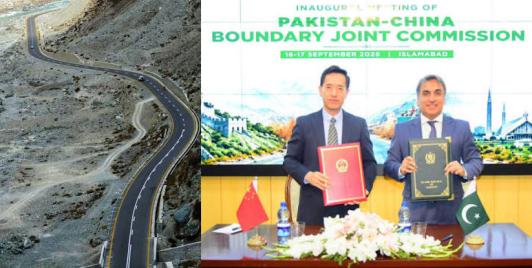
The Pakistan-China Boundary Joint Commission needs to be viewed in backdrop of the fast-changing geopolitics of South Asia and its military implications. The Shaksgam Valley sits immediately north of the Siachen Glacier and just west of Aksai Chin under China's control. By controlling Shaksgam, China can jointly monitor Indian military movements from the north while Pakistan does so from the south.

The question, therefore, is not whether Bangladesh could have secured a particular agreement simply by attending. There is no guarantee that participation in a summit automatically produces investment or diplomatic breakthroughs. The question is whether Bangladesh benefited by being absent.
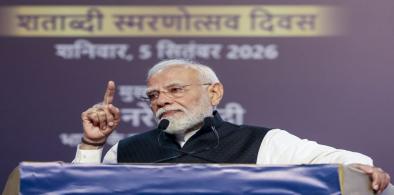
For China to achieve its hegemonic ambitions in Asia, weakening democracies is essential. India, therefore, stands as an iron wall against illiberal encroachments, positioning itself as both a regional hegemon and a defender of democratic order.
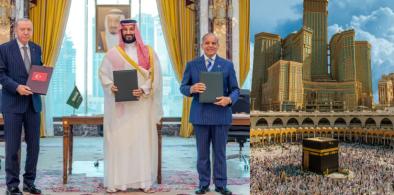
The Mecca Pact, barely a month old, has already been discredited. Its authenticity is in question, its efficacy doubtful. The very notion of an “Islamic Nato” has been exposed as a mirage. Collective defence requires not just declarations but capabilities, coordination and political will. None of these are evident in the pact’s functioning.

Having understood the American game plan, India acted swiftly to minimise the danger by ensuring that Pakistan did not get off the 'grey list' till its compliance is fully confirmed, writes Brig Anil Gupta (retd) for South Asia Monitor
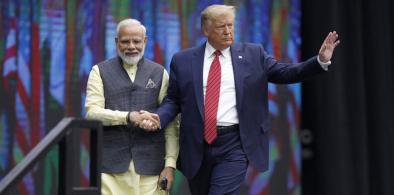
The visit will be high on optics and low on substance as both Trump and Indian Prime Minister Narendra Modi seek relief from domestic pressures and revalidation before their citizens, writes Arul Louis for South Asia Monitor
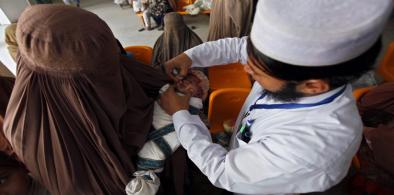
The issue of polio eradication has taken a perilous form in Pakistan due to the deadly mixture of militancy and developmental issues, writes Sanchita Bhattacharya for South Asia Monitor

Technology collaboration by removing tariff and non-tariff barriers, specifically in the high technology segment, could be great lever of strategic and public policy partnerships for both countries, writes Kumar Deep (@kumar_deep) for South Asia Monitor
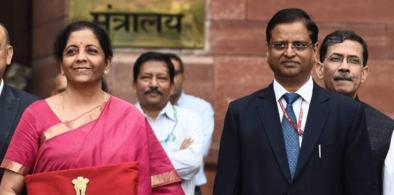
India may have jumped the rankings in The World Bank’s Ease of Doing Business but foreign and domestic investors seek improvements in the ease of doing business on the ground, especially in the states, writes N Chandra Mohan for South Asia Monitor
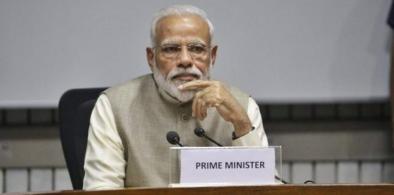
The 'tax charter' ushers India into a new era where the rights of taxpayers in terms of imposition and payment of taxes are recognized for the first time, writes Arun Anand for South Asia Monitor
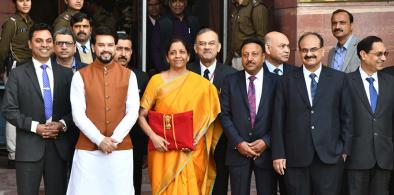
India Inc’s confidence will certainly be boosted with a more transparent and non-adversarial tax regime and a business-friendly policy framework that improves the conditions for doing business on the ground, especially in the various states, writes N Chandra Mohan for South Asia Monitor

The IN has been at the forefront in supporting the country’s security and diplomatic initiatives in the region through extensive bilateral and multilateral interaction, writes Cmdre Anil Jai Singh (retd) for South Asia Monitor

If India has to progress towards deeper engagement under the ‘Neighborhood First’ policy, it has to integrate some of the genuine concerns of its strategic regional partners, writes Kumar Deep for South Asia Monitor
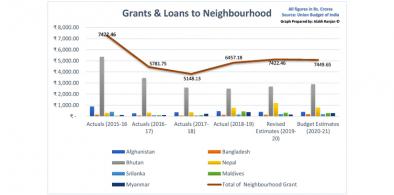
The enthusiasm Modi has shown towards the neighbourhood, through his numerous visits has not got translated in overall policy during these years, writes Alakh Ranjan for South Asia Monitor
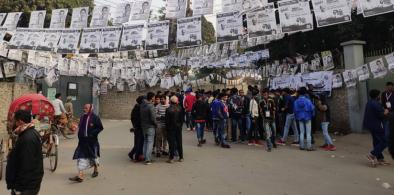
Fracturing political institutions like the Election Commission, Parliament and the Judiciary are also responsible for the popular apathy and political decay in Bangladesh, writes Akmal Hossain for South Asia Monitor
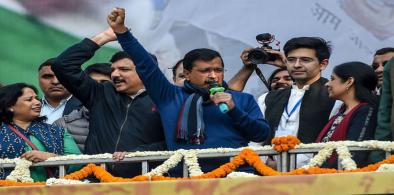
The BJP may have also harmed itself by its poisonous communalism which cannot but have put off some of the party’s own sensible supporters, not to mention the Left-Liberals, writes Amulya Ganguli for South Asia Monitor

The US pullout from Iraq, which will be perceived as withdrawal under pressure, will have a fallout in Afghanistan, writes Lt Gen PC Katoch (retd) for South Asia Monitor

In a country like Pakistan, where freedom of expression is strictly curtailed, guaranteeing that everything is in line with an openly orthodox and conservative interpretation of religion will only multiply the problem, writes Sanchita Bhattacharya for South Asia Monitor
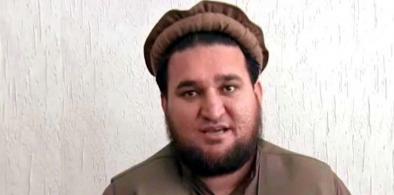
How Ehsan could escape high-security detention and how he could reach Turkey, along with his family, remains a mystery that Islamabad is unable or unwilling to answer, writes Mahendra Ved for South Asia Monitor