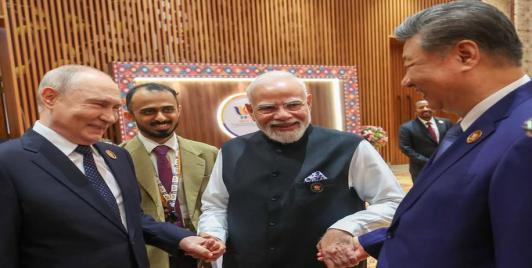


PHOTO SHARED BY PM MODI ON X

EU Fast-Tracks FTA with India as BRICS Summit Signals Shifting Geopolitical Dynamics

The timing of the EU announcement coincided with the BRICS+ Summit in New Delhi, creating speculation about whether the EU was seeking to reinforce its strategic engagement with India amid the growing influence of the BRICS grouping.

Never Forget Abbottabad: The Other Chapter of 9/11 Should not Fall Victim to Selective Memory

Abbottabad itself is symbolic. Just 30 miles north of Islamabad, along the historic Karakoram Highway, it is home to Pakistan’s premier military academy. For bin Laden to live there undetected is not simply a mystery—it is a reminder of the uncomfortable realities of counterterrorism

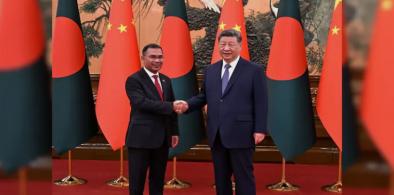
India’s Push-Ins Could Push Bangladesh Towards China

Amid strategic challenges from Beijing in Bangladesh, New Delhi cannot separate border management with foreign policy. New Delhi should hold high-level dialogue with Dhaka and develop a cooperative roadmap to facilitate the identification and repatriation of undocumented migrants from India. 

Growing Sri Lanka-India Defence Cooperation Throws Up Air-Defence Questions

The visit therefore should not be viewed simply as another bilateral defence engagement. It represents an attempt by New Delhi to institutionalise India's security relationship with Sri Lanka, while simultaneously reassuring Colombo that India's expanding security interests need not threaten Sri Lankan sovereignty.

More on Geopolitics, Security and Strategic Affairs

The Mecca Joint Defense Agreement: What It Means for South Asia

New Delhi’s official response has been measured, almost pointedly so, a statement that India is “looking into the implications” rather than any dramatic condemnation. That restraint is wise, and should be read as strength rather than uncertainty. India’s ties with Saudi Arabia are too economically consequential, too carefully cultivated over the past decade, for Riyadh to jeopardize them by handing Pakistan a blank check. 

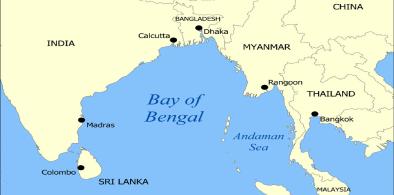
The Mineral Geopolitics of the Bay of Bengal: To Win the Subterranean War, India's Maritime Strategy Needs a Paradigm Shift

The vulnerability for India lies in the asymmetry of technological readiness and the aggressive sub-surface mapping being conducted by external actors, most notably China. Beijing has been able to resource its scientific research vessels, oceanographic mapping devices, and supposed civilian ocean surveys to map the bathymetry and mineral content of the Indian Ocean Region systematically.

Growing US-China Rivalry in Indian Ocean: A Test of Sri Lanka's Foreign Policy

China’s growing influence in Sri Lanka is an immediate concern for India as the resident power in the region, but it is also a global concern for the United States. 

Hasina's Return Proclamation Throws a Spanner in India-Bangladesh Ties

The Indian government is caught in a bind. Despite the BNP government’s outrage, for Delhi to hasten Hasina’s extradition is not an option.

Why the Afghanistan-Pakistan Border Keeps Burning: Keys to Peace Lies With Group Whose Loyalties Answer to No One

The borderland TTP now exploits is the same terrain that Pakistan's own security establishment worked for decades to create as "strategic depth."  The world of proxy-war infrastructure seldom remains directed towards where its architects have aimed.

India and Australia Enhance Strategic Relationship, Prioritise Maritime Domain Awareness to Secure Indo-Pacific

A significant factor that emerged after India launched Operation Sindoor against Pakistan in May 2025 was the strain in the India-US relationship under the Trump administration, driven by aggressive tariff disputes and policy friction. This indirectly accelerated India’s push to diversify partnerships, prompting New Delhi to lean more pragmatically into closer economic and strategic ties with middle powers such as Australia.

The Reopening of Nathu La and a Pragmatic India-China Compact: Opportunity for Both Countries to Move Beyond Symbolism

India and China need not share identical geopolitical visions to agree that a stable border, prosperous border communities and transparent rules are preferable to uncertainty. The most useful measure of Nathu La’s success may therefore be not how many tonnes cross the pass, but how routinely two neighbouring systems learn to work together.

Hasina’s December Gamble: Will it Become a Moment of Confrontation or Reconciliation?

December could therefore become much more than Victory Month. It could become a test of whether Bangladesh's next chapter will be written through democratic accommodation or another round of political vengeance. The danger is that a leader returning to face her past could inadvertently reopen the country's deepest wounds. 

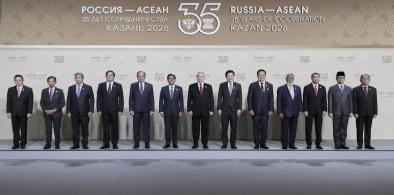
Russia’s Bid for a Larger Asian Role; Will Be Closely Watched by Beijing

Russia wants to use the Far East to diversify away from the West, but it risks becoming excessively dependent on China. That is why Southeast Asia, India, Japan and other Asian partners matter to Moscow as they provide Russia with a wider Asian field and fallback and reduces the risk that Russia’s entire eastern pivot becomes a one-way dependence on Beijing.
 

The Architecture of Disruption: Structural Parallels Between Indira Gandhi and Donald Trump

For democracies under pressure, the lesson is sobering. Institutions do not only collapse when attacked from outside; they can also be hollowed out from within by leaders who master the language of mass appeal better than the language of internal restraint. 

Bangladesh's Bid to Clear a US-Wanted Terror Fugitive Raises Troubling Questions

Although the Yunus administration was replaced by an elected government in February 2026, the influence of Islamist groups, jihadist organizations, and religious extremists has reportedly remained largely unchanged. As a result, several prominent leaders of Islamist organizations and militant groups continue to gain strength.

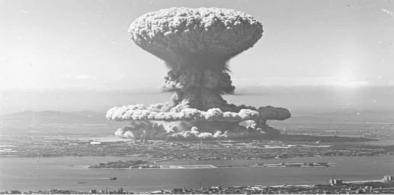
81 Years After Hiroshima: Don't Normalize the Unthinkable

August 6 is not a day for ceremonies alone. It is a day to remember why restraint was carefully created in the first place  and to  prevent another Hiroshima - Nagasaki. A third devastation, deliberate or accidental will  take less than 43 seconds.

The Shrinking Policy Space for Small States: Lessons from Bangladesh, Implications for India

New Delhi's wariness is not really about the river, or even the defence talks in isolation. It is about what Chinese capital and now a nascent security channel, both sitting in a border-adjacent basin, imply for India's own economic and security position.

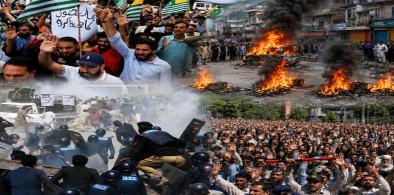
PoK Polls Expose A Deeper Faultline: Widening Gap Between Official Narratives and Ground Realities

Any further instability in the region carries security implications for both countries. Escalating unrest along an already sensitive frontier can heighten tensions and reduce the already limited space for dialogue between New Delhi and Islamabad.

Asymmetric Warfare via Migration: What India Can Learn from Spain’s Ceuta Crisis

Rightly, India is now treating mass irregular Rohingya migration as an engineered, hybrid national security threat that requires a coordinated border guarding, diplomatic, and legal response.