The protection for journalists remains the biggest challenge in Afghanistan, and while women journalists make up just 17 percent of the news force, 30 percent of them have reported violence, writes Farida Nekzad for South Asia Monitor


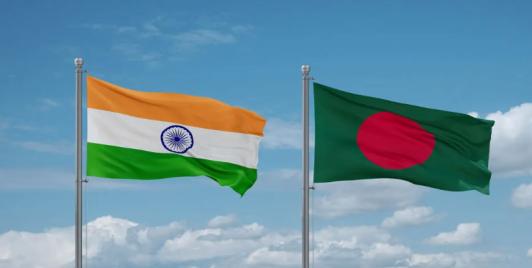
If India says the security of its Northeast, border management, trade and connectivity matter, Bangladesh can equally say that water sharing, deaths at the border, market access, energy security, river management and sovereign equality matter to it.
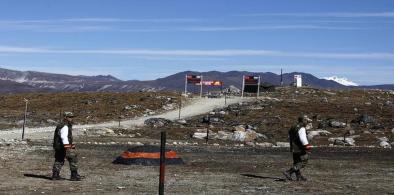
The Indian military views no disengagement in Arunachal Pradesh as part of a wider strategic recalibration, prompting India to match Chinese force rebalancing by shifting strike corps and resources equally across both northern and eastern fronts.
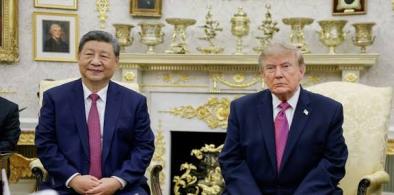
BRICS is acquiring greater visibility, while countries of the Global South continue to seek a greater voice in the international system. The desire for a more multipolar world is becoming increasingly evident. Over the next decade, this could produce a geopolitical configuration rather different from the one we have known since the end of the Cold War.
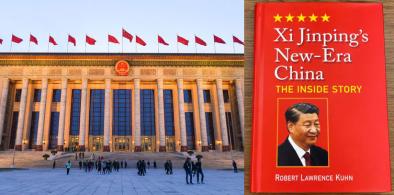
Kuhn says if the first half of this century is being defined by USA-China relations, the second half may well be defined by India-China relations and, in the New World Order, "India-China relations will likely become the most pivotal.....for the entire world".
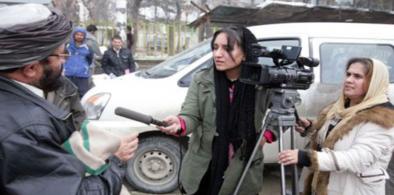
The protection for journalists remains the biggest challenge in Afghanistan, and while women journalists make up just 17 percent of the news force, 30 percent of them have reported violence, writes Farida Nekzad for South Asia Monitor
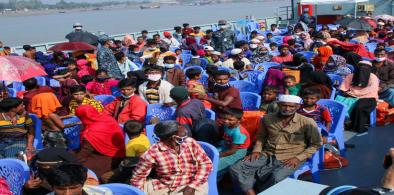
It is the height of hypocrisy if the global community led by the West lets Myanmar off the hook and instead pressurises poor Bangladesh to not only shelter more than a million people in the overcrowded country but even dictate locations for settling them, writes Subir Bhaumik for South Asia Monitor
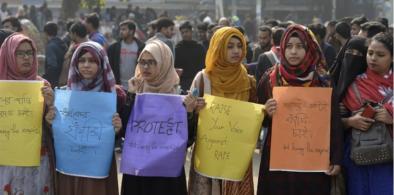
Experts feel that impunity enjoyed by rapists in the country are not due to the fact that Bangladesh does not have a high punishment for rape - currently the highest punishment afforded is life imprisonment - but that rapists are convicted in only three percent of the cases, writes Tasmiah Nuhiya Ahmed for South Asia Monitor
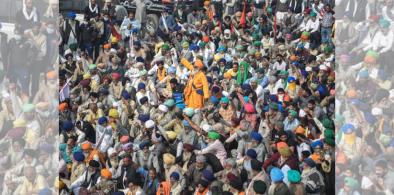
The anger of these agitating farmers is yet another manifestation of the narrative of farmer distress that stalks the India growth story, writes N Chandra Mohan for South Asia Monitor

With the outgoing President Donald Trump having ordered a nearly full US troop withdrawal from Afghanistan after almost two decades in the war-torn country, in Bolton’s assessment there are clear dangers of a serious instability that could threaten not only the South Asian region but the rest of the world, writes Mayank Chhaya for South Asia Monitor

Yet no nuclear scientist has been targeted in Pakistan, not even Abdul Qadeer Khan, father of Pakistan’s nuclear bomb who indulged in blatant nuclear proliferation with obvious government support, writes Lt Gen Prakash Katoch (retd) for South Asia Monitor
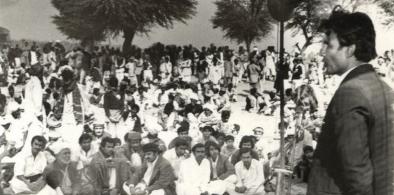
Rasool Bux Palijo has earned a place in the pantheon of leaders of South Asia who has earned lasting fame and created an ideological legacy in the struggle against martial law, feudalism, colonialism, and imperialism, writes Muhammad Abbas Khaskheli for South Asia Monitor
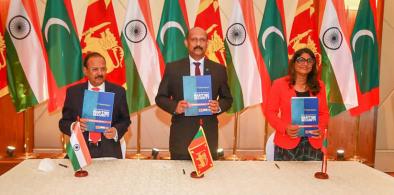
India, Sri Lanka, and the Maldives agreed to expand the scope of intelligence sharing, including terrorism and cybersecurity, at the meeting to discuss common security threats, writes Sugeeswara Senadhira for South Asia Monitor

Pakistani audiences seem unwilling to discard the supposedly "vulgar" stuff they are addicted to, given the common socio-cultural ethos of the subcontinent, writes Mahendra Ved for South Asia Monitor
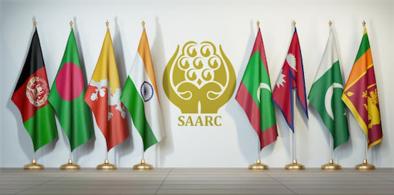
The spread of COVID-19 infections in South Asia has not been uniform across countries; while some countries were successful in controlling the pandemic, others were not, writes Partho Pratim Mitra for South Asia Monitor

The BJP governments in these states, in their quest to criminalize interfaith marriages, are going ahead with coming out with this law, despite not even a single case of ‘love jihad’ having been detected by the central investigative teams to date, writes Reeti Prakash for South Asia Monitor
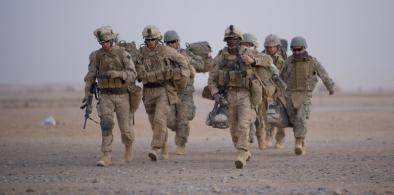
Till the Afghan National Security Forces (ANSF) are confident and sufficiently armed to stabilize the country, it would be prudent for the US to retain troop strength between 5000-8000 in Afghanistan, writes Lt Gen Prakash Katoch (retd) for South Asia Monitor

The Malabar naval exercises could be seen as an obvious manifestation of the desire among members of the Quad to keep trade routes open, military confrontations in check and keep the Indo-Pacific Region open for legitimate rules-based economic activity, writes Raghbendra Jha for South Asia Monitor
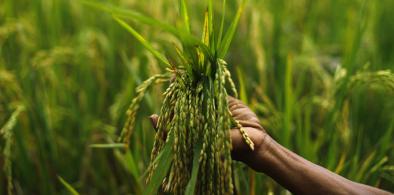
COVID-19 has brought into focus supply chain issues and with it a fundamental change in the way food availability and access is viewed, one that goes beyond the conventional focus on weather, area, production, and yield (APY) paradigm of crops, writes Partha Pratim Mitra for South Asia Monitor

These are challenging times with rising majoritarianism and nationalism and, with a large Muslim population, India must watch events in Europe closely, and ensure its secular fabric remains intact, writes Lt Gen P R Kumar (retd) for South Asia Monitor