
Increasing Islamic radicalisation and the influence of Pakistan and China in the island nation may be troublesome and India must adopt necessary measures to counter their influence at the earliest, writes Jai Kumar Verma for South Asia Monitor

The Indian government is caught in a bind. Despite the BNP government’s outrage, for Delhi to hasten Hasina’s extradition is not an option.
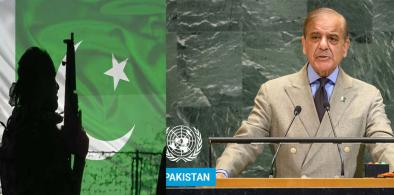
The borderland TTP now exploits is the same terrain that Pakistan's own security establishment worked for decades to create as "strategic depth." The world of proxy-war infrastructure seldom remains directed towards where its architects have aimed.
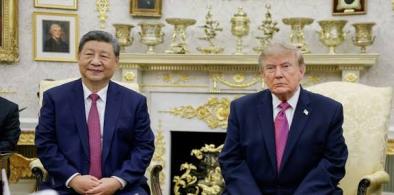
A significant factor that emerged after India launched Operation Sindoor against Pakistan in May 2025 was the strain in the India-US relationship under the Trump administration, driven by aggressive tariff disputes and policy friction. This indirectly accelerated India’s push to diversify partnerships, prompting New Delhi to lean more pragmatically into closer economic and strategic ties with middle powers such as Australia.
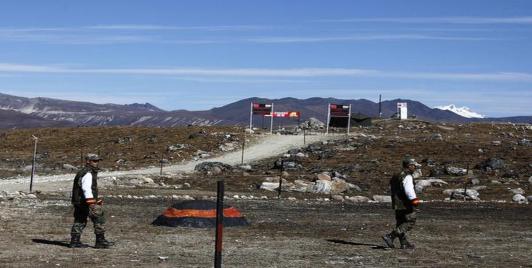
India and China need not share identical geopolitical visions to agree that a stable border, prosperous border communities and transparent rules are preferable to uncertainty. The most useful measure of Nathu La’s success may therefore be not how many tonnes cross the pass, but how routinely two neighbouring systems learn to work together.
Increasing Islamic radicalisation and the influence of Pakistan and China in the island nation may be troublesome and India must adopt necessary measures to counter their influence at the earliest, writes Jai Kumar Verma for South Asia Monitor

The enhanced allocation of resources serves as a signal to both Iran and Afghanistan that India is ready to walk the talk and hasten the completion of the project, especially at a time when the almost complete Gwadar port in Pakistan received its first container shipment, in mid-January, writes Nilova Roy Chaudhury for South Asia Monitor

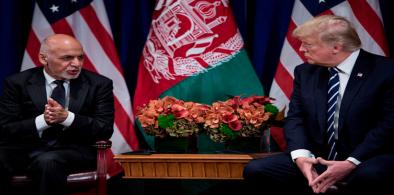
The US-India relationship has a number of contentious issues, trade being the most important of them, writes Pranay Kumar Shome for South Asia Monitor

The MCC, which has approved 37 compacts for 29 countries since its inception in 2004, could extend a claim on products originating or produced from Nepal, which would unfortunately lose its sovereign rights over certain products which have their origin in Nepal, write Jivesh Jha and Nil Prasad Paneru for South Asia Monitor
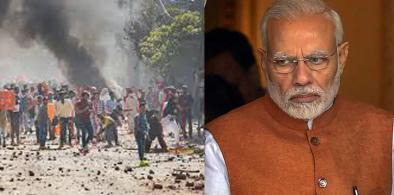
The success of Modi’s populist campaigns in 2014 and 2019 Lok Sabha elections, followed by the majoritarian mobilizations and lurking use of repression, pose a serious threat to liberal democracy in India, writes L T Om Prakash for South Asia Monitor
With Delhi assembly elections set for February 8, the battle lines are sharply drawn between two pitting ideologies that have polarised national discourse like at no time before, writes Tarun Basu for South Asia Monitor
The re-emergence of IS would have a definite impact on the Af-Pak region, with its consequential fallout for India and regional peace and stability in South Asia, writes Brig Anil Gupta (retd) for South Asia Monitor
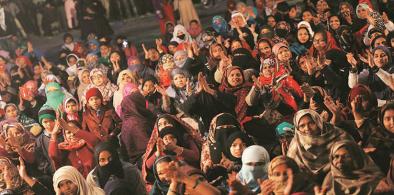
What makes the Shaheen Bagh rare in the history of Indian civil society movements is that this is the first-time Muslim women are leading a protest against a law passed by the state, writes Alakh Ranjan for South Asia Monitor
It is widely believed that India’s decision on CAA would ‘question the principle of equality before the law’ and emotionally impact the Muslim community of both India and its neighbouring countries, writes Sukanya Bali for South Asia Monitor
Shringla, who came in from Washington where he served as India’s ambassador, will have his work cut out, writes Nilova Roy Chaudhury for South Asia Monitor
The strategic gameplan of support to the Rohingya militancy is clearly visible. One, for China, making them into militants can be used to destabilize many countries, including India in South Asia, thus weakening its economic competitors, writes Swadesh Roy for South Asia Monitor
In South Asia, the issue of marine litter management is not taken as a priority by any of the nations, write Harsh Mahaseth and Shubham Sharma for South Asia Monitor
Salafist movements, such as Hizb ut-Tahrir and the Jamiat-E Eslah, while opposing Taliban methods, are generally the same, and these movements, consciously or unconsciously, pave the way for Taliban recruitment in Afghanistan, Writes Saleem Payenda for South Asia Monitor
Bangladesh and Maldives, amongst others, are the most afflicted and vulnerable victims of environmental pollution and climate change, Write Akmal Hossain for South Asia Monitor