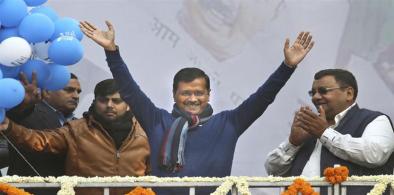
The Indian government is caught in a bind. Despite the BNP government’s outrage, for Delhi to hasten Hasina’s extradition is not an option.
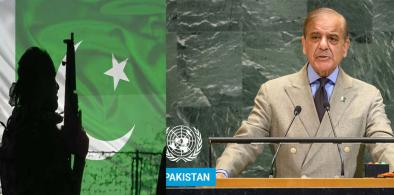
The borderland TTP now exploits is the same terrain that Pakistan's own security establishment worked for decades to create as "strategic depth." The world of proxy-war infrastructure seldom remains directed towards where its architects have aimed.
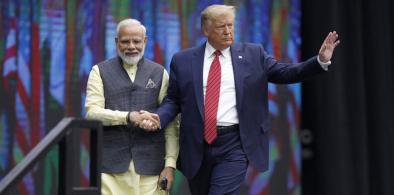
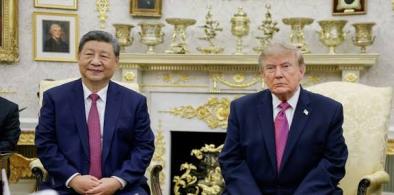
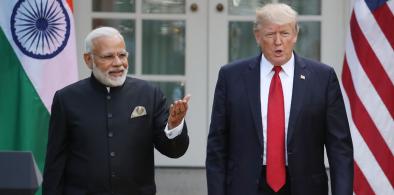
A significant factor that emerged after India launched Operation Sindoor against Pakistan in May 2025 was the strain in the India-US relationship under the Trump administration, driven by aggressive tariff disputes and policy friction. This indirectly accelerated India’s push to diversify partnerships, prompting New Delhi to lean more pragmatically into closer economic and strategic ties with middle powers such as Australia.
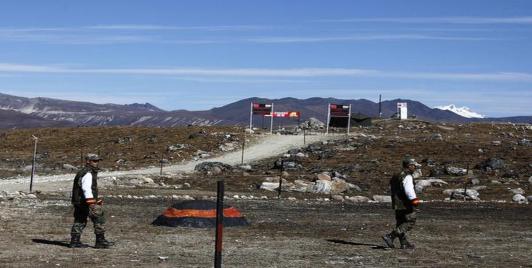
India and China need not share identical geopolitical visions to agree that a stable border, prosperous border communities and transparent rules are preferable to uncertainty. The most useful measure of Nathu La’s success may therefore be not how many tonnes cross the pass, but how routinely two neighbouring systems learn to work together.
The lack of homework by the Modi government on the adverse implications of the CAA is now clearly visible both domestically and internationally, writes Alakh Ranjan for South Asia Monitor

Sri Lanka is at the centre of the IOR and the country which will have greater stakes and leverage over this island nation will have an edge in the Indian Ocean, writes Alakh Ranjan for South Asia Monitor

There are enough existing solutions to alleviate air pollution which is a result of a waste-disposal problem. However, there is a need to have political and administrative will to implement them, writes Anil Rajvanshi for South Asia Monitor

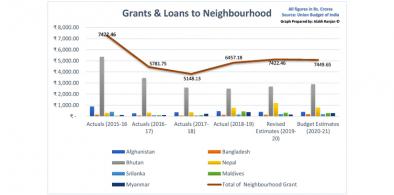
India understands the needs of Bhutan and is equally willing to diversify the relationship beyond hydropower. During his last visit, Modi showed India’s intent towards the diversification of bilateral relations, writes Alakh Ranjan for South Asia Monitor

Gandhi was an engineer at heart. He improvised and built equipment like better snake-catching tools, small cotton-spinning wheel (takli) and chappals (sandals) from used tires. In 1929, he even instituted an INR one lakh prize (INR 20 crores in today’s value; 2.6 times bigger than the Nobel Prize) for the design of a modern charkha (spinning wheel), writes Anil K Rajvanshi for South Asia Monitor
Trump realized that the draft deal, if signed, would be labeled a surrender to the Taliban, which would be politically damaging for him. Another reason could be that he never really wanted to meet the Taliban, but wanted to showcase the peace efforts made, and place indirect pressure on them through the subterfuge writes Lt Gen PC Katoch (retd) for South Asia Monitor