Thousands protest in PoJK's Rawalakot

Pakistan: Oppressor at Home, Peace Broker Abroad

This contradiction—peace abroad, repression at home—defines Pakistan’s current posture. While Islamabad seeks international recognition as a mediator, its domestic record is marred by bloodshed and denial of democracy. The JAAC movement, rooted in basic economic grievances, has become a symbol of resistance against this hypocrisy. 

Myanmar, India and the Northeast: Balancing Security, Connectivity and Geopolitics

The strategic significance of the offensive lies in control over Kachin State’s heavy rare-earth deposits, which account for roughly half of the world’s supply and are critical for electric vehicles and wind turbines. The KIA took control of these lucrative mining areas near Pangwa and Chipwi in late 2024 and has since heavily fortified its positions.

Xi Jinping’s Loosening Leverage Over North Korea Amid Shifting Indo Pacific Security Dynamics

China in recent times has elevated some of its key bilateral relations, Vietnam, Pakistan, North Korea, to the level where they are now considered by Beijing as  consequential to regional and global peace and stability. China’s foreign and 'grand strategy' is aimed at realizing a shared destiny for mankind and nurturing a new type of great-power relations within a multipolar world. This requires a strategic alignment between China’s strategy and others.

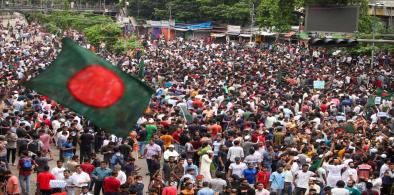
Bangladesh's 'Red Telephone' Breach: More to it Than Meets the Eye?

More importantly, the alleged sabotage occurred during a period of political transition following the developments of August 2024. Institutional loyalties, political rivalries, and competing networks of influence continue to shape Bangladesh's political landscape. In such a context, any breach involving the Prime Minister's secure communications infrastructure deserves careful examination.

More on Geopolitics and Strategic Affairs

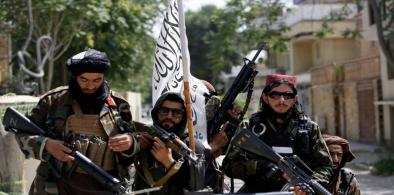
As world abandons Afghanistan, Taliban, IS and ISK-P feed on each other to export terror

The region and the world should reconsider their policies toward Afghanistan and the Taliban. They must assist the Afghanistan people in forming a legitimate government and establish professional security forces. The Taliban are not a trustworthy partner in the fight against terrorism.

Pakistan seeks climate justice as its people battle climate change

In the bustling city of Karachi, solar panels are becoming a common sight. Pakistan is investing heavily in renewable energy, aiming to generate 30% of its electricity from renewable sources by 2030

Pakistan needs to address foundational causes of its persistent violence and social instability

It is a fact that Pakistan's obsession with military power without attending to the roots of political exclusion and economic disparity has left its vulnerable masses base to the extremes. 

Sri Lanka's presidential election: Voter faced with choice of status quo, mild tinkering or radical change

Most analysts agree that there is no clear-cut winner and the race to the presidency is a multiple-horse race

Kolkata's protests: Will it herald a new era of youth-propelled social awakening in India?

What sets these protests apart was their apolitical nature, illustrating that regardless of how firmly a government may seem entrenched in power, movements grounded in just causes can expose the vulnerability of even the most resilient regimes, as recent events have clearly shown.

Manipur’s civil unrest: A growing threat to India’s national security

Cross-border arms and drug trafficking has always been there in the region, with recent reports suggesting large quantities of guns being shipped to Manipur from an illicit market located close to the border between China and Myanmar. Drugs are being used by the insurgent group to finance their procurement of arms and fund other illicit activities.

Twenty years of EU-India 'strategic partnership': Substance needs to match rhetoric

The Brussels-based think tank Egmont Institute, in a policy brief in April, said individual EU member States attach a lot of importance to their bilateral relationship with New Delhi and are interacting with the Indian government at the highest level. “However, visits of the leaders of the EU institutions to India are rare. One fails to see a real political interest in India from the Commission President and from the President of the European Council.”

Revival of nuclear posturing: Isnt it time for India to review its no-first-use policy?

China, Pakistan and Russia have clearly and unequivocally declared that they will exercise ‘FIRST USE OF NUKES’ option under certain circumstances. For China and Pakistan, India is the target. Yet our Chief of Defence Staff and premier think tank viz Centre for Air Power Studies, IDSA, USI and many others continue to ‘sing’ the outdated NFU policy.

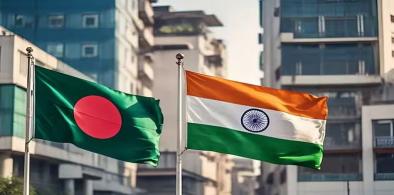
The never-ending killings on the India-Bangladesh border

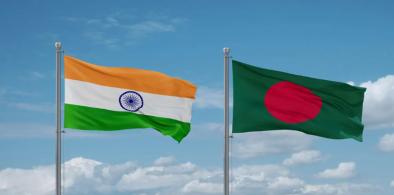
The recurrent border killings have been a source of tension between India and Bangladesh. The government of Bangladesh has consistently urged India to implement non-lethal measures and exercise restraint in border management. In response, India has underscored the challenge of securing a frontier that is both expansive and permeable while also committing to reducing the use of lethal force. 

Combating Islamophobia: What India can learn from the UK

Is it not time for India to set up a committee like the one in the UK to ensure the implementation of norms which combat misconceptions about other religions? In India many misconceptions are prevailing and no impactful effort has been undertaken to counter these. These misconceptions have spread very dangerously in society.

Afghanistan is a ticking time bomb that could explode any time

Afghanistan has turned into fertile ground for terrorist groups from around the world. If the flow of terrorism continues unchecked in Afghanistan, there is little doubt that the world could face another incident similar to 9/11, or perhaps something even worse. Today, Afghanistan has become a security black hole for the regional countries and the world overall.

Signs of a virulent civil war emerging in Manipur

The irony is that Manipur is where the Chinese and American interests coincide against India. But the need is to look at ourselves in the mirror. If we provide a readymade asymmetric battlefield to overt or covert inimical forces, why would they not exploit it? 

India’s national security challenges amid global disorder

The combative rise of China has challenged US hegemony in global relations. In such a world, the crafting of a foreign policy that ensures national security requires vigilance, patience, caution, economic and military clout, and more importantly, constant risk management that enables India to maintain its strategic autonomy.

Balochistan's enforced disappearances: When will Pakistan own up to its flawed policies?

Many fear that the Balochistan situation could lead to a 1971-like crisis that split the country due to centralised power, military operations against civilians, and foreign overreach. Why, then, have these lessons not been learned?

Why peace continues to elude Manipur

The ethnic cleansing under Biren Singh’s watch broke all records – Kuki-Zo women paraded naked and subjected to mass rape publicly, with some token FIRs. This is also viewed as the reason why Prime Minister Narendra Modi has avoided visiting violence-stricken Manipur in the past 16 months.