The voters' message was widely seen to be against the "excesses" of the Modi era -- just like it was against Mrs Gandhi 47 years ago.


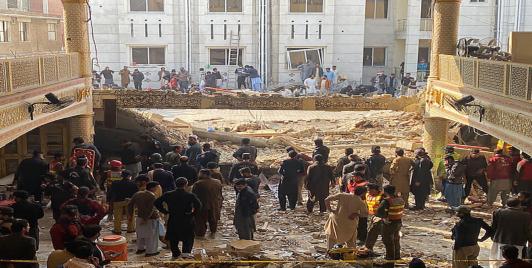
India must also recognise that Pakistan's internal security crisis has wider regional implications. Escalating Pakistan–Afghanistan tensions could create additional uncertainty along the western frontier, while attacks on Chinese projects could affect regional connectivity and investment.
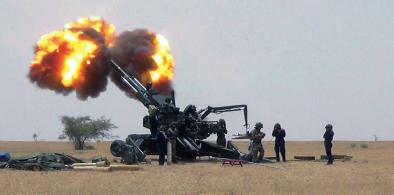
India has demonstrated that it can develop and manufacture modern artillery systems. What needs reassessment is how quickly we acquire, integrate and field them, and how effectively we ensure that new technologies communicate and operate together.
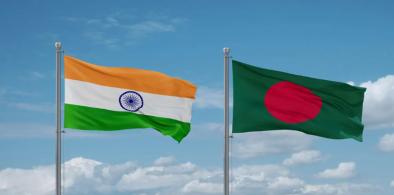
If India says the security of its Northeast, border management, trade and connectivity matter, Bangladesh can equally say that water sharing, deaths at the border, market access, energy security, river management and sovereign equality matter to it.
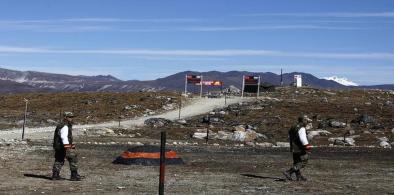
The Indian military views no disengagement in Arunachal Pradesh as part of a wider strategic recalibration, prompting India to match Chinese force rebalancing by shifting strike corps and resources equally across both northern and eastern fronts.
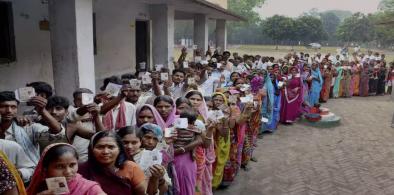
The voters' message was widely seen to be against the "excesses" of the Modi era -- just like it was against Mrs Gandhi 47 years ago.
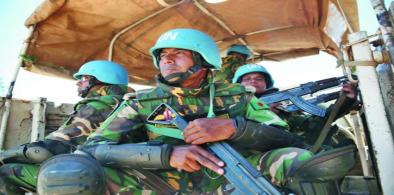
Bangladesh's journey in UN peacekeeping stands as a testament to unwavering dedication, professionalism, and sacrifice. The nation's commitment to global peace and security is evident in its consistent troop deployments and active participation in the international discourse on peacekeeping.
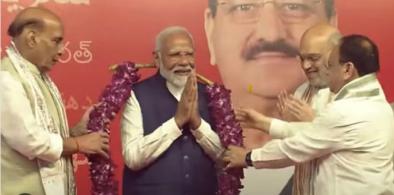
In many ways, once the final figures are certified, the 2024 election will be remembered as one where India’s hundreds of millions of ordinary people, a large percentage of them in grave economic distress, voted to create a stronger opposition of the kind they would like against an out-of-control prime minister.
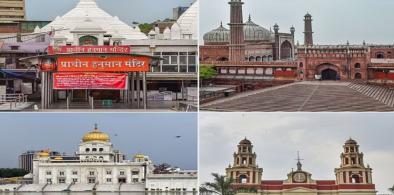
India is the origin of Sanatana Dharma (later Hinduism) philosophy, which also gave birth to Jainism, Buddhism and Sikhism. India, since millennia, has absorbed Zoroastrianism and Judaism. The other two Abrahamic religions Christianity and Islam came to the shores of India within decades of their founding in the Middle East and took root. With such pluralistic beliefs and one culture, India needs to debate religions to make societies aware of their evolution.
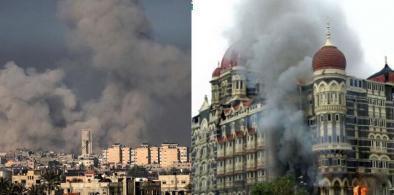
Interestingly, a comparison was drawn by Israel between the October 7 attack and the 26/11 Mumbai terror attack in the hope that there would be an unqualified understanding of Israel’s action. What this supposed comparison fails to recognize is that there is a significant difference.
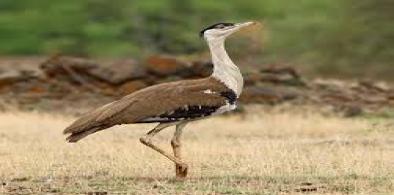
This judgment not only addresses the immediate concern of protecting the GIB but also provides a strategic framework for balancing ecological conservation with sustainable development.

Apart from the substantial loss in revenue, international students, especially from India who are aspiring to study abroad, are seeking out alternative destinations that are more welcoming, such as Germany, Japan, Ireland, Israel and Russia.
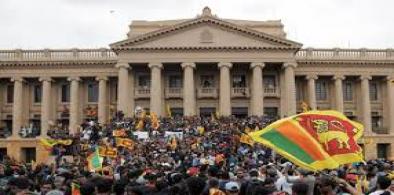
Just twenty years ago, India's neighboring countries, apart from Pakistan, were solely dependent on India. But now all the small countries except Bhutan are trying to identify themselves as neutral countries in the India-China rivalry.

Even so, Bhansali’s project has evoked considerable interest in Pakistan since the word went out that he was once considering casting Fawad Khan and Mahira Khan, two of the top stars who have acted in Bollywood films. “Then, politics entered,” one of them rued.

Despite the myriad challenges faced by Western journalists in covering South Asia, maintaining journalistic integrity is non-negotiable. This entails a rigorous commitment to fact-checking, corroborating information from diverse sources, and challenging ingrained biases.

India and China represent the future, America (West) the present, and Europe the past; Islam has a long way to go.

The growing camaraderie between Pakistan’s military and the ISK poses a threat to the entire South Asian region.
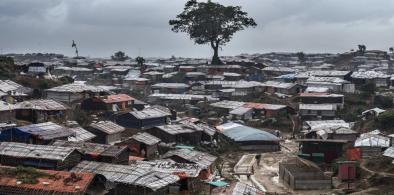
The encampments in Cox's Bazar have metamorphosed into hotbeds of militant activities, underpinned by the infusion of funds from the Middle East, Pakistan, and other nations, which are cynically utilized to perpetrate a nexus of militancy within these precincts.
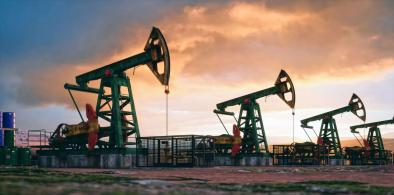
The revival of trade relations with old friend Russia is the turning point in India’s oil dependency on the Arab world. This has strengthened India’s resilience to oil shock to a considerable extent.
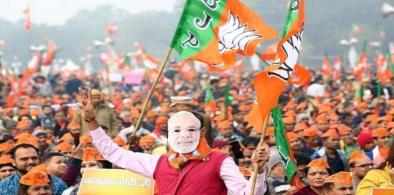
All in all, the issues on the agenda are very different from the issues that the BJP thought would be on the agenda. The finals could go down to the wire and there will be many lessons learned once the votes are counted and the results are declared.