

Terrorist violence in Pakistan mosque

Mounting Instability in Pakistan: Consequences for Regional Security

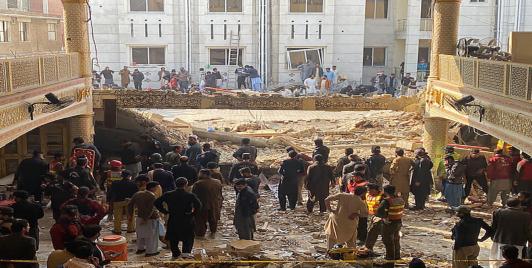
India must also recognise that Pakistan's internal security crisis has wider regional implications. Escalating Pakistan–Afghanistan tensions could create additional uncertainty along the western frontier, while attacks on Chinese projects could affect regional connectivity and investment.

Indian Artillery: Speed of Acquisition Is as Important for Readiness as Technology

India has demonstrated that it can develop and manufacture modern artillery systems. What needs reassessment is how quickly we acquire, integrate and field them, and how effectively we ensure that new technologies communicate and operate together.

Why Dhaka and Delhi Must Find Common Ground - and Their Shared Space

If India says the security of its Northeast, border management, trade and connectivity matter, Bangladesh can equally say that water sharing, deaths at the border, market access, energy security, river management and sovereign equality matter to it. 

PLA’s Partial Pullbacks from Ladakh Frontier: More Tactical Than Operational Move by China

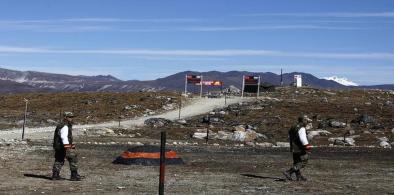
The Indian military views no disengagement in Arunachal Pradesh as part of a wider strategic recalibration, prompting India to match Chinese force rebalancing by shifting strike corps and resources equally across both northern and eastern fronts.

More on Geopolitics, Security and Strategic Affairs

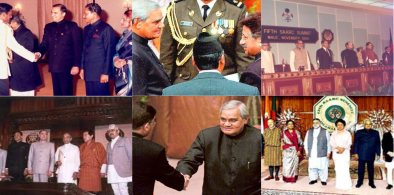
Strategic dialogue, Track 1.5 diplomacy necessary to maintain regional stability in South Asia

It is crucial for India and Pakistan to establish new confidence-building measures (CBMs) to mitigate the potential destabilizing effects of advanced technologies. Key elements of effective CBMs include robust communication channels, bilateral discussions on emerging technologies and their implications for regional peace, and strict adherence to missile test notification protocols.


Rekindling the spirit of communal amity in Sri Lanka: A Prime Minister's quest

In this newly revived spirit of amity, PM Gunawardena travelled from Jaffna to Kilinochchi by road. There were no protests and he was received at both venues with warmth and cordiality.

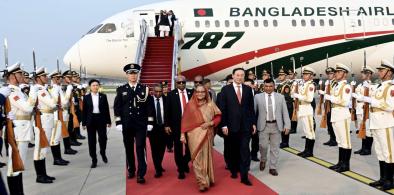
After back to back India visits, Hasina’s China visit demonstrates Bangladesh’s delicate balancing act

Hasina sees no contradiction in maintaining equity in ties with China and India as she is able to adeptly navigate the conflicting interests of China and India. Analysts feel that Dhaka will continue to have a balanced approach to ties with Beijing and New Delhi since Bangladesh depends on both for stability and growth. 

Modi's Russia visit was to reaffirm strategic ties in uncertain times

The Moscow meeting was to understand each other's priorities and concerns according to the evolving geopolitics and reassure each other of their commitment to deepening their relationship in the coming years. 

International education as soft power: Need for integration into nation’s foreign and security policies

A credible, viable, and sustainable foreign and security policy needs to see relationship building, collaboration, and cooperation as part of its education policy and driven by an aspiration for global good and human welfare. 

The imperative of regional cooperation in South Asia

Today, the lack of regional cooperation in South Asia impedes development and has long-term negative economic, social and security ramifications. Over-reliance on foreign powers for partnerships and financial support can have adverse economic effects as seen in Sri Lanka and Pakistan.

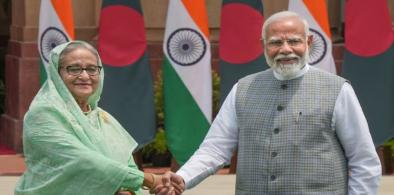
Hasina's India visit is beneficial for regional stability and prosperity, China factor notwithstanding

India was keen to welcome PM Hasina before her China trip to ensure bilateral consensus on sensitive issues. Over the last several years, strategic ties have grown, with cooperation in science and technology, defence and security, energy, trade, commerce, and maritime issues. The goal of the visit was to strengthen these bonds.

A world in transition: Will this lead to a new world order or disorder?

China, Russia and the US, however, give little value to international laws. They accept them only if they suit their own interests. They reject them if they conflict with their interests.

Sri Lanka's debt deal with China: Implications for the economy and India-Sri Lanka relations

India and China have long been strategic rivals in South Asia. China's significant economic footprint in Sri Lanka, through investments in infrastructure projects like the Hambantota Port and the Colombo Port City, has raised concerns in New Delhi about Beijing’s growing influence. The debt deal, involving China, adds another layer to this complex relationship.

The Arakan Army: A growing security threat to Bangladesh and region

The AA’s control over large swathes of territory in Rakhine State, including strategic border areas, increases the risk of arms smuggling, human trafficking, and other illicit activities. Bangladesh's geography puts it at the heart of three major Asian drug trade routes - the Golden Wedge, the Golden Triangle and the Golden Crescent. This makes the country a lucrative transit for the region's drugs, especially from Myanmar and India, undermining Bangladesh’s internal security.

Intelligence sharing between India, Sri Lanka imperative to curb mounting IS threat to South Asia

The arrest of four Sri Lanka nationals last month in Ahmedabad, India by Gujarat's Anti-Terrorism Squad caught the attention of Sri Lankan authorities. During interrogation, the four admitted to being closely involved with the banned NTJ and confessed they joined IS through Pakistani handler Abu Bakr Al Baghdadi. 

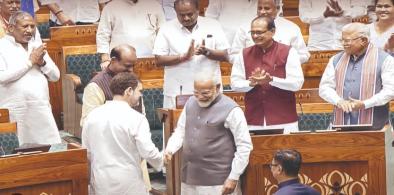
In India’s changed polity, it is now clearly Narendra Modi versus Rahul Gandhi

Nearly 20 years Modi’s junior, Gandhi now has the opportunity to directly counterbalance a prime minister who for ten years since 2014 lorded over legislative actions because no opposition party had managed to win the required 10 per cent of the 543 parliamentary seats.

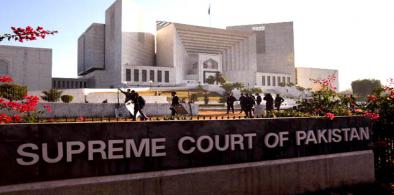
A politicised judiciary in Pakistan needs comprehensive reforms to restore trust

The judiciary in Pakistan is at a crossroads. The current trend, characterised by politicisation and inefficiency, jeopardises the basic foundations of justice and the rule of law.

The leak-ed scandal: Can the new law cure the pervasive malady of examination paper leaks in India?

The Act does not sufficiently address the root causes of paper leaks, such as systemic corruption and the involvement of organized networks. Without tackling these underlying issues, the Act risks becoming a reactive tool rather than a proactive solution.

Climate crisis is on us: World has little to lose on climate finance agreement

If the world is not to waste this opportunity to declare an all-out war on the looming climate crisis, climate negotiators need to ‘huddle together’ with urgency to save ourselves from the scorching temperatures, devastating wildfires, deadly floods and other climate extremes of the future.