China’s Xi Jinping meeting with North Korea's Kim Jong Un

Xi Jinping’s Loosening Leverage Over North Korea Amid Shifting Indo Pacific Security Dynamics

China in recent times has elevated some of its key bilateral relations, Vietnam, Pakistan, North Korea, to the level where they are now considered by Beijing as  consequential to regional and global peace and stability. China’s foreign and 'grand strategy' is aimed at realizing a shared destiny for mankind and nurturing a new type of great-power relations within a multipolar world. This requires a strategic alignment between China’s strategy and others.

Bangladesh's 'Red Telephone' Breach: More to it Than Meets the Eye?

More importantly, the alleged sabotage occurred during a period of political transition following the developments of August 2024. Institutional loyalties, political rivalries, and competing networks of influence continue to shape Bangladesh's political landscape. In such a context, any breach involving the Prime Minister's secure communications infrastructure deserves careful examination.

Between the Melody Moment and the Hard Work Ahead: Modi's Europe Tour Outcome Will Depend on Delivery in Coming Years

India's MSME sector, the backbone of its export economy, remains largely unequipped to navigate European standards and certification requirements. As ABC Live noted, the next stage will be tougher than negotiation: India must now prove that its exporters, MSMEs, regulators, ports, testing labs, and state governments can actually use the agreement. A framework signed in Gothenburg means nothing to a textile exporter in Tiruppur who cannot get a product certified to EU standards.

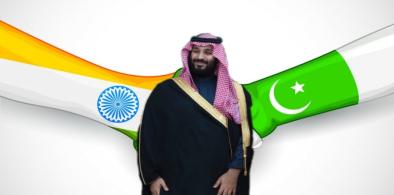
Why India and Pakistan Must Move From Rivalry to Responsibility: In Fragmenting Global Order, South Asia Cannot Afford Internal Paralysis

The central lesson is simple: unresolved India-Pakistan hostility weakens South Asia from within. It prevents trade, blocks institutions, raises nuclear risk, politicizes water, militarizes borders, and diverts attention from human development. Both countries will continue to disagree on major issues. But disagreement does not require permanent hostility. Strategic maturity means building rules to manage conflict before conflict manages the region.

More on Geopolitics and Strategic Affairs

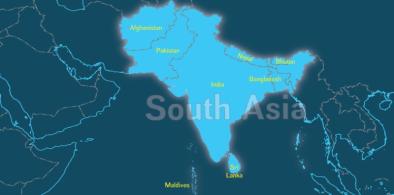
Need to take a holistic approach to flood control in South Asia

Over 54 major watercourses draining excess water from South Asia into the Bay of Bengal flows through Bangladesh, to which is added its own share of rainfall, writes Ambassador Sarvajit Chakravarti (retd) for South Asia Monitor

Sri Lanka's tourism industry, once a growth engine, struggles for survival

For Sri Lanka's tourism industry, the worst is yet to come. Experts say the downfall will continue as the energy crisis is unlikely to ease for months, writes Shraddha Nand Bhatnagar for South Asia Monitor

BJP fields an Adivasi president: A political masterstroke by Modi

It’s a win-win situation for the BJP in the Presidential election. It now evidently hopes to fully enlist the Adivasis in its expansionist plans while the Congress flounders without a sense of direction, writes Amulya Ganguli for South Asia Monitor 

Islamist attack on Yoga Day: India-bashing and nationalist politics in the Maldives

India-bashing is a preferred pasttime for opposition politicians in countries like Bangladesh, Nepal and Sri Lanka, not to mention Pakistan and Afghanistan, writes N. Sathiya Moorthy for South Asia Monitor

Scramble for power and pelf: India’s elected representatives in an unedifying spectacle

Only adequate remuneration and commensurate punishment for infringement can the practice of illegal gratification be significantly reduced, if not eliminated, writes Amb Sarvajit Chakravarti (retd) for South Asia Monitor 

Padma Bridge epitomises Bangladesh‘s success story and Hasina’s leadership

Bangladesh has proved its capacity by building a 6.15 km bridge over the country's second toughest river using its own money, writes Fumiko Yamada for South Asia Monitor 

India: A nation bound by its constitution or a selective interpretation of civilization?

Those who were not part of the anti-British struggle had roots in the ideologies of landlord-clergy combine. They articulated nationalism in the name of religion, called it cultural nationalism, writes Dr Ram Puniyani for South Asia Monitor 

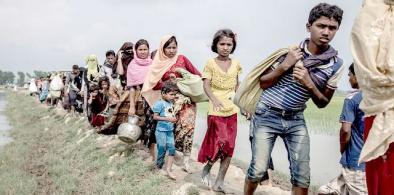
Rohingya repatriation from Bangladesh: Myanmar must keep its word

Myanmar and Bangladesh must cooperate in a neighbourly manner. Resolving the regional humanitarian problem will benefit the entire region of South Asia and Southeast Asia, writes Parvej Siddique Bhuiyan for South Asia Monitor 

India must take corrective measures to control hatred, divisiveness

In view of the growing trade and cultural ties between India and the Arab world, it will be disastrous if differences aggravate and no remedial and timely actions are taken, writes Asif Rameez Daudi for South Asia Monitor

India’s devotional politics; and its immunity to criticism

Beginning with Mahatma Gandhi and Jawaharlal Nehru till Narendra Modi, we have a tendency to associate divine qualities to a political leader, writes Dr. Suparna Banerjee for South Asia Monitor

Bangladesh's help to Sri Lanka underlines need for SAARC revival

Covid-19 pandemic and Sri Lanka's crisis are the best examples for all member states to try their level best to revitalize SAARC, writes Dr Shakuntala Bhabani for South Asia Monitor

Religion is another name for love; hate is part of divisive politics

The major political parties in India need to oppose the gross violations of the Constitution, the bulldozer (in)justice and beating of accused in custody, writes Dr Ram Puniyani for South Asia Monitor

Are Hindus being persecuted in Bangladesh? Facts belie prevailing narratives

Unlike Myanmar and India, Bangladesh has never, particularly since 1991, promoted any discriminatory policy against minorities, writes Samina Akhter for South Asia Monitor

Will warming ties with the US be a lifeline for Pakistan?

A number of factors in Pakistan such as the alarming economic situation, continued grey-listing by the FATF, growing terrorism challenges created the exigency for a reset in its ties with Washington, writes Shraddha Nand Bhatnagar for South Asia Monitor 

Afghanistan: The failure of democracy, the US and the free world

But the democratic world, mainly the US, already lost its battle for democracy in South and Central Asia by allowing the collapse of the the Afghan Republic, writes Fahim Sadat for South Asia Monitor