


The film lives to its own dialogue that showing wrong is as dangerous as hiding the truth; it totally hides the murders and exodus of Muslims, writes Dr Ram Puniyani for South Asia Monitor
China in recent times has elevated some of its key bilateral relations, Vietnam, Pakistan, North Korea, to the level where they are now considered by Beijing as consequential to regional and global peace and stability. China’s foreign and 'grand strategy' is aimed at realizing a shared destiny for mankind and nurturing a new type of great-power relations within a multipolar world. This requires a strategic alignment between China’s strategy and others.
More importantly, the alleged sabotage occurred during a period of political transition following the developments of August 2024. Institutional loyalties, political rivalries, and competing networks of influence continue to shape Bangladesh's political landscape. In such a context, any breach involving the Prime Minister's secure communications infrastructure deserves careful examination.
India's MSME sector, the backbone of its export economy, remains largely unequipped to navigate European standards and certification requirements. As ABC Live noted, the next stage will be tougher than negotiation: India must now prove that its exporters, MSMEs, regulators, ports, testing labs, and state governments can actually use the agreement. A framework signed in Gothenburg means nothing to a textile exporter in Tiruppur who cannot get a product certified to EU standards.
The central lesson is simple: unresolved India-Pakistan hostility weakens South Asia from within. It prevents trade, blocks institutions, raises nuclear risk, politicizes water, militarizes borders, and diverts attention from human development. Both countries will continue to disagree on major issues. But disagreement does not require permanent hostility. Strategic maturity means building rules to manage conflict before conflict manages the region.
The film lives to its own dialogue that showing wrong is as dangerous as hiding the truth; it totally hides the murders and exodus of Muslims, writes Dr Ram Puniyani for South Asia Monitor
The film has soured Hindu-Muslim relations to an extent in Kashmir - and also in the rest of the country - that the Pandits will be unable to settle down as before in close proximity with their Muslim neighbours, writes Amulya Ganguli for South Asia Monitor
The younger generation of both countries is keen to forge stronger ties between these two Muslim-majority countries in the region, writes Mehjabin Bhanu for South Asia Monitor
Fortunately, Pakistan never went ballistic and their reaction has averted what could have potentially led to a disastrous escalation, writes Maj Gen Jagatbir Singh (retd) for South Asia Monitor
Afghanistan owes a measure of its progress to the India cricket board and its generosity in providing to the embattled Afghan cricketers the use of ‘home’ grounds in India, writes Qaiser Mohammed Ali for South Asia Monitor
The Japan Bank for International Cooperation listed India as the most attractive investment destination, yet Prime Minister Fumio Kishida’s visit to Delhi failed to generate that investment buzz, writes S. Majumder for South Asia Monitor
With its strategic position in the Indian Ocean, India has a vital role in America’s Indo-Pacific Strategy, writes Lt Gen P. C. Katoch (retd.) for South Asia Monitor
Enhanced ties between Bangladesh and Myanmar can contribute to the growth of trade and investment relations with ASEAN and BIMSTEC countries, writes Jubeda Chowdhury for South Asia Monitor
The international community needs to appreciate that against all odds and the trauma of partition, India’s culture is composite and represents her civilizational heritage, writes Amb Bhaswati Mukherjee (retd) for South Asia Monitor
After Basil Rajapaksa's current visit, Modi is likely to fly from New Delhi to Jaffna to mark the reopening of Palaly Airport for commercial operations, writes Sugeeswara Senadhira for South Asia Monitor
One of the major lessons of the assembly election results is that a fragmented opposition cannot take on the mighty electoral might of BJP-RSS, writes Dr Ram Puniyani for South Asia Monitor
Because of Dhaka’s economic success, Saudi Arabia now perceives Bangladesh as a lucrative investment destination, writes Hussain Shazzad for South Asia Monitor
It is a no-brainer that Arvind Kejriwal’s victory speech was sharply focused on issues of governance, writes Jagdish Rattanani for South Asia Monitor
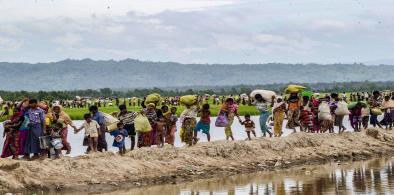
Tatmadaw, the Myanmarese junta, must be pressured to allow the Rohingya in Bangladesh to return to their homes with full dignity and civil rights, writes Kyaw Min for South Asia Monitor
The mystical traditions of South Asia transcend apparently rigid religious boundaries, write Priyanka Singh and Beena Sarwar for South Asia Monitor