Sea cucumber farming is slowly becoming popular in the northern part of Sri Lanka where over 600 fishermen are currently involved in the lucrative trade


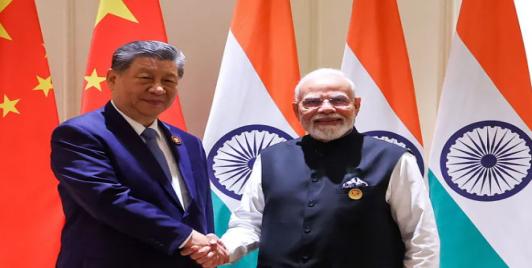
Why not begin by reopening serious discussions with Chinese conglomerate BYD about an Indian factory? BYD is now one of the world’s dominant EV manufacturers. Its Indian ambitions were caught in the post-Galwan investment freeze. Invite it back to the table—but on Indian terms
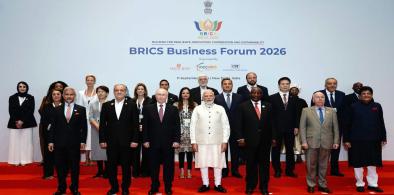
But the choice test applies to India as much as to the countries it hopes will follow its lead. If BRICS genuinely widens India's menu of markets, technology partners and financing sources without deepening its dependence on any one of them, it becomes a credible model for the rest of the Global South.
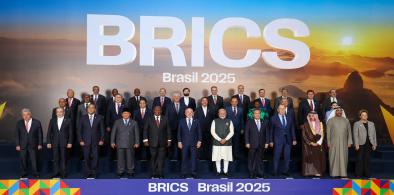
India’s stand for a dollar-based system is not a rejection of BRICS alignment or unity, but it is a determined choice to act in favour of self-interest like any other founding member. The key difference is India’s position has been the most transparent of all founding members rather than standing behind the collective rhetoric.

The evidence indicates that the increase in state borrowing over the past decade is best understood as the outcome of a changing fiscal federal system rather than simply an expansion of welfare politics.
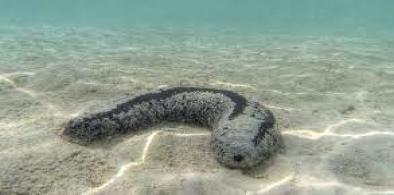
Sea cucumber farming is slowly becoming popular in the northern part of Sri Lanka where over 600 fishermen are currently involved in the lucrative trade

Security analysts are baffled how an agreement between ISRO and Oppo India has been signed as it greatly increases the security risk for India
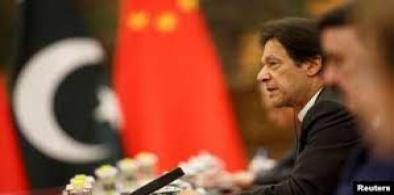
Pakistan Prime Minister Imran Khan on Monday launched the Pakistan-China Business Investment Forum to fast-track project approvals and investment proposals from Chinese investors

Sri Lanka has been looking to Chinese tourists, considered the world’s largest spending tourists, to revive its struggling tourism industry as Sri Lankan officials and airlines hold discussions with leading Chinese group tour operators

A week after a group of Indian parliamentarians, including a minister in the government of Prime Minister Narendra Modi, attended a dinner reception hosted by the Tibetan parliament-in-exile, the Chinese Embassy in New Delhi expressed “concern” over their participation and asked them in separate letters to “refrain from providing support to the ‘Tibetan independence’ forces”
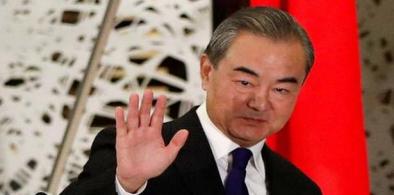
Chinese Foreign Minister Wang Yi will visit Sri Lanka and the Maldives early January, Chinese Foreign Ministry spokesperson Zhao Lijian confirmed, as Beijing seeks to enhance its influence in the region, considered as India's backyard

The Chinese ambassador to Sri Lanka visit to the Northern region of Sri Lanka, during which he travelled to Jaffna and Mannar and the northernmost point of the island at Point Pedro, has raised curiosity, and concern

China never accepts deadlines on resolving disputes; in the decades to come it's going to be a hostile coexistence for India and China, write Pradeep S. Mehta and Sandra George for South Asia Monitor
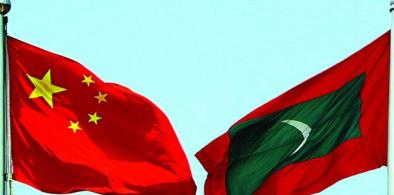
Maldives Vice President Ahmed Naseem met the newly appointed Chinese Ambassador to Male, Wang Lixin, and reaffirmed the archipelago’s firm support for the “One-China” policy
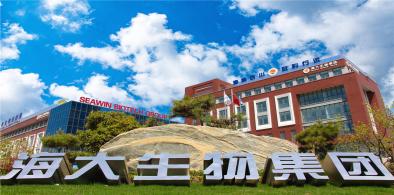
Sri Lanka has now agreed to take delivery of organic fertilizer from China’s Qingdao Seawin Biotech Group Co Ltd, almost two months after Colombo had rejected its shipment, citing poor standards, forcing the firm to initiate arbitration proceedings

The situation at the China-India border is “generally stable” and both sides are maintaining dialogue and communication through diplomatic and military channels to ease the border situation following the standoff at eastern Ladakh, the Chinese Foreign Ministry said on Tuesday
The Asian Development Bank (ADB) has blacklisted three Chinese state-owned firms from participating in its key infrastructure projects, including the Kathmandu airport development project, in Nepal
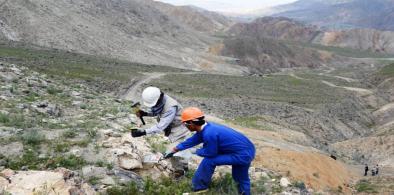
China has warned its companies and nationals on Friday against "blindly" visiting Afghanistan to inspect mineral resources after multiple reports emerged of foreigners being arrested without exploration permits in several provinces
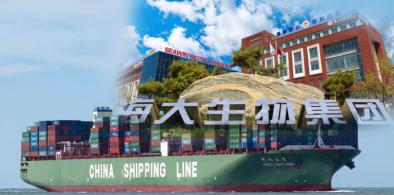
Sri Lanka has decided to pay $6.7 million in compensation to the Chinese fertilizer firm after the latter initiated an arbitration proceeding against Colombo which had earlier rejected its fertilizer consignment of 20,000 metric tonnes, citing quality issues
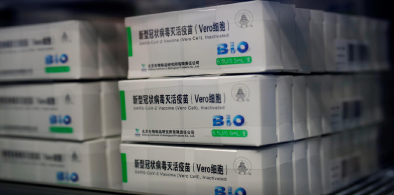
A batch of COVID-19 vaccines donated by the Chinese government arrived in Kabul, the capital of Afghanistan