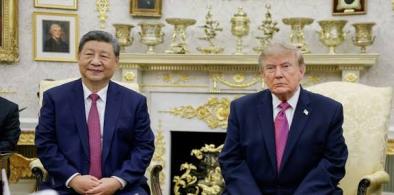
India's Prime Minister Narendra Modi meets Bangladesh's interim government head Muhammad Yunus

Bangladesh–India Relations at a Crossroads: Needed Recalibration, Not Rupture

The current strains in Bangladesh–India relations should therefore be seen not as an inevitable deterioration, but as a test of diplomatic maturity. Bangladesh and India share more than geography and history; they share a responsibility to ensure that temporary political frictions do not harden into structural mistrust. In a time of regional uncertainty, neither country benefits from a relationship defined by grievance or miscommunication. 

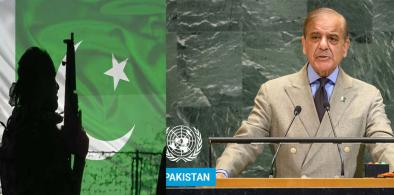
A Dangerous Power Grab in Pakistan; Unpredictable Consequences For Region

The 27th Amendment, celebrated by its proponents as a security reform, is in reality a political coup executed through constitutional means. It marks not only Munir’s personal triumph but the institutional victory of the military over all other state authorities. As history warns, empowering any unelected institution above the republic’s elected will invites instability—not strength. Pakistan may soon discover that consolidating military power does not secure the nation’s future, but instead places it at greater risk

How Foreign Digital Influencers Are Tarnishing India’s Global Image

India must now transition from conventional soft-power thinking to visibility governance—the systematic management of how the country appears, circulates, and is emotionally interpreted across global platforms. Failure to do so will leave India’s global image increasingly shaped by commercial incentives outside Indian control.  

Afghanistan Should Not Get Caught In The India-Pakistan Strategic Rivalry

The strengthening of Taliban-India ties runs counter to Pakistan’s interests. The more border clashes intensify between the Taliban and Pakistan, the more secure the Kashmir region and the Line of Control (LoC) become for India. Under such conditions, Pakistan will remain preoccupied with its northwestern border, giving India a unique opportunity to consolidate its control over Kashmir and potentially weaken, drive out, or eliminate Kashmiri militant groups 

More on Spotlight

South Asian nations should enhance public spending on health, scientific research

There is a need to invest in scientific research in the South Asian region so that disease control measures could be taken in the right earnest, writes Shubham Singh for South Asia Monitor

COVID-19 and the growing vulnerability of overseas Bangladeshis

Due to COVID-19, Bangladeshi  workers abroad are caught jobless, quarantined in shabby living places, mentally disturbed because of their family crisis of getting no money, fear of being affected by the coronavirus aftermath and uncertainties of being back in Bangladesh, write Dr. Mohammad Rezaul Karim and Dr. Mohammad Tarikul Islam for South Asia Monitor

Sri Lanka’s Constitutional Council, once hailed, leading to power tussles

Some of the decisions by the CC have resulted in a major tussle between the Council and the Executive in Sri Lanka, writes Sugeeswara Senadhira for South Asia Monitor

Future of work: Need to address widening mismatch between skill, academic training and employment

Devising a strategy to help close the digital skills gap should be a key focus for all businesses during the next decade and beyond, writes Partha Pratim Mitra for South Asia Monitor

A conflict-ridden AfPak region where fighting COVID-19 is not a priority

A common thread that runs through them is of COVID-19 taking the back seat in the plans and actions of various stakeholders in the  AfPak region working at cross-purposes, writes Mahendra Ved for South Asia Monitor

On Ramzan eve, India seeks to allay Gulf concerns over Islamophobia

There is growing realization within the government and diplomatic community that India stands to lose a great deal in allowing Islamophobia to spread within India and among Indians abroad and some nimble diplomacy is required to change perceptions, writes Nilova Roy Chaudhury for South Asia Monitor

Can India's pharma soft power work in South Asia?

Indian pharma’s soft power has, no doubt, opened up possibilities for foreign policy in the neighbourhood, writes N Chandra Mohan for South Asia Monitor

India, France, China should WAVE to fight future viruses

The terrific trio of Modi, Macron and XI should meet over videoconference and announce WAVE. They have the capability and potential to make history, writes Rajendra Shende for South Asia Monitor

South Asia needs to pay more attention to public health; SAARC needs to pool health resources

What really jumps up from the plethora of information floating around is the lack of preparedness and lack of governmental attention to health care, especially in the overcrowded South Asian region, writes Sreeradha Datta for South Asia Monitor

Muslims in India: A minister indulges in smoke and mirrors

Irrespective of whether they succeed in convincing the foreigners, the reactions in India to the minister’s assertion will range from amusement to derision, writes Amulya Ganguli for South Asia Monitor

Policy priorities: rice for ethanol or hungry stomachs?

This abundant food-in-the-granary exigency will unfold even as a large number of Indians are grappling with hunger pangs and are  stuck in varying degrees of deprivation, writes C Uday Bhaskar for South Asia Monitor

A questionable agreement: Has Khalilzad betrayed Afghan people by caving into Taliban pressure?

The wider consequences of the agreement between the US and Taliban remain ambiguous, writes Iqbal Dawari for South Asia Monitor

A meaningful gesture to restore trust in frayed India-Bangladesh ties

The Indian government’s decision to pass and enact, in December 2019, the Citizenship Amendment Act, naming Bangladesh as a country where minorities are persecuted, had an extremely negative fallout in that country, writes  Nilova Roy Chaudhury for South Asia Monitor

The COVID-19 fight is the test of Modi’s leadership

India is poised for an all-out war and, like in any war, this is not the time for partisanship. It’s in this scenario that Modi will find himself at a fork in the road, writes E.D. Mathew for South Asia Monitor

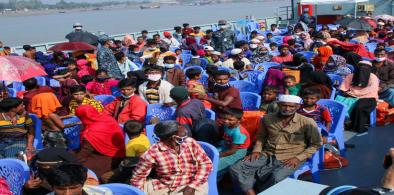
Myanmar needs to recognise and accept 'Rohingya identity'; integration with Bangladesh is wishful thinking

Indeed, if anyone is serious about the plight of the Rohingyas and is looking for sustainable solutions to the crisis, then the person ought to put her gaze not on Bangladesh but on Myanmar, writes Imtiaz Ahmed for South Asia Monitor