War Against Iran Enters Second Month

War Against Iran Enters Second Month: Whither Global Leadership?

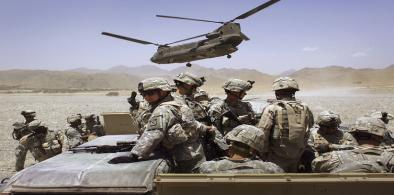
Expanding the arc of aerial/missile destruction  to the Bab el-Mandeb would irreparably threaten the last viable option for  Gulf oil exports and a regional war will soon cascade into an ‘epic’  global crisis. Ironically, the tally of death and destruction is barely mentioned and the war sanitized to a daily video ritual. Scroll and move on. Sagacious global leadership  is absent  when it is most needed  and a discerning global civil society has been  paralyzed by the unending Trump  theatrics. 

A New Dawn in Kathmandu: India Must be the First Responder to Nepali Needs

Given that Nepali citizens enjoy national treatment in India, greater enrolment in higher education institutions across Uttarakhand, Uttar Pradesh, Bihar, and West Bengal should be encouraged. India must remain the first responder to Nepal’s needs at all times. Sustained cooperation and mutual trust can help realise the vision of “Viksit Nepal” alongside “Viksit Bharat.” Regional frameworks such as SAARC, BBIN, and BIMSTEC should be leveraged to strengthen Nepal’s alignment with India across international platforms.

Balendra Shah’s Rise as Nepal PM: A Test of Political Maturity with Regional Ramifications

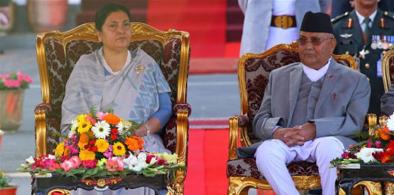
Balendra Shah’s rise as Prime Minister of Nepal represents a defining moment in the country’s contemporary political evolution. It signals a break from traditional party dominance and the emergence of a new political language shaped by youth aspirations and digital mobilization. At the same time, it introduces new uncertainties into Nepal’s regional relationships, particularly with India and China, both of whom will closely monitor Kathmandu’s evolving foreign policy orientation.

Power, Influence and Covert Intervention in South Asia: Was Bangladesh Target of a Transnational Conspiracy?

Since August 2024, Pakistan’s military establishment, its intelligence apparatus, and associated actors—including Turkey’s MIT—have allegedly been involved in sending weapons and explosives into Bangladesh. These materials are believed to have ended up in the possession of pro-Yunus loyalist mercenaries as well as various extremist groups, including Ansar Al Islam, a local affiliate of Al Qaeda.

More on Spotlight

It is time for India to change the narrative with China

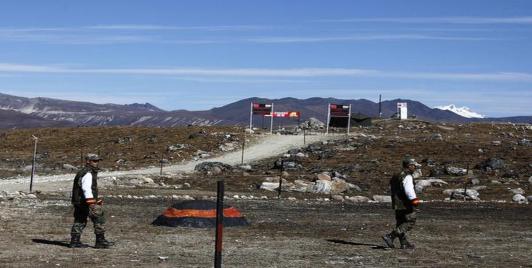
It is high time the Chinese political and military leadership are made to realise that chronic hegemonism and doggedness in constantly trying to crawl and clutch Indian territories are not going to work anymore and that the LAC must be clarified, writes Anil Bhat for South Asia Monitor

Should India continue to engage with the RIC?

For India, however, questions arise whether the RIC fits New Delhi’s objectives as it increases its strategic engagement with the United States, Japan, and Australia which goes against the RIC’s objective to undermine a growing American presence in the Indo-Pacific, writes Shantanu Roy-Chaudhury for South Asia Monitor

Time to reset the Indo-Sri Lankan relationship

Given Sri Lanka’s strategic location in the Indian Ocean, India seeks to exert all its influence to rebalance the island nation away from the dragon’s embrace, writes N Chandra Mohan for South Asia Monitor

Democratisation of road spaces: Cycling, pedestrian tracks must be integral to smart-city infrastructure

Changing our transport behaviour is therefore the need of the hour. It becomes imperative that cycling and pedestrian walking is fully integrated with our existing public transport systems, writes Pankaj M Munjal for South Asia Monitor

Ram Temple was necessary to re-establish traditional Hindu values

The struggle for building a Ram Temple should be seen as a clash between civilizational values, writes Arun Anand for South Asia Monitor 

India in the South China Sea: Need for counterweight to China in the region

India’s current policy reorientation suggests that for it to overcome its continental and regional challenges vis-à-vis China’s increasing assertion, it must also involve itself in Beijing’s geographic neighborhood, writes Don McLain Gill for South Asia Monitor

Will India become a Hindu rashtra?

Is the Hindu rashtra already here, marking the end of Nehruvian secularism? Just as Turkey’s Recep Tayyip Erdogan is said to be keen on reviving the Islamic Ottoman empire, forsaking Kemal Ataturk’s secularism, is Modi leading India towards the pre-Muslim period of ancient India?, writes Amulya Ganguli for South Asia Monitor 

In the time of COVID-19 pandemic, let’s not forget other epidemics in Nepal

It is clear that Nepal is exposed to multiple forms of infectious diseases. So, it becomes imperative for the Nepal government to be better equipped and expedite viral monitoring to stop possible outbreaks in the future, writes Jivesh Jha  for South Asia Monitor

Kashmir a year after: Sullenness inside, support outside

There is little doubt, however, that the removal of the “temporary” provision of a special status for Jammu & Kashmir does have a strong measure of support outside the ruling party because it was perceived as an artificial barrier that fostered separatism, writes Amulya Ganguli for South Asia Monitor

China will not define LAC; unlikely to revert to April 2020 status

India has hopes on continuing talks but for Beijing, talks are only to gain time - similar to what the terrorists do, writes Lt Gen P. C. Katoch (retd) for South Asia Monitor

The curious affairs of Cynthia Ritchie and her Pakistani dalliances

There are numerous conjectures against or in support of Ritchie who is fighting her own court battles against the PPP brass. But it is not difficult to conclude that she is being used to tarnish the PPP leaders, dead and living, writes Mahendra Ved for South Asia Monitor

Nepal and India need to know and understand each other better; blame game won't help

There is a crying need for establishing a Nepal Study Center in New Delhi and an India Study Center in Kathmandu, writes Kamal Dev Bhattarai for South Asia Monitor

Health diplomacy: COVID-19 opens up opportunities for India’s pharma

As the world battled a never health threat in coronavirus, India’s dependable pharmaceutical sector has risen to the occasion, writes Dr. Gurpreet Sandhu for South Asia Monitor 

National security: Strategic deterrence in the Indian context (Part II of two-part series)

Our goal is to achieve punitive and credible deterrence capability against Pakistan and China respectively. While it will be a challenge, India has the capabilities and capacities to fight a two-front war and ensuring a stalemate, which will be a strategic victory, with grave consequences to the aggressors, writes Lt Gen P R Kumar (retd)  for South Asia Monitor 

Zoonotic diseases: Continued wildlife exploitation will lead to next pandemic

Continued exploitation of the natural world through hunting, trade, habitat degradation, and urbanisation has shifted mammal populations and led to the rise in infectious animal diseases that can jump over to humans, writes Sarmin Akter for South Asia Monitor