The Rajapaksas have entertained several projects with Chinese support and money, which is bound to cost Sri Lanka its sovereignty dearly in the coming years, if corrective steps are not taken, writes N.S.Venkataraman for South Asia Monitor


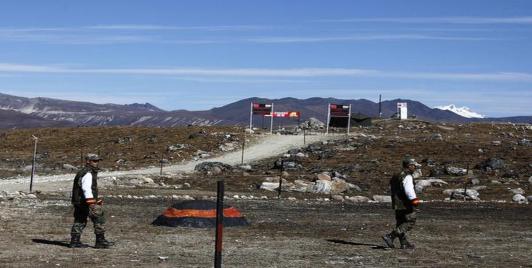
The Indian military views no disengagement in Arunachal Pradesh as part of a wider strategic recalibration, prompting India to match Chinese force rebalancing by shifting strike corps and resources equally across both northern and eastern fronts.
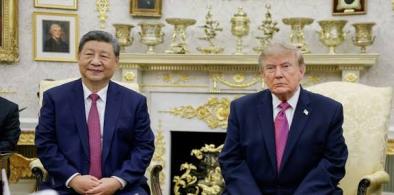
BRICS is acquiring greater visibility, while countries of the Global South continue to seek a greater voice in the international system. The desire for a more multipolar world is becoming increasingly evident. Over the next decade, this could produce a geopolitical configuration rather different from the one we have known since the end of the Cold War.
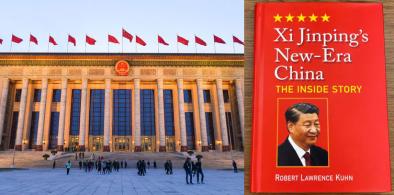
Kuhn says if the first half of this century is being defined by USA-China relations, the second half may well be defined by India-China relations and, in the New World Order, "India-China relations will likely become the most pivotal.....for the entire world".
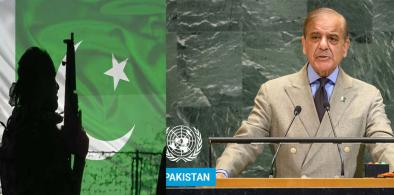
The strategic equation has irrevocably shifted. Pakistan’s long-standing attempt to separate itself from its proxies has failed, replaced by the reality of a state struggling with the infrastructure it created. As these groups operate with increasing autonomy, the world community is left with a clear conclusion

The Rajapaksas have entertained several projects with Chinese support and money, which is bound to cost Sri Lanka its sovereignty dearly in the coming years, if corrective steps are not taken, writes N.S.Venkataraman for South Asia Monitor
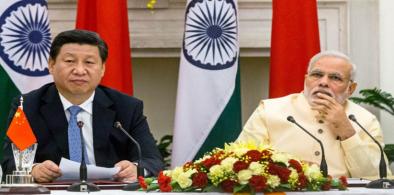
It is high time the Chinese political and military leadership are made to realise that chronic hegemonism and doggedness in constantly trying to crawl and clutch Indian territories are not going to work anymore and that the LAC must be clarified, writes Anil Bhat for South Asia Monitor
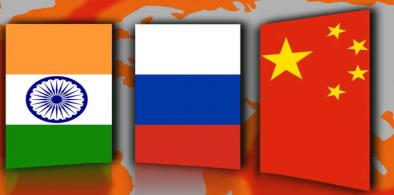
For India, however, questions arise whether the RIC fits New Delhi’s objectives as it increases its strategic engagement with the United States, Japan, and Australia which goes against the RIC’s objective to undermine a growing American presence in the Indo-Pacific, writes Shantanu Roy-Chaudhury for South Asia Monitor
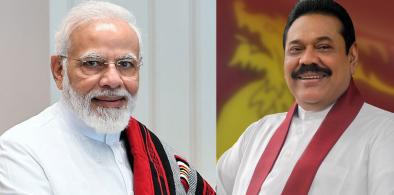
Given Sri Lanka’s strategic location in the Indian Ocean, India seeks to exert all its influence to rebalance the island nation away from the dragon’s embrace, writes N Chandra Mohan for South Asia Monitor

Changing our transport behaviour is therefore the need of the hour. It becomes imperative that cycling and pedestrian walking is fully integrated with our existing public transport systems, writes Pankaj M Munjal for South Asia Monitor

The struggle for building a Ram Temple should be seen as a clash between civilizational values, writes Arun Anand for South Asia Monitor
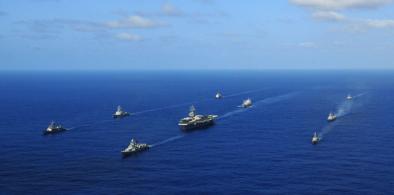
India’s current policy reorientation suggests that for it to overcome its continental and regional challenges vis-à-vis China’s increasing assertion, it must also involve itself in Beijing’s geographic neighborhood, writes Don McLain Gill for South Asia Monitor
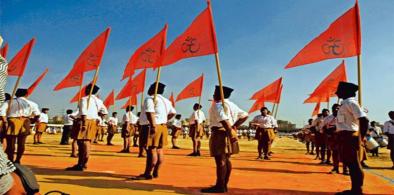
Is the Hindu rashtra already here, marking the end of Nehruvian secularism? Just as Turkey’s Recep Tayyip Erdogan is said to be keen on reviving the Islamic Ottoman empire, forsaking Kemal Ataturk’s secularism, is Modi leading India towards the pre-Muslim period of ancient India?, writes Amulya Ganguli for South Asia Monitor

It is clear that Nepal is exposed to multiple forms of infectious diseases. So, it becomes imperative for the Nepal government to be better equipped and expedite viral monitoring to stop possible outbreaks in the future, writes Jivesh Jha for South Asia Monitor

There is little doubt, however, that the removal of the “temporary” provision of a special status for Jammu & Kashmir does have a strong measure of support outside the ruling party because it was perceived as an artificial barrier that fostered separatism, writes Amulya Ganguli for South Asia Monitor
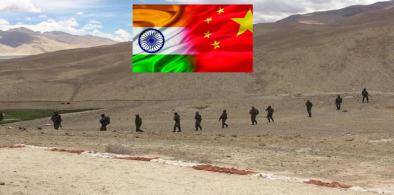
India has hopes on continuing talks but for Beijing, talks are only to gain time - similar to what the terrorists do, writes Lt Gen P. C. Katoch (retd) for South Asia Monitor

There are numerous conjectures against or in support of Ritchie who is fighting her own court battles against the PPP brass. But it is not difficult to conclude that she is being used to tarnish the PPP leaders, dead and living, writes Mahendra Ved for South Asia Monitor
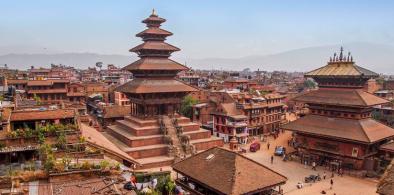
There is a crying need for establishing a Nepal Study Center in New Delhi and an India Study Center in Kathmandu, writes Kamal Dev Bhattarai for South Asia Monitor

As the world battled a never health threat in coronavirus, India’s dependable pharmaceutical sector has risen to the occasion, writes Dr. Gurpreet Sandhu for South Asia Monitor
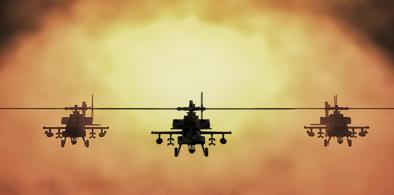
Our goal is to achieve punitive and credible deterrence capability against Pakistan and China respectively. While it will be a challenge, India has the capabilities and capacities to fight a two-front war and ensuring a stalemate, which will be a strategic victory, with grave consequences to the aggressors, writes Lt Gen P R Kumar (retd) for South Asia Monitor