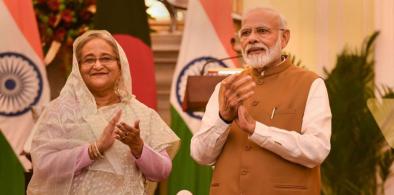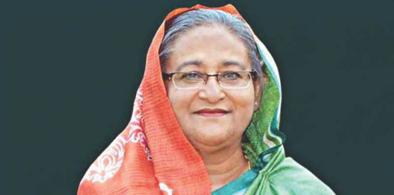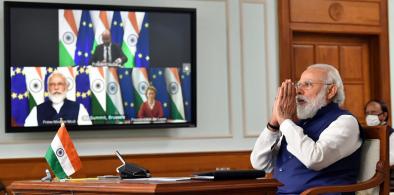

India's Prime Minister Narendra Modi meets Bangladesh's interim government head Muhammad Yunus

Bangladesh–India Relations at a Crossroads: Needed Recalibration, Not Rupture

The current strains in Bangladesh–India relations should therefore be seen not as an inevitable deterioration, but as a test of diplomatic maturity. Bangladesh and India share more than geography and history; they share a responsibility to ensure that temporary political frictions do not harden into structural mistrust. In a time of regional uncertainty, neither country benefits from a relationship defined by grievance or miscommunication. 

A Dangerous Power Grab in Pakistan; Unpredictable Consequences For Region

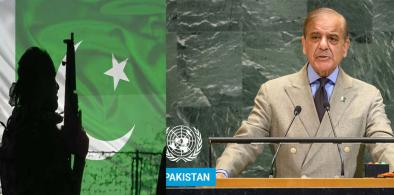
The 27th Amendment, celebrated by its proponents as a security reform, is in reality a political coup executed through constitutional means. It marks not only Munir’s personal triumph but the institutional victory of the military over all other state authorities. As history warns, empowering any unelected institution above the republic’s elected will invites instability—not strength. Pakistan may soon discover that consolidating military power does not secure the nation’s future, but instead places it at greater risk

How Foreign Digital Influencers Are Tarnishing India’s Global Image

India must now transition from conventional soft-power thinking to visibility governance—the systematic management of how the country appears, circulates, and is emotionally interpreted across global platforms. Failure to do so will leave India’s global image increasingly shaped by commercial incentives outside Indian control.  

Afghanistan Should Not Get Caught In The India-Pakistan Strategic Rivalry

The strengthening of Taliban-India ties runs counter to Pakistan’s interests. The more border clashes intensify between the Taliban and Pakistan, the more secure the Kashmir region and the Line of Control (LoC) become for India. Under such conditions, Pakistan will remain preoccupied with its northwestern border, giving India a unique opportunity to consolidate its control over Kashmir and potentially weaken, drive out, or eliminate Kashmiri militant groups 

More on Spotlight

In Kashmiri psyche, Hindu majoritarianism will replace a multicultural democratic India as national symbol

If, in the name of security, the BJP can, with one stroke, undo the federal asymmetry which was a product of the unique circumstances pertaining to the accession of J&K state to India, with a complex set of legal and constitutional mechanisms, the same can be done to the Northeast special powers, but with greater ease, writes Reeta Tremblay for South Asia Monitor

The course of three South Asian democracies - Nepal, Bhutan and Maldives

After a decade, these three countries - Nepal, a Hindu majority country, Bhutan, a Buddhist country and Maldives, an Islamic country - make a compelling study in the journey of democracy, writes Rishija Singh for South Asia Monitor

India's nuclear policy has destablised South Asia: A Pakistani view

Despite dramatization of Pakistan’s nuclear capabilities, it is quite clear that South Asia has remained safe from any major conflict due to Pakistan’s nuclear weapons, writes Rabia Javed for South Asia Monitor

The dichotomy in Bangladesh: Democracy or development

By narrowing the space for dissent and dichotomizing values, the ruling Awami League has effectively defanged the opposition, media as well as ordinary people writes Rishija Singh for South Asia Monitor

India's hyper-nationalist narratives helped Pakistan Army stay relevant

The warmongering narrative, primarily driven by the ruling party and the media at large, may fetch some electoral gains to the BJP  but it has proved to be welcome fodder for the Army in Pakistan as it tries to reinvent itself to remain relevant, writes Mayank Mishra for South Asia Monitor

India and Pakistan: Will there be a spring in ties?

As those who follow the India-Pakistan dynamic would know, there are two aspects to this relationship, often diametrically at odds with each other. A neutral observer would not know where the truth lies - perhaps, in between

India-ASEAN partnership: New Delhi must provide a balance to Beijing

Some foreign policy analysts from Southeast Asia have questioned the lack of performance by India, hinting at a subtle resistance to the concept of “Indo-Pacific” as a replacement to the old “Asia-Pacific,” writes Tunchinmang Langel for South Asia Monitor

Afghan refugees in India: The nowhere people

Given their situation, the only reason most Afghan refugees are staying on in India is to get a chance to go to any European country, writes Khatima Emami for South Asia Monitor

History tells us Pakistan Army will play spoiler

In a tumultuous fortnight, during which many an illusion was shattered at the turn of the year, some home truths emerged in the chronically accident-prone ties between India and Pakistan