
Representational Photo

Jaish-e-Mohammed's Female Brigade: ISI-Backed New Jihadi Units Intensify Counterterrorism Challenges in South Asia

Unlike earlier jihadist cells dominated by Pakistani nationals, this unit deliberately recruits women from Indonesia, the Philippines, Uzbekistan, and other foreign countries. Reason behind recruiting non-Pakistani nationals serves a dual purpose: it complicates attribution and shields Pakistan’s security apparatus from direct accountability. Such operational sophistication reflects ISI’s continued role not merely as a passive enabler but as an active architect of jihadist adaptation.

Securing The Digital Frontier: A Unified Call For Cybersecurity In South Asia

South Asia has the potential to be a global digital leader. It has a young population and a booming tech industry. However, this potential will only be realized if the region is secure. We must treat cybersecurity as a pillar of national security, just like border defense. This requires better technology, smarter laws, and stronger regional ties. The digital threats of 2026 are fast and complex. To meet them, South Asia must be faster and more united. The time to build a collective digital shield is now, before the next major crisis occurs.

Aid, Ports, And The Limits of Incrementalism: What India’s Budget Says About Its Foreign Policy

Yet the strategic costs are real. Reduced engagement in Bangladesh risks ceding influence at a moment when Dhaka is actively diversifying its partnerships. Hesitation over Chabahar weakens India’s leverage in Iran and Central Asia and underscores its vulnerability to US pressure even as it seeks a more multipolar foreign policy. The 2026–27 Budget does not signal a dramatic shift in Indian foreign policy. There is no abandonment of neighbours-first rhetoric or of connectivity-led diplomacy. What it reveals instead is a narrowing circle of feasible economic action.
 

Mob Rule As Political Strategy: Reshaping Bangladesh's Secular Memory And Pluralistic Bengali Culture

The ideals of 1971 represent inclusivity, human dignity, and resistance to oppression. Baul and Sufi traditions reject radical views and promote humanism and coexistence. Islam in Bengal arrived largely through Sufis—from Persia, Arabia, and Central Asia—who emphasized spirituality, tolerance, and accommodation. These traditions resonated with local Hindu practices and gave rise to syncretic forms such as Baul philosophy. Rabindranath Tagore and Nazrul Islam embodied this civilizational synthesis.     
 

More on Spotlight

The unending agony of Afghan women: Caught in the stranglehold of a deeply patriarchal society

Rural women have said that the physical and sexual security of women was strongly protected under the Taliban regime. The women in Afghanistan are caught in a conundrum. While they resent systemic social repression and denial of gender rights under the Taliban regime, the return of political instability in the country they fear can increase their physical and sexual insecurity.

Rampant smuggling across Afghan-Pak border jeopardising regional security

Smuggling activities along the Afghan border are often linked with militant groups and organized crime. The illegal trade of arms has contributed to the proliferation of the "Kalashnikov culture" across the length and breadth of Pakistan. 

Nightmare returns in Bangladesh: Extremists aim to destabilise country under guise of student protest

Given the nature of these 'student' demonstrations, it is apparent that Bangladesh faces serious danger from a network of underground political activists and extremists aiming to destabilise the country. These issues are putting Prime Minister Sheikh Hasina's leadership to the test

Securing the digital frontier: India needs to adopt a holistic strategy to strengthen cybersecurity

Google and Facebook, which collect vast amounts of user data, will be required to overhaul their data-handling practices to meet the stringent requirements of the bill. Critics argue that certain provisions grant excessive power to the government, potentially undermining the very privacy protections the bill seeks to establish.

The growing salience of India’s state governments in expansion of India-UAE ties

A growing area of cooperation between India and the UAE is agriculture. UAE has committed to setting up three food parks in India - in the states of Haryana, Gujarat and Madhya Pradesh - at an estimated cost of $2 billion to address the issue of food security as both countries had also agreed to set up a food corridor. 

Bangladesh's quota movement: From peaceful protests to attempt at 'Bengali Spring'?

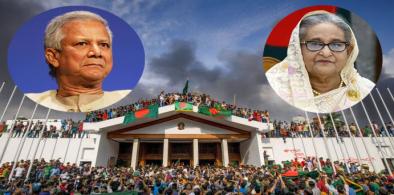
It is undeniable that although the movement was initially for quota reform, it later took the shape of a movement to overthrow the government. It was an attempt to taste power through undemocratic, back-alley, violent means. An attempt was made to create a "Bengali Spring: in Bangladesh in the style of the Arab Spring.

Exponential growth in India-Saudi Arabia relations: Moving past the Pakistan factor

The inclusion of the military dimension in India-Saudi Arabia relations is of great strategic significance which is expected to gain more momentum in the future.

Bangladesh's Solar Home Systems are an exemplar in energy access and climate resilience

Bangladesh's triumph in off-grid renewable energy, epitomized by the SHS program, serves as a global benchmark. The collaborative efforts of government, private sector, and public entities have ushered in a new era of sustainable energy. 

Pakistan's climate emergency cries for timely action and international support

Pakistan's climatic catastrophe requires a global response. Developed countries must fulfill their pledges to provide financial and technological assistance to developing countries like Pakistan so that they can effectively mitigate and adapt to climate change.

Gratuitous advice amid global disorder: US needs to smell the roses

Quite unequivocally, strategic autonomy would be a hallmark of India’s foreign and security policy allowing it to oscillate between strategic proximity and strategic distancing depending on the circumstances and need of the hour. New Delhi would certainly not be guided by the script the US, or its Western allies prescribe.

Can Afghanistan transcend its dubious legacy of terrorism?

Madrassas in Pakistan and Afghanistan, often funded by Gulf states, have spread extremist ideologies. Saudi-financed madrasas in Pakistan taught Wahhabism, fostering a transnational network of militants using Afghanistan as a base. The U.S. and Saudi Arabia provided substantial aid and funding to these madrassas and the Mujahideen, promoting jihad against the Soviets. 

Pakistan’s economic recovery contingent on political stability

Pakistan's continuous political turbulence, characterised by infighting and power rivalries, poses a serious threat to the country's economic development.

Bangladesh's recent violence was an expression of simmering political and social discontent

The violent conflicts have caused infrastructure damage, supply chain disruptions, and industry closures that have cost Bangladesh billions of dollars in lost revenue and negatively impacted essential industries like clothing, steel, ceramics, and pharmaceuticals. Its ramifications went beyond short-term financial losses. 

Baloch national gathering: Call for a new era of struggle against Pakistani State brutalities

The whole Baloch nation has faced the worst form of oppression by the Pakistani State: they have been abducted, received mutilated bodies of their loved ones, confronted illegal raids, illegal detention, and bogus cases. They have not been allowed peaceful protests; they have been totally censored by mainstream media. 

Strategic dialogue, Track 1.5 diplomacy necessary to maintain regional stability in South Asia

It is crucial for India and Pakistan to establish new confidence-building measures (CBMs) to mitigate the potential destabilizing effects of advanced technologies. Key elements of effective CBMs include robust communication channels, bilateral discussions on emerging technologies and their implications for regional peace, and strict adherence to missile test notification protocols.