Gulf War Strains Bangladesh's Economic Fragility

Gulf War Strains Bangladesh's Economic Fragility, Test for New Government

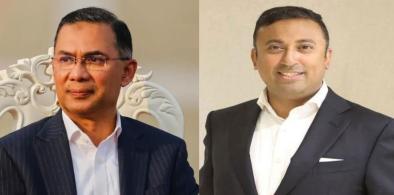
The current war has exposed Bangladesh’s structural vulnerabilities: dependence on imported energy, fragile reserves, and narrow fiscal space. For the new government, the stakes are clear—stabilize fuel and food supplies now while building resilience through diversified energy, broader exports, and stronger social protection. Wars in the Gulf may be fought thousands of miles away, but their economic shockwaves reach Bangladesh within days. In the end, the crisis will be felt in three simple pressures shaping everyday life: oil prices, food costs, and migrant jobs.

Re-imagining Pakistan’s Human Capital Crisis: It Must Dismantle Policy Structures That Serve Elite Interests

This crisis did not emerge overnight. It is a product of neglecting the foundational capacity to invest in human capital, where Pakistan hardly puts less than 2% of its national GDP on human capital factors. Meanwhile, the regional peers like Bangladesh and India invest more in education and health, and Pakistan is still trapped in a cycle of short-term fiscal thinking, political instability, and elite capture that is systematically hollowing out the nation’s potential to rise and grow.

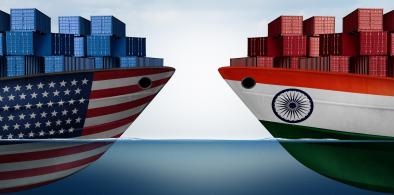
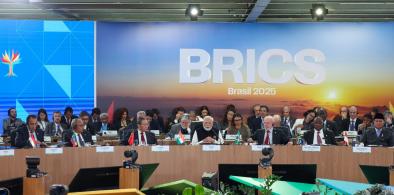
The Delhi Tightrope: Can India Lead BRICS without Triggering a Trumpian Trade War?

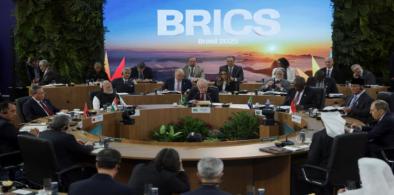
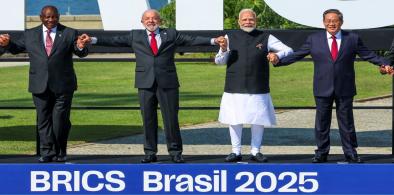
In 2026, the “strategic autonomy” that we so often discuss must evolve from a defensive crouch to a balanced offensive infrastructure play. India’s success will be measured by its ability to convince the Trump administration that a stable, digitally-sovereign BRICS is actually a better trade partner than a chaotic, bankrupt one.

Bangladesh’s International Crimes Tribunal Under Fire: Serving Justice or Political Retribution?

Yunus created a suffocating atmosphere in Bangladesh by pushing the country towards the fate of a Caliphate, threatening the nation’s Bengali soul. Simultaneously, he weaponized the ICT and turned it into an instrument of targeting Sheikh Hasina by appointing Jamaat-e-Islami leaders into key positions in it. As a result, Hasina was handed death penalty in two cases, while she faces hundreds of murder charges—most of which were lodged by the activists of Bangladesh Nationalist Party (BNP) and Jamaat. 

More on Spotlight

Twenty years of EU-India 'strategic partnership': Substance needs to match rhetoric

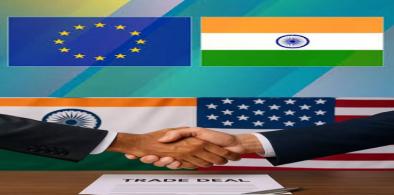
The Brussels-based think tank Egmont Institute, in a policy brief in April, said individual EU member States attach a lot of importance to their bilateral relationship with New Delhi and are interacting with the Indian government at the highest level. “However, visits of the leaders of the EU institutions to India are rare. One fails to see a real political interest in India from the Commission President and from the President of the European Council.”

Revival of nuclear posturing: Isnt it time for India to review its no-first-use policy?

China, Pakistan and Russia have clearly and unequivocally declared that they will exercise ‘FIRST USE OF NUKES’ option under certain circumstances. For China and Pakistan, India is the target. Yet our Chief of Defence Staff and premier think tank viz Centre for Air Power Studies, IDSA, USI and many others continue to ‘sing’ the outdated NFU policy.

The never-ending killings on the India-Bangladesh border

The recurrent border killings have been a source of tension between India and Bangladesh. The government of Bangladesh has consistently urged India to implement non-lethal measures and exercise restraint in border management. In response, India has underscored the challenge of securing a frontier that is both expansive and permeable while also committing to reducing the use of lethal force. 

Combating Islamophobia: What India can learn from the UK

Is it not time for India to set up a committee like the one in the UK to ensure the implementation of norms which combat misconceptions about other religions? In India many misconceptions are prevailing and no impactful effort has been undertaken to counter these. These misconceptions have spread very dangerously in society.

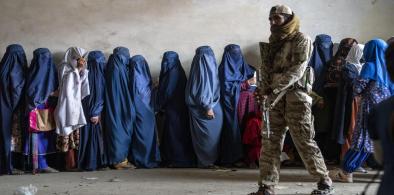
Afghanistan is a ticking time bomb that could explode any time

Afghanistan has turned into fertile ground for terrorist groups from around the world. If the flow of terrorism continues unchecked in Afghanistan, there is little doubt that the world could face another incident similar to 9/11, or perhaps something even worse. Today, Afghanistan has become a security black hole for the regional countries and the world overall.

Signs of a virulent civil war emerging in Manipur

The irony is that Manipur is where the Chinese and American interests coincide against India. But the need is to look at ourselves in the mirror. If we provide a readymade asymmetric battlefield to overt or covert inimical forces, why would they not exploit it? 

India’s national security challenges amid global disorder

The combative rise of China has challenged US hegemony in global relations. In such a world, the crafting of a foreign policy that ensures national security requires vigilance, patience, caution, economic and military clout, and more importantly, constant risk management that enables India to maintain its strategic autonomy.

Balochistan's enforced disappearances: When will Pakistan own up to its flawed policies?

Many fear that the Balochistan situation could lead to a 1971-like crisis that split the country due to centralised power, military operations against civilians, and foreign overreach. Why, then, have these lessons not been learned?

Why peace continues to elude Manipur

The ethnic cleansing under Biren Singh’s watch broke all records – Kuki-Zo women paraded naked and subjected to mass rape publicly, with some token FIRs. This is also viewed as the reason why Prime Minister Narendra Modi has avoided visiting violence-stricken Manipur in the past 16 months.

India's patriarchal nightmare: The Kolkata horror, and illusion of justice

The Kolkata case is a stark reminder of the persistent failures of India's criminal justice system in addressing sexual violence against women. To truly address the issue of rape in India, there must be a holistic approach that includes legal reforms

Can a collaborative strategy work for South Asia's gold medal quest at the 2028 Olympics?

South Asia’s quest for gold medals at the 2028 Olympics requires a strategic and collaborative effort. By learning from the successes of sports legends like Michael Phelps and Caeleb Dressel, and addressing key areas such as infrastructure, coaching, and talent development, South Asia can enhance its Olympic performance.

Bangladesh in the aftermath of a revolution: Need for political clarity to meet high expectations

The lesson from the Bangladesh protests reaffirm the fact that governments and their agencies should handle grievances of citizens promptly, with sincerity and fairness, or retributive justice will follow that is unhealthy for democracy. Currently, it is imperative for internal peace along with cultural safety to be restored in Bangladesh, or the nation will drift miles away from democracy.

Emerging practices in channelising green finance : Global learnings for South Asia

There is  a strong case to develop MVI for all countries of South Asia based on climate  and other vulnerability indicators so that  these countries could  access  and channelise green finance  to fulfil their SDG goals.

Democracy in transition: Bangladesh's political chessboard open to potential permutations and combinations

BNP’s push for early elections, Jamaat-e-Islami’s need for time to rebuild, the ambitions of smaller parties, and the rise of new political forces from the anti-discrimination movement all contribute to a highly volatile and unpredictable political environment. 

The arrest of former ISI chief echoes Pakistan’s continuing politico-military tussle

The reign of the "hybrid government" in Pakistan has ended with Gen Munir's military wresting its socio-economic and political control.  The arrest of the former ISI spymaster has been made into an example for those who dared act against the military.