Gulf War Strains Bangladesh's Economic Fragility

Gulf War Strains Bangladesh's Economic Fragility, Test for New Government

The current war has exposed Bangladesh’s structural vulnerabilities: dependence on imported energy, fragile reserves, and narrow fiscal space. For the new government, the stakes are clear—stabilize fuel and food supplies now while building resilience through diversified energy, broader exports, and stronger social protection. Wars in the Gulf may be fought thousands of miles away, but their economic shockwaves reach Bangladesh within days. In the end, the crisis will be felt in three simple pressures shaping everyday life: oil prices, food costs, and migrant jobs.

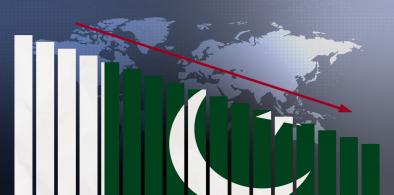
Re-imagining Pakistan’s Human Capital Crisis: It Must Dismantle Policy Structures That Serve Elite Interests

This crisis did not emerge overnight. It is a product of neglecting the foundational capacity to invest in human capital, where Pakistan hardly puts less than 2% of its national GDP on human capital factors. Meanwhile, the regional peers like Bangladesh and India invest more in education and health, and Pakistan is still trapped in a cycle of short-term fiscal thinking, political instability, and elite capture that is systematically hollowing out the nation’s potential to rise and grow.

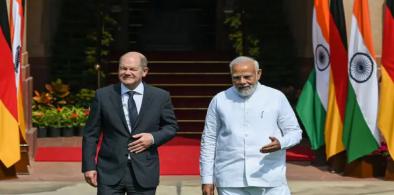
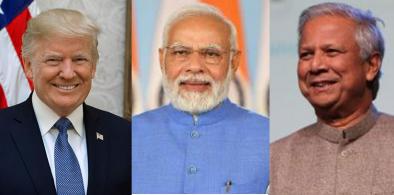
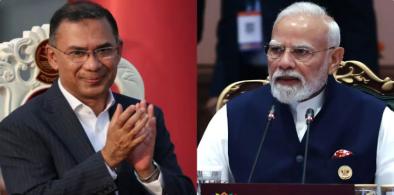
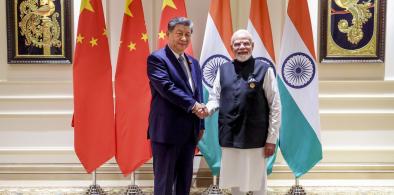
The Delhi Tightrope: Can India Lead BRICS without Triggering a Trumpian Trade War?

In 2026, the “strategic autonomy” that we so often discuss must evolve from a defensive crouch to a balanced offensive infrastructure play. India’s success will be measured by its ability to convince the Trump administration that a stable, digitally-sovereign BRICS is actually a better trade partner than a chaotic, bankrupt one.

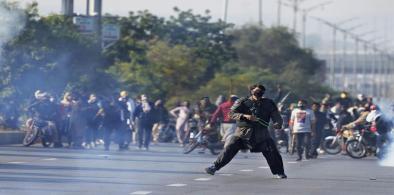
Bangladesh’s International Crimes Tribunal Under Fire: Serving Justice or Political Retribution?

Yunus created a suffocating atmosphere in Bangladesh by pushing the country towards the fate of a Caliphate, threatening the nation’s Bengali soul. Simultaneously, he weaponized the ICT and turned it into an instrument of targeting Sheikh Hasina by appointing Jamaat-e-Islami leaders into key positions in it. As a result, Hasina was handed death penalty in two cases, while she faces hundreds of murder charges—most of which were lodged by the activists of Bangladesh Nationalist Party (BNP) and Jamaat. 

More on Spotlight

A new 'great game' in the Maldives? Male's shifting sands a strategic challenge for Indian diplomacy

The Maldives has undergone a radical transformation. To see this as playing the India or China card would be a miscalculation. Indeed, the strategic narrative of what is going on is very different. 

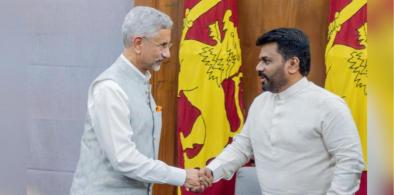
An emerging force in Sri Lankan politics may have wider regional implications

While the NPP’s visit to India exemplifies changes in its political understanding, it has an important dimension in Sri Lanka's domestic politics. New Delhi appears to have judged that the NPP coalition has the potential to play a decisive role in the upcoming presidential election.

Pakistan: Will it remain a democracy in uniform?

The Pakistani military went all out to deliver this vote. Its idea to have direct control of the political situation to what it comprehends will bring stability to Pakistan’s crisis may be a pipe dream with a fractured verdict leaving Pakistan open to elements that will only compound its instability.

The Myanmar crisis is a worrying security challenge for Bangladesh and India

Rakhine's lack of effective government structure and civil order will continue to be a significant source of worry for the region, particularly in terms of humanitarian, security, economic, and political issues.

Naga fears in Manipur need to be addressed: further unrest could be unsettling for India's Northeast

If the Nagas are drawn into the already raging ethnic conflict in Manipur, it would be catastrophic for the border state and have repercussions in the entire northeast of India. The decision to fence the entire India-Myanmar border and cancel the FMR could potentially lead to discontent in Nagaland and Mizoram.

Dragon in the Maldives: Red alert for India’s regional leadership

The Maldives case is a vivid example that Beijing is not going to stop its power play in India's neighboring countries. China's aim is crystal clear: to question India's bid for regional leadership.

Is the diplomatic road to Kabul re-opening? Human rights be damned

If India and China are changing, so are many other countries who realise the futility of trying to persuade a bunch of religious fundamentalists, now enjoying absolute power, to change their way of treating their people.

Pakistan’s otherwise predictable election seeks to involve youth

Besides youth, efforts have also been made to increase women’s inclusion in electoral politics. Section 206 of the Elections Act 2017 mandates at least 5 per cent women's representation in general seats. However, major political parties often award tickets to women for unwinnable seats and focus on swing constituencies.

Feminisation of agriculture in South Asia: Need to close the gender gap

Nobel Prize-winning economist Amartya Sen is a vehement supporter of granting land access to women and argues that economic empowerment is a critical step to realise the goal of gender equality and women’s empowerment.

With growing radicalization, Manipur remains on the boil

Ironically, recent actions will be playing into the hands of China which has a lien on many insurgent groups in Myanmar, including Meitei and Kuki-Naga groups, which it would use to destabilize northeast India.

Is it curtains for Imran Khan in Pakistan? Country entering choppy waters as election looms

It is a risible state of affairs in Pakistan where a three-time prime minister, who could have been in prison for ten years without going into exile returns, even as another one, Khan, is sentenced to ten 

Muslim nations must call out terrorists and withdraw clandestine support

Though a vast majority of Muslims oppose violent extremism, it is a reality that most extremist and terrorist violence does occur in largely Muslim states, although it mostly consists of attacks by Muslim extremists on fellow Muslims and not some clash between civilizations. 

India’s Ram Mandir consecration sparks celebrations, yet raises questions in Nepal

The way this was done raises questions about whether Hindus have been spiritually awakened and also what this means for India as an avowedly secular, democratic country.

Red Sea crisis: Domino effect on Bangladesh and global supply chain

The protracted Red Sea crisis may hurt Bangladesh's exports, stoke inflationary pressures, and delay the recovery of the economy. Bangladesh’s apparel sector is highly dependent on the route, as nearly 70 percent of the country's clothes are exported to European countries

Millets should be used as food and not for fuel

Worldwide sorghum is the fifth highest-produced grain crop and fourth in India. Nutritionally it is better than rice as it contains beta-carotene, folic acid, fiber, thiamine, and riboflavin.