Gulf War Strains Bangladesh's Economic Fragility

Gulf War Strains Bangladesh's Economic Fragility, Test for New Government

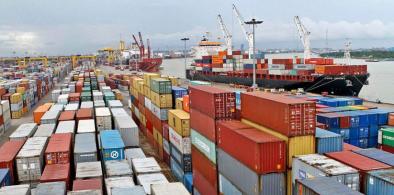
The current war has exposed Bangladesh’s structural vulnerabilities: dependence on imported energy, fragile reserves, and narrow fiscal space. For the new government, the stakes are clear—stabilize fuel and food supplies now while building resilience through diversified energy, broader exports, and stronger social protection. Wars in the Gulf may be fought thousands of miles away, but their economic shockwaves reach Bangladesh within days. In the end, the crisis will be felt in three simple pressures shaping everyday life: oil prices, food costs, and migrant jobs.

Re-imagining Pakistan’s Human Capital Crisis: It Must Dismantle Policy Structures That Serve Elite Interests

This crisis did not emerge overnight. It is a product of neglecting the foundational capacity to invest in human capital, where Pakistan hardly puts less than 2% of its national GDP on human capital factors. Meanwhile, the regional peers like Bangladesh and India invest more in education and health, and Pakistan is still trapped in a cycle of short-term fiscal thinking, political instability, and elite capture that is systematically hollowing out the nation’s potential to rise and grow.

The Delhi Tightrope: Can India Lead BRICS without Triggering a Trumpian Trade War?

In 2026, the “strategic autonomy” that we so often discuss must evolve from a defensive crouch to a balanced offensive infrastructure play. India’s success will be measured by its ability to convince the Trump administration that a stable, digitally-sovereign BRICS is actually a better trade partner than a chaotic, bankrupt one.

Bangladesh’s International Crimes Tribunal Under Fire: Serving Justice or Political Retribution?

Yunus created a suffocating atmosphere in Bangladesh by pushing the country towards the fate of a Caliphate, threatening the nation’s Bengali soul. Simultaneously, he weaponized the ICT and turned it into an instrument of targeting Sheikh Hasina by appointing Jamaat-e-Islami leaders into key positions in it. As a result, Hasina was handed death penalty in two cases, while she faces hundreds of murder charges—most of which were lodged by the activists of Bangladesh Nationalist Party (BNP) and Jamaat. 

More on Spotlight

Can India become a Hindu theocratic state post-Ayodhya consecration?

Advani was gracious enough to handwrite his answer in which he said, “The Indian Constitution guarantees equality and justice to all citizens, irrespective of their faith. The BJP holds that this commitment of our constitution makers is a commitment of the nation. Anything else would be contrary to our history, tradition and culture. The BJP rejects theocracy. In India, we can never have Class I citizens and Class II citizens as you have in Pakistan and several Islamic countries.” 

No sermons, but tougher on trade, closer on geostrategy: If he wins, Trump 2.0 will pick up threads of India ties

Trump took a broader view of the Indo-Pacific region and its role that aligned with India’s in a world where China assumes an increasingly aggressive posture towards neighbours and vies for global dominance. In his tenure, he extended the Pacific remit to the Indian Ocean, embracing India in the strategy for the region.

The Ram temple issues are socio-political, not just religious

While the real issue of Ram temple is social, it is also a political play at its zenith. In a politically charged nation, what we see are distorted views of the developments in Ayodhya.

Is social media hijacking the narrative, impacting governance and policies?

The adverse influence of uncontrolled social media in the relations between India and Maldives is a case in point. Social media poses an existential threat to the conventional methods of conducting governance, diplomacy, and warfare. 

Spreading extremism in Pakistan has ominous implications for region

Al-Qaeda's strategic plan involves aiding "persecuted" Kashmiri Muslims once their objectives in Pakistan are achieved. Shifting the jihadist threat toward Kashmir will also align with the ambitions of the Pakistani military. 

India’s stigmatized mental healthcare cries for prioritisation

In India's close-knit communities, mental health struggles often face a deafening silence. According to a study by Deloitte, over 70 per cent of Indians use derogatory terms for mental disorders and nearly 40 per cent voice fear of a neighbour seeking help for mental health issues.

Why India, with its huge backlog of unresolved cases, needs robo-judges

The recent passage of amended criminal laws in India highlights the challenges of human judges' adaptability, contrasting with the instantaneous application capabilities of robo-judges. COVID-19 accelerated technology integration in Indian courts, paving the way for the use of AI in judicial administration. 

Recounting Indian Navy's1971 valour: Questions before the nation

With the spectacular achievements of the Indian Navy in the 1971 war under the daring and decisive leadership of Admiral Nanda, he could well have been considered for being made Admiral of the Fleet. As this involves rectifying past oversights, there are already precedents.

BNP's miscalculation can prove costly for party and Bangladesh

The absence of a strong opposition can potentially pave the way for the ascendancy of authoritarian, dictatorial, or undemocratic forces within the country's political sphere. 

India and the European Union: Growing partners in technology

Both DPI and AI are data-driven and integral to future human development. In 2024, India and the EU are looking to formulate a unified approach towards these two cutting-edge aspects of technology.

Victory of independent candidates: A new message in Bangladesh's electoral politics

The large number of independent candidates winning in this election has shown new thinking in Bangladesh's politics. And the time may have come for political parties to rethink their candidate selection process.

The long march to Islamabad: Pakistan's persecuted Baloch community hit the road for justice

The judiciary, media, human rights activists and Baloch nationalist parties have almost exhausted their efforts in trying to persuade international institutions to intervene and end the sustained atrocities against the people of Balochistan.

The worsening water crisis: Need to adopt innovative water technologies

India’s mainland is endowed with a long coastline of over 5500 km. All the areas situated near this coastline can get clean drinking water through dew condensation.

Terrorism is a tactic of war; yet it defies a uniform definition

State-sponsored terrorism is often employed by smaller or weaker states to weaken bigger or stronger nations as it is more cost effective than traditional war. One of the most prominent examples of this could be the Kashmir issue between India and Pakistan

With non-state actors altering geostrategic realities, Underwater Domain Awareness is a strategic imperative for region

The drone attacks in the Arabian Sea recently are an indication of the high-tech means available to the non-state actors and it won’t take much time for them to acquire deadly underwater drones with explosives to carry out unimaginable attacks in a politically volatile IOR