The Muslim Personal Law Board is committing the same mistake by opposing the UCC as it did during the discourse on the abhorrent Muslim practice of instantaneous triple talaq without realising its far-reaching consequences.
Khamenei’s assassination terminates an epoch of ideological confrontation, yet inaugurates profound uncertainty. Legally and normatively, it imperils protections for sovereign leaders; strategically and politically, it probes Iran’s institutional fortitude; religiously and narratively, it unveils unifying and divisive societal forces. Diplomatic containment—through intermediaries such as Oman or Qatar—must prioritise the transition's fragility without incitement. Absent such prudence, this strike risks catalysing a wider regional conflagration, where initial tactical triumphs yield enduring strategic costs.
The revival of SAARC will not come from dramatic diplomatic breakthroughs. Instead, it will emerge through incremental cooperation in education, digital infrastructure, disaster response and trade facilitation. Crucially, the future of South Asian regionalism may depend on a generation that increasingly experiences the region not through borders but through shared digital, economic and cultural networks.
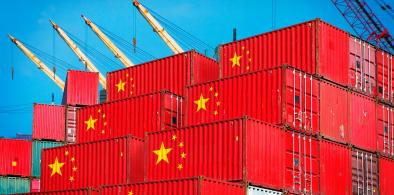
Trade adjustments between major economies inevitably reverberate beyond bilateral channels. Bangladesh’s potential tariff advantages in textiles could redirect labour-intensive supply chains. Pakistan, operating within the China-Pakistan Economic Corridor framework, may use India’s perceived alignment with Washington to advance its own strategic narratives. China itself will interpret these developments within the broader context of great-power competition and recalibrate its economic and strategic posture accordingly.
A more comprehensive lesson about 21st-century youth politics can be learned from the story taking place between Kathmandu and Dhaka. Gen Z has extraordinary mobilization skills. Protests can grow quickly and upend established power structures thanks to social media networks. But mobilization is insufficient on its own. Successful political transformation requires organization, leadership, and institutional strategy. Nepal’s youth built those structures quickly. Bangladesh’s did not.
The Muslim Personal Law Board is committing the same mistake by opposing the UCC as it did during the discourse on the abhorrent Muslim practice of instantaneous triple talaq without realising its far-reaching consequences.
Macron and Modi should shun transactional diplomacy that engages in multi-billion dollar agreements for military fighter jets and machinery, nuclear reactors and pharmaceutical products. Instead, they should embrace some transformational diplomacy to make the planet sustainable again.
Russia’s proposal to establish Sri Lanka’s first nuclear power plant comes on the heels of the completion of a similar nuclear power plant in Bangladesh, which has paved the path for Russia to play a larger role in South Asian geopolitics.
In recent years India has been prioritising regional integration among South Asian countries, excepting Pakistan. As per the joint vision statement between Nepal and India in April last year, the two countries agreed to expand sub-regional cooperation in the power sector among Bangladesh, Bhutan, India and Nepal (BBIN)
Climate crisis is a lesser word to describe the transformative shifts that are taking place in weather conditions across the Global South affecting mostly countries like Pakistan in South Asia. Attitudes of society need to change towards women. Societal attitudes, traditional norms and cultural practices create entrenched gender disparities that hinder women’s participation in development plans and in survival strategies devised to save them in the post-disaster period.
From Modi's standpoint, the visit unfolded precisely as he desired. The exceptional reception he received from the leader of the free world, less than a year before facing the billion-strong Indian electorate, serves as a significant boost for him.
It is high time the Nepalese government strengthens its diplomatic muscle and stands up strongly for the legal rights of its citizens working overseas.
Manipur is burning and the government knows not what to do next. This is a sensitive state in a sensitive region with not very friendly neighbours. The collapse of State machinery here should be a cause for alarm.
The June 10 deployment of two carriers by IN has received favourable notice internationally and this has added salience on the eve of Prime Minister Narendra Modi’s state visit to the USA (June 21) in relation to India’s naval capabilities.
The centerpiece of Modi’s state visit to the US is expected to be a jet engine agreement that can propel Indo-US relations to a new sphere altogether. The application by General Electric to co-produce GE-F414 jet engines in India, along with technology transfer, has already received approval of the Biden administration.
Such is the disparity that at a time when Aida Girma-Melaku, Unicef's representative, reported that Pakistan confronts a triple burden of malnutrition affecting young children, adolescents, and pregnant and lactating women, with 40 per cent of children under the age of five being stunted, Pakistan spent $1.2 billion on imports of luxury cars and electric vehicles for its rich and powerful in the last half of 2022.
For KMMTTP to be a success, locals from both India and Myanmar must be involved as project stakeholders. And India, while economically supporting the project, should also politically back Myanmar's return to democracy.
The worst part of the disaster was not only loss of resources like property but the sexual violence the women in Sri Lanka faced. Apart from lack of proper nutrition, hygiene and clean water and health care, what was impossible to handle was sexual violence along with high cases of rape and domestic abuse.
Although not immediate neighbours in the South Asian region, Nepal and Pakistan face similar social issues and have always helped each other in times of need. And yet there are no direct flights between the two countries.
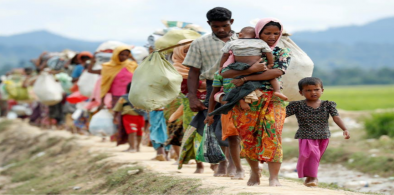
Unfortunately, the repatriation of the Rohingya refugees might not be a feasible option, given the current circumstances. They have already been in the camps since 2017 with little done. The need of the hour is to devise a long-term solution for their integration into the host society, and assimilation seems to be a more sustainable answer than repatriation