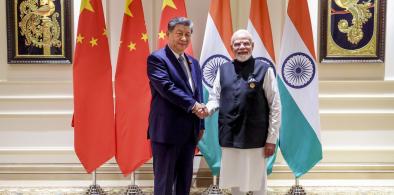
Khamenei and his successor Mojtaba Khamenei, Trump and Netanyahu

Khamenei's Assassination and a Fractured Iran: Regional and Global Ramifications of a War of Attrition

Khamenei’s assassination terminates an epoch of ideological confrontation, yet inaugurates profound uncertainty. Legally and normatively, it imperils protections for sovereign leaders; strategically and politically, it probes Iran’s institutional fortitude; religiously and narratively, it unveils unifying and divisive societal forces. Diplomatic containment—through intermediaries such as Oman or Qatar—must prioritise the transition's fragility without incitement. Absent such prudence, this strike risks catalysing a wider regional conflagration, where initial tactical triumphs yield enduring strategic costs.

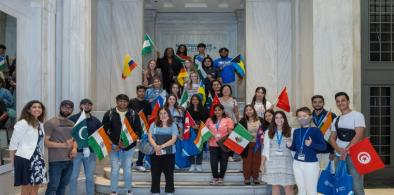
Reimagining a Cooperative South Asia: A Next-Gen Agenda to Revive SAARC

The revival of SAARC will not come from dramatic diplomatic breakthroughs. Instead, it will emerge through incremental cooperation in education, digital infrastructure, disaster response and trade facilitation. Crucially, the future of South Asian regionalism may depend on a generation that increasingly experiences the region not through borders but through shared digital, economic and cultural networks.

US–India Tariff Framework: Trade Concessions Should not Dictate Foreign Policy Choices

Trade adjustments between major economies inevitably reverberate beyond bilateral channels. Bangladesh’s potential tariff advantages in textiles could redirect labour-intensive supply chains. Pakistan, operating within the China-Pakistan Economic Corridor framework, may use India’s perceived alignment with Washington to advance its own strategic narratives. China itself will interpret these developments within the broader context of great-power competition and recalibrate its economic and strategic posture accordingly.

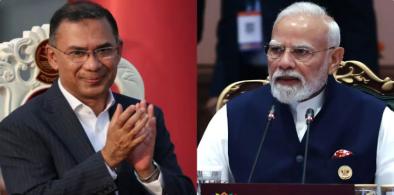
Why Nepal’s Gen Z Succeeded Where Bangladesh’s Failed

A more comprehensive lesson about 21st-century youth politics can be learned from the story taking place between Kathmandu and Dhaka. Gen Z has extraordinary mobilization skills. Protests can grow quickly and upend established power structures thanks to social media networks. But mobilization is insufficient on its own. Successful political transformation requires organization, leadership, and institutional strategy. Nepal’s youth built those structures quickly. Bangladesh’s did not.

More on Spotlight

EU's growing engagement in South Asia will benefit India, Bangladesh, Nepal, and Bhutan

In order to provide small company owners and women traders access to the market, South Asian countries should also adopt regional concepts like the border "haat" (informal markets) used at the India-Bangladesh and India-Myanmar border points.

Diplomacy and the global North-South divide: Need to redefine power dynamics in international relations

An alternate strategy for overcoming the North-South divide and altering power dynamics is South-South collaboration. South-South collaboration disproves the idea that knowledge and progress only travel from North to South, giving developing nations the chance to establish their autonomy and create their own narratives.

Climate crises affect women more: Vulnerabilities of Nepalese women increased manifold after 2015 earthquake

According to a UN report, three months after the quake in Nepal at least 245 children had been preyed upon by traffickers and that was just the “tip of a growing iceberg”

With a little help from India, an energy deal will open new avenues in Dhaka-Kathmandu relations

A trilateral energy sales and purchase agreement between Bangladesh, Nepal, and India are required for any Dhaka-Kathmandu power transaction to be implemented because Bangladesh and Nepal do not have a direct land link.

Pakistan abides by the highest standards of nuclear safety and security

Pakistan’s nuclear tests of 28 May 1998 not only demonstrated the resolve of the Pakistani nation to safeguard the country's territorial integrity, independence and sovereignty but also the desire to preserve strategic balance in South Asia. 

India should leverage its soft power as a trade multiplier

India should make concerted efforts to corner a bigger role in the governance of global multilateral bodies and should get involved in resolving global conflicts and issues. It should take its success to the world, contributing to capacity building wherever required, especially in Africa. 

Bhutan's foreign policy is guided by a set of philosophical and cultural values

Bhutan is regarded as ‘the kingdom of happiness’ and also has the reputation of being the first to become the one and only carbon-negative country in the world. The international community sees Bhutan as a peaceful and traditional country, and that has helped its policymakers formulate a foreign policy that maintains its unique status in the world order.

The crisis in Manipur has been brewing: Depths of discord in northeastern India

The danger is that the cracks in the Constitution are widening. The need of the hour is to find the true meaning of religion. A divisive agenda no matter how strong, will end up dividing the nation and enhancing a culture of division.

Pakistan: The military versus the people

Since Pakistan’s birth over 75 years ago, it is the ‘establishment’ that has largely determined who gets political power and when to take it away. Out-of-favour politicians get disqualified from political office, imprisoned, or exiled. Some have been killed.

India and Australia: A relationship whose time has come

The research strengths of Australian universities in areas such as cyber security, quantum computing, space technology, robotics and AI, critical technologies, public health, water, waste utilization, teacher training, low-cost housing, and solar power, to name a few, are all initiatives and aspirations that PM Modi has identified for India and which Australian universities are well-placed to collaborate on.

Karnataka elections 2023: Defeat of hate in India

From the secular Bharat Jodo Yatra to the Karnataka elections, Indian civil society groups have played an important role. One does look forward to civil society groups committed to the rights of weaker sections of society playing a similar role in forthcoming elections to ensure that the country comes back to the path and idea of India envisaged by the freedom movement and the Constitution of India.

Climate crisis: A ticking time bomb that the world can ignore at its own peril

The warning is not only coming with unusual certainty but there is a clearer message that the world is failing in its pursuit to meet the Paris Climate Agreement.

Regional cooperation imperative in tackling Cyclone Mocha-type natural disasters

Cyclone Mocha only reminds us of the urgency of India-Bangladesh-Myanmar-Thailand-China-Sri Lanka cyclone management cooperation. As a start, Myanmar-Bangladesh-India trilateral cooperation is a must in this regard.

Will Karnataka mark the turning of the tide in Indian politics?

After Karnataka, however, the BJP may be wary of going down that path when the world will be watching Modi’s forthcoming steps in the run-up to the 2024 general election 

25 Years of Pokhran II Tests: Thinking beyond nuclear deterrence in South Asia

The lesson one can draw from 25 years of nuclear South Asia is that nuclear weapons are guarantors of stability at the highest or strategic levels, but they are certainly not the panacea to the security challenges faced by a nation, especially at the sub-conventional level. The case of the India-Pakistan conflict validates this point