A potent Western Leg of Quad in partnerships with Russia, France, Japan and possibly Oman, South Africa, Indonesia and Singapore remains a must to craft, writes Lt Gen Yash Malhotra (retd) for South Asia Monitor


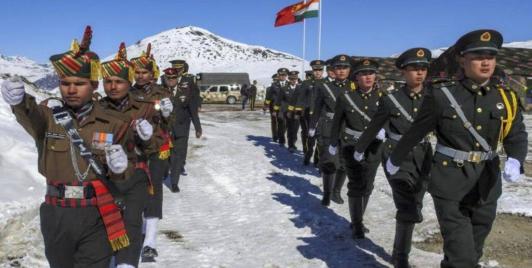
Hopes for Sino-Indian relations centre on a cautious diplomatic thaw, institutionalised border stability and renewed high-level engagement. Indian negotiators and defence planners are well aware that “trust must be verified”. While the activation of these eight points provides valuable channels to prevent an accidental kinetic clash on the ground, the real test of China’s sincerity will not be the joint statements signed in Beijing, but whether it ceases infrastructure build-ups and respects the historical patrolling rights of Indian troops along the LAC.
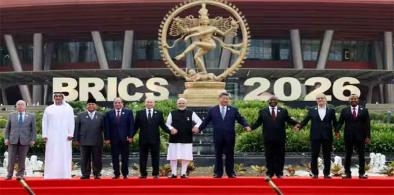
By removing the ‘Indo’ prefix from Indo-Pacific the US implicitly acknowledges that it no longer unilaterally defines the eastern strategic landscape. Regional organisations like BRICS continue to redefine the lexicon of ‘rules-based order’ to insulate themselves from western domination.
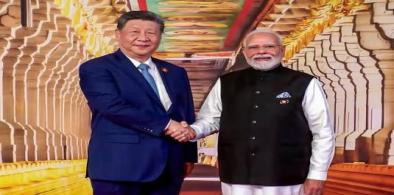
The bilateral discussion between Prime Minister Narendra Modi and Chinese President Xi Jinping on the sidelines of the 18th BRICS Summit indicates surge in mutual ties, particularly by way of trade. However, little can be expected by way of full settlement of the boundary dispute.
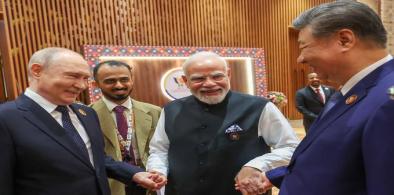
The timing of the EU announcement coincided with the BRICS+ Summit in New Delhi, creating speculation about whether the EU was seeking to reinforce its strategic engagement with India amid the growing influence of the BRICS grouping.

A potent Western Leg of Quad in partnerships with Russia, France, Japan and possibly Oman, South Africa, Indonesia and Singapore remains a must to craft, writes Lt Gen Yash Malhotra (retd) for South Asia Monitor
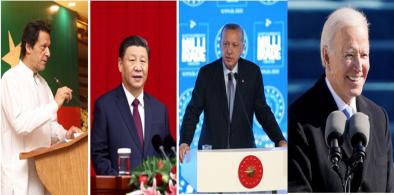
A US drone base in Pakistan will adversely affect Pakistan-China relations; it will arouse Taliban anger with whom Islamabad is negotiating to curb the Tehrik-i-Taliban Pakistan (TTP), writes Lt Gen P. C. Katoch (retd) for South Asia Monitor
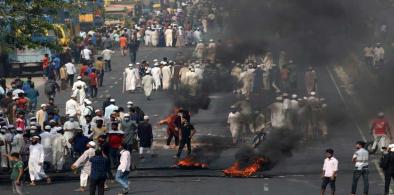
Attacks on Hindu localities and places of worship, like temples and Durga Puja mandaps, are aimed at terrorizing Hindus so that they don't assert politically, stay away from voting and even vote against Awami League in frustration at lack of protection, writes Subir Bhaumik for South Asia Monitor
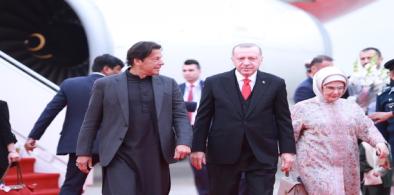
The Turkish actors are immensely popular in Pakistan, even as the women actors, glamorous and without any veils, even sporting swimwear in real lives, have drawn criticism from the Pakistani conservatives, writes Mahendra Ved for South Asia Monitor
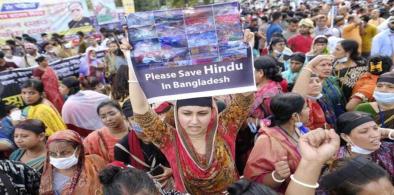
While the ruling Awami League remains committed to protecting the minorities, the administration has been often unable to prevent Islamist rampages, writes Tapas Das for South Asia Monitor

Instead of following the unsustainable growth example of the US and China, which is based on extreme greed and a very materialistic outlook, we should give the world a new direction of development where high technology is guided by spirituality, writes Anil K. Rajvanshi for South Asia Monitor
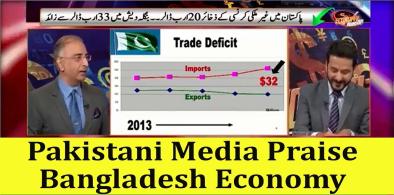
Had it not been exploited by Pakistan economically for 24 years (1947-71), Bangladesh would have gone further ahead, writes Pathik Hasan for South Asia Monitor
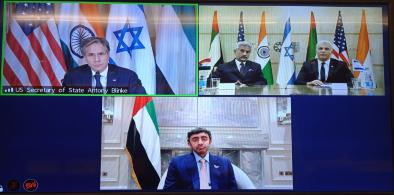
In a cooperative set-up of the four nations focused on the Middle East, UAE has the capital, Israel and the US the technology edge and India the manufacturing and execution capability, writes Arul Louis for South Asia Monitor
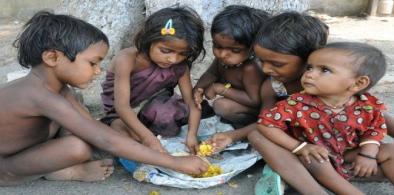
The GHI ranking given to India is certainly a wake-up call for the country, writes Partha Pratim Mitra for South Asia Monitor
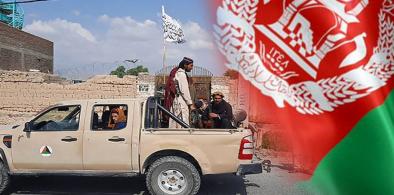
Pakistan has shifted anti-India terrorist camps into Afghanistan and there is evidence of the Taliban allowing Harkat-ul Ansar (HuA) to push terrorists from Afghanistan into Kashmir, writes Lt Gen P. C. Katoch (retd) for South Asia Monitor
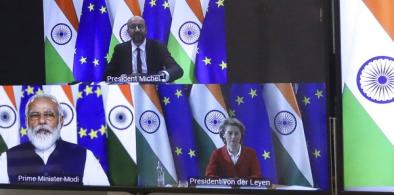
The new strategy is a most welcome development for India, which had been juggling its national security interests in this vast and volatile region with support, as usual, from France, writes Amb. Bhaswati Mukherjee (retd) for South Asia Monitor
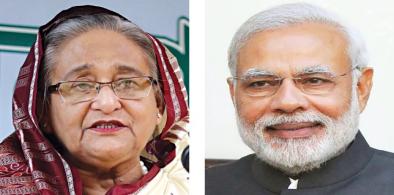
In this 50th year of Bangladesh’s liberation, need India remind them that in 1971 it sheltered over 10 million Bangladeshi refugees without a whimper, with hardly any foreign aid, and that all Indians kept paying for decades afterward to defray the cost to the nation?, writes Amb. Sarvajit Chakravarti (retd) for South Asia Monitor
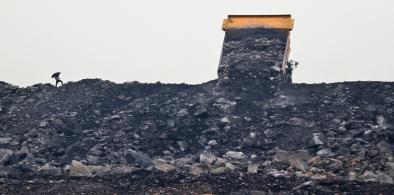
India’s energy problems, however, are not unique as its powerful neighbor, China, too, is experiencing serious shortages of electricity, writes N. Chandra Mohan for South Asia Monitor
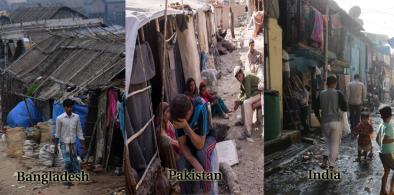
South Asia has an approximate population of 1.9 billion —about 23 percent of the world population — with a substantial number of slum dwellers and homeless, writes Nirupama Sekhri for South Asia Monitor
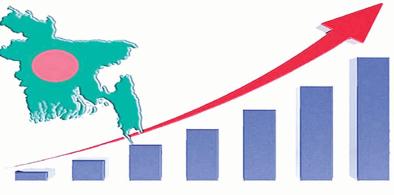
According to the Center for Economic and Business Research (CIBR), a British economic research institute, Bangladesh will be the 34th largest economy by 2025, 26th by 2030 and 25th by 2035 if its economy continues to grow and develop like it is now, writes Pathik Hasan for South Asia Monitor