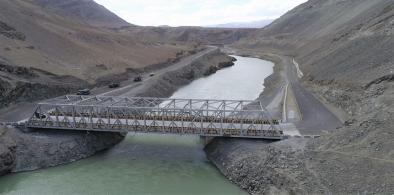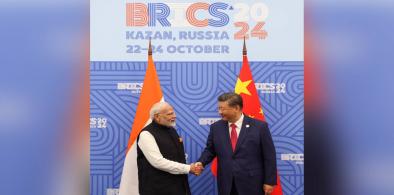


Why no heads rolled for the surprises in 2020 with PLA exercising in Aksai Chin and a new road constructed five km short of Galwan?
The 75th anniversary of India–China relations offers a rare diplomatic opening. In a world of strategic rivalry, climate change and air pollution represent a shared threat where national interests converge. Environmental cooperation provides a low-politics entry point for rebuilding trust—through joint work on crop-residue management, high-density air-monitoring networks, and clean-energy transitions. Moreover, the Himalayan region—the planet’s “Third Pole”—is acutely vulnerable to black carbon and atmospheric pollutants from both sides of the border. Cooperation on air quality is therefore an act of Himalayan stewardship, protecting the water security of over a billion people.
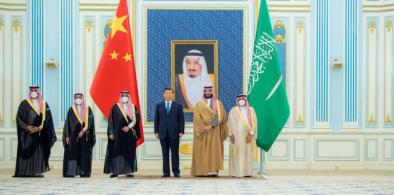
At the same time, MBS has skilfully leveraged China as a strategic counterweight, signalling that any American hesitation could push Riyadh towards deeper military and technological cooperation with Beijing—an outcome the United States would prefer to avoid. China has already become Saudi Arabia’s largest trading partner, while the United States remains its primary arms supplier and security guarantor.
If Taiwan were to fall, Japan’s security architecture would be fundamentally compromised. The First Island Chain would fracture, opening a northern pathway for Beijing toward Okinawa and Kyushu. Takaichi recognised this reality and voiced what many regional strategists have long acknowledged: Japan has little choice but to act, even at the cost of Beijing’s displeasure.
Reincarnation in Tibetan Buddhism is a profound spiritual process determined by the enlightened intentions of the deceased master and recognized through visions, prophecies, dreams, and unmistakable signs - not through the drawing of lots. The historical record is unequivocal: Tibet consistently regarded the Golden Urn as an external political imposition and avoided it whenever authentic spiritual evidence was present.
Why no heads rolled for the surprises in 2020 with PLA exercising in Aksai Chin and a new road constructed five km short of Galwan?
The establishment of a second naval base in Lakshadweep, INS Jatayu is a key part of this strategy. It's a calculated move to counter China's influence in the Indian Ocean Region.
China has tried to set up a hybrid renewable energy system mixed with solar, wind, and other renewables on three islands in the Jaffna Peninsula. It was later cancelled. There is no economic reason for hosting such a project in a place so close to India.
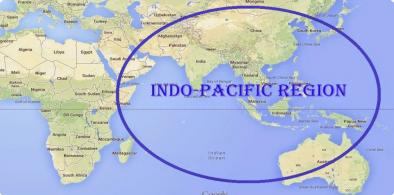
Australia has succeeded in sending a strong message to both ASEAN and China. To ASEAN, Canberra has communicated its commitment both in economic and security terms. The keyword will be a free and open Indo-Pacific, which is in line with the overall security vision of the West.
The US meanwhile, remains resilient in its future demographic and economic growth projection and stability, alongside the prospects of India. The so-called rise of China is now reversing, and the perceived decline of the US and the West is not happening.
Among other things, the bill, which is now an act, dismisses as inaccurate the Chinese claim that Tibet has been part of China since ancient times and empowers the State Department to actively counter China’s disinformation about Tibetan history, people and institutions.
The critical mineral supply chain in the Indo-Pacific is undergoing transformative changes through new deals, reforms, and negotiations facilitated by the strategic partnership of QUAD.
The belligerence by the PLA also exposes the futility of continuing Corps Commander-level military-to-military talks when China has repeatedly indicated there will be no more PLA pullback.
Beijing might still use this election victory for President Tsai as a pretext to increase aggression and to justify that peaceful reunification is a lost cause, portraying the DPP as the cause of increasing cross-Strait tensions.
As traditional geopolitics transforms, with the Gulf regaining centrality in the larger Indo-Pacific arena, India, Japan, and Southeast Asia see their strategic perspectives increasingly converge. The Big-B plan has significant implications for India, Bangladesh's Look East policy, and Thailand's Look West policy.
It would be prudent to establish a joint working mechanism with Myanmar at the diplomatic and military levels for managing the borders - unless we want China to keep winning.
China and Russia have shown their support for Myanmar despite the dire situation there, and their interest in the region is evident by their growing naval presence in the Indian Ocean and Bay of Bengal.
As far as China is concerned, the so-called buffer zones are now a permanent arrangement and it knows India can do precious little about it. That is why China has been saying keep the border issue separate and get on with the bilateral relations.
Melaka is also seen as a possible counterbalancing base against potential power presence in the Nicobar Island chain in the Andaman Sea and as a fallback in complementing China's existing forward bases and port capacities in Gwadar in Pakistan and in linking up with the other routes in accessing the Indian Ocean.
The Indian government has no answer to the question that if we have not lost any territory, then why the 20 rounds of military-to-military talks?