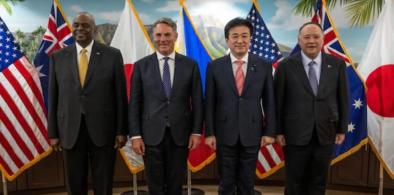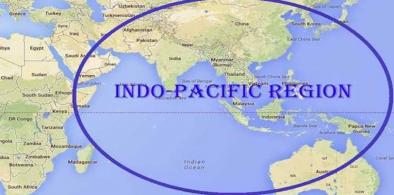


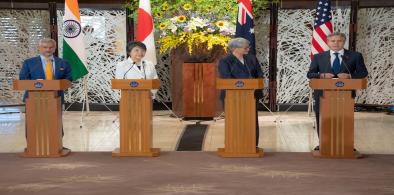
Bangladesh expressed its commitment to walk alongside Japan, a leading creator of the QUAD alliance in the Indo-Pacific strategy, for the sake of a peaceful Indo-Pacific region.
The 75th anniversary of India–China relations offers a rare diplomatic opening. In a world of strategic rivalry, climate change and air pollution represent a shared threat where national interests converge. Environmental cooperation provides a low-politics entry point for rebuilding trust—through joint work on crop-residue management, high-density air-monitoring networks, and clean-energy transitions. Moreover, the Himalayan region—the planet’s “Third Pole”—is acutely vulnerable to black carbon and atmospheric pollutants from both sides of the border. Cooperation on air quality is therefore an act of Himalayan stewardship, protecting the water security of over a billion people.
At the same time, MBS has skilfully leveraged China as a strategic counterweight, signalling that any American hesitation could push Riyadh towards deeper military and technological cooperation with Beijing—an outcome the United States would prefer to avoid. China has already become Saudi Arabia’s largest trading partner, while the United States remains its primary arms supplier and security guarantor.
If Taiwan were to fall, Japan’s security architecture would be fundamentally compromised. The First Island Chain would fracture, opening a northern pathway for Beijing toward Okinawa and Kyushu. Takaichi recognised this reality and voiced what many regional strategists have long acknowledged: Japan has little choice but to act, even at the cost of Beijing’s displeasure.
Reincarnation in Tibetan Buddhism is a profound spiritual process determined by the enlightened intentions of the deceased master and recognized through visions, prophecies, dreams, and unmistakable signs - not through the drawing of lots. The historical record is unequivocal: Tibet consistently regarded the Golden Urn as an external political imposition and avoided it whenever authentic spiritual evidence was present.
Bangladesh expressed its commitment to walk alongside Japan, a leading creator of the QUAD alliance in the Indo-Pacific strategy, for the sake of a peaceful Indo-Pacific region.
Unlike in the Indo-Pacific region, where China poses a security issue for India and US, the challenge in the Middle East is from Beijing’s subtle economic and political push through its Belt and Road Initiative.
Japan now wants to provide its leadership role in the region for the Western world. Washington, which was so long seeking to counter China through India, has now turned to Japan as it felt that New Delhi was not living up to that role.
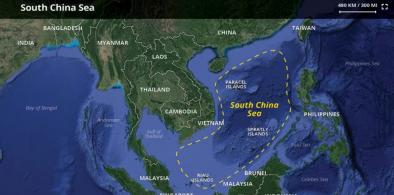
ASEAN remains ill-equipped to handle the fallout from the tensions in the South China Sea or the potentiality of a full-blown Taiwanese conflict.
Against this backdrop, India has been promoting the idea of ‘net security provider’ in South Asia and the Indian Ocean Region (IOR).
Following the attack on a mosque in Kunduz, Afghanistan on October 8, 2021, ISK confirmed the recruitment and mobilization of Uyghur fighters. This was the first time that the alliance between IS-K and Uyghurs was affirmed by IS-K on media platforms.
But New Delhi must not be complacent, because a lot more needs to be done in acquisitions and modernisation to match the much larger and more sophisticated Chinese arsenal and to raise India’s politico-diplomatic assertiveness against Beijing's muscle-flexing.
To gain a strong foothold in Sri Lanka, China used the political weakness of the Rajapaksa family to sustain its corrupt and authoritarian regime by funding its electoral campaign in order to gain a strategic advantage in the Indian Ocean Region to marginalize India and other Western countries. especially US influence in the Indo-Pacific region.
Safeguards Defenders, a Spain-based human rights NGO that first drew attention to the Chinese overseas “police stations” last year, listed operations in 30 countries in North and South Americas, Europe, Africa and Asia (but not in India or other South Asian countries).
China has blocked several times attempts to designate Pakistan-based operatives behind attacks on India as global terrorists, which would place them under international sanctions.
Viewing Bangladesh and other areas to the south as a single economic zone, Japan will build Bengal-Northeast India industrial value chain concept in cooperation with India and Bangladesh to foster the growth of the entire region.
Keeping the warfare history and strategic culture of China in the Indo-Pacific region in perspective, chances are high that there could be more short-term military clashes in the near future with India which will be more intense by nature, especially before India’s general elections in 2024, in order to influence India's political landscape and change the politico-and security architecture of the Indo-Pacific region.
Whatever has been achieved by BRO in 2022 and early 2023 is very substantial and has raised Beijing's ire much more. For India, it is imperative to continue the momentum of its long overdue building of strategic infrastructure, because a lot more needs to be done to match PLA’s buildup and deployment.
India and Japan are already cooperating on the Bay of Bengal infrastructure development through their strong regional cooperation. Among these initiatives are the construction of LNG infrastructure in Sri Lanka, the building of pipelines and electrification in Myanmar, and the improvement of Bangladesh's road network.
This agreement has profound geo-strategic implications against the backdrop of the US-China maritime battle in the Indo-Pacific region. It will not only add fuel to the fire of their strategic competition but also result in the growing militarization of the strategic region amid the Taiwan crisis.