

The potential implications of recent protests in New Caledonia are best understood in the context of a broader framework of China’s increasing presence in the South Pacific island countries.
India possesses immense talent, entrepreneurial capacity, and a large domestic market, yet it still lacks sufficient depth in high-end manufacturing, research and development, semiconductor ecosystems, advanced engineering, and globally dominant product companies.
One of the most striking features of South Asian trade is how little the region trades internally. Intra-regional trade within South Asia remains among the lowest in the world relative to geographic proximity. Political tensions — especially between India and Pakistan — have prevented the emergence of a deeply integrated regional production system comparable to ASEAN or the European Union. This is a major missed opportunity.
Scarcity of cooking fuel is pushing people, particularly across South Asia, toward hunger. Livelihoods have been lost among the large unorganised labour force while thousands of self-employed street vendors, smaller restaurants and eateries are being forced to close shop, facing a scary, insecure future. For middle class households across India, everyday snacks like the samosa or dosa have become scarce because of shortage and high prices of cooking gas cylinders.
India is one of the world’s largest suppliers of generic medicines and APIs to Europe. If the EU begins favouring “Made in EU” pharmaceutical production through procurement preferences, subsidies or state aid, Indian drug manufacturers could face reduced access to EU public procurement contracts and tougher supply-chain resilience requirements.
The potential implications of recent protests in New Caledonia are best understood in the context of a broader framework of China’s increasing presence in the South Pacific island countries.
This new bloc is vital for both the US and regional players, especially the Philippines which is not part of the original Quad. For Australia and Japan, this new partnership represents a more focused security arrangement with greater on-the-ground ease of conducting military activities as compared to the more bureaucratic Quad.
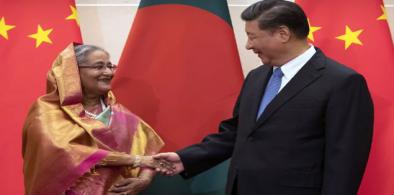
Bangladesh must exercise caution when considering the adoption of the Indo-Pacific Strategy advocated by the US and its regional allies. This move could potentially strain Bangladesh's friendship with China.
Over half of these 'research vessels' operated in the South China Sea, but their growing presence in the Indian Ocean has stirred regional tensions and is a matter of growing concern to India.
While most of the attention to keeping the Indo-Pacific region free and open has been focused on strategic issues, Venkataraman emphasized the critical role of the IPEF in boosting regional economic ties.
India has signed a $375 million contract with the Philippines for three batteries of BrahMos supersonic cruise missiles, among the most advanced in the world. This will be seen by Beijing as a direct threat to its interests in the South China Sea.
“We are all fighting a global war against our common enemy, which is the climate crisis,” said Dr Rajendra Shende
China used both the ASEAN FTA and RCEP tariff concessions to enter the ASEAN market to make it a potential platform for sneaking into the Indian market through the ASEAN–India FTA.
Sri Lanka is also allowing Chinese research vessels in its ports. China has big plans for the region, not just spy ships.
India’s inevitable regional and global leadership provides a welcome new opening for the country and the region in their security calculations. It remains the region’s most important Asian partner in providing the economic and security fallback that is based on values, trust and proven expectations.
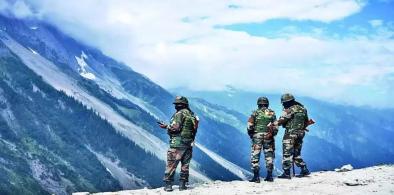
Why no heads rolled for the surprises in 2020 with PLA exercising in Aksai Chin and a new road constructed five km short of Galwan?
The establishment of a second naval base in Lakshadweep, INS Jatayu is a key part of this strategy. It's a calculated move to counter China's influence in the Indian Ocean Region.
China has tried to set up a hybrid renewable energy system mixed with solar, wind, and other renewables on three islands in the Jaffna Peninsula. It was later cancelled. There is no economic reason for hosting such a project in a place so close to India.
Australia has succeeded in sending a strong message to both ASEAN and China. To ASEAN, Canberra has communicated its commitment both in economic and security terms. The keyword will be a free and open Indo-Pacific, which is in line with the overall security vision of the West.
The US meanwhile, remains resilient in its future demographic and economic growth projection and stability, alongside the prospects of India. The so-called rise of China is now reversing, and the perceived decline of the US and the West is not happening.