Hasina has some of the finest diplomats and public faces to handle the initial take-off of a South Asian peace process, if she were to push it, though much depends on how India and Pakistan respond, writes Subir Bhaumik for South Asia Monitor



The borderland TTP now exploits is the same terrain that Pakistan's own security establishment worked for decades to create as "strategic depth." The world of proxy-war infrastructure seldom remains directed towards where its architects have aimed.

A significant factor that emerged after India launched Operation Sindoor against Pakistan in May 2025 was the strain in the India-US relationship under the Trump administration, driven by aggressive tariff disputes and policy friction. This indirectly accelerated India’s push to diversify partnerships, prompting New Delhi to lean more pragmatically into closer economic and strategic ties with middle powers such as Australia.

India and China need not share identical geopolitical visions to agree that a stable border, prosperous border communities and transparent rules are preferable to uncertainty. The most useful measure of Nathu La’s success may therefore be not how many tonnes cross the pass, but how routinely two neighbouring systems learn to work together.
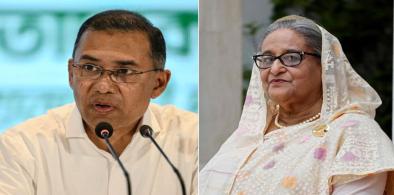
December could therefore become much more than Victory Month. It could become a test of whether Bangladesh's next chapter will be written through democratic accommodation or another round of political vengeance. The danger is that a leader returning to face her past could inadvertently reopen the country's deepest wounds.
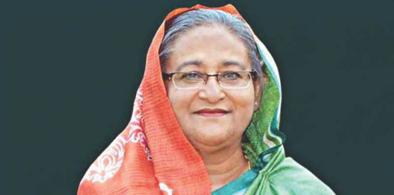
Hasina has some of the finest diplomats and public faces to handle the initial take-off of a South Asian peace process, if she were to push it, though much depends on how India and Pakistan respond, writes Subir Bhaumik for South Asia Monitor
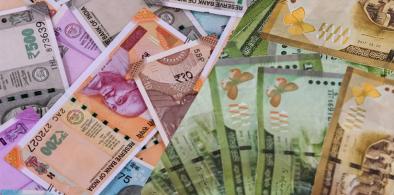
While countries of the South Asian region are taking individual steps to battle COVID-19, currency swaps have emerged as an important tool of economic cooperation in the region, writes Partha Pratim Mitra for South Asia Monitor

The media and newspaper industry in Bangladesh face two major challenges: First, economical challenges, and second, the repression by the government that has stifled the freedom of expression and has made various attempts to silence critical coverage, writes Aashish Kiphayet for South Asia Monitor
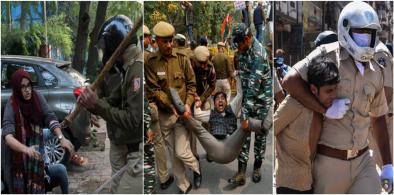
The colonial legacy of the Indian police highlights how the use of force is endemic to policing in India, manifest in the organizational structure and the professional culture which often tolerates and even promotes abuse, write Subhranil Ghosh and Sreemoyee Majumder for South Asia Monitor
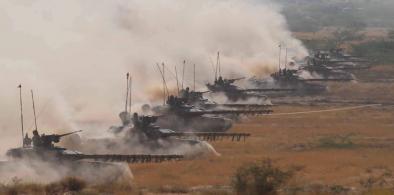
Deterrence requires a national strategy that integrates diplomatic, informational, military, and economic powers. India must develop strategies, plans, and operations that are tailored to the perceptions, values, and interests of specific adversaries, writes Lt Gen P R Kumar (retd) for South Asia Monitor
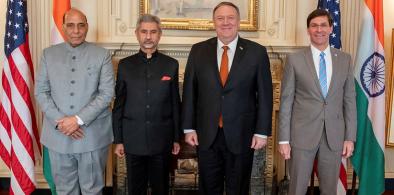
In the event of any hostility with China, India will have to fight two-front war because Pakistan also has assembled a sizeable number of troops and military assets in Pakistan Occupied Kashmir, writes Susmit Kumar for South Asia Monitor
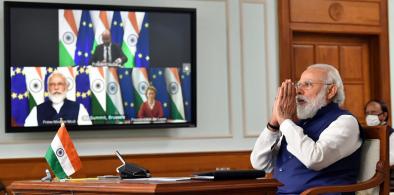
India under PM Modi is charting new territory in a clear break from the past. Indian foreign policy has shifted its goalposts, both in style and substance, writes Amb Bhaswati Mukherjee (retd) for South Asia Monitor

Bangladesh is strategically important to China for dominating the Bay of Bengal in conjunction with Myanmar, writes Lt Gen P. C. Katoch (Retd) for South Asia Monitor
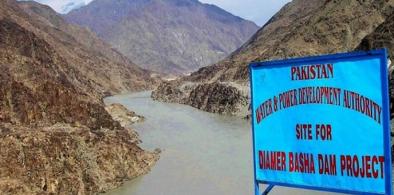
The Pakistan government claims that the Diamer-Bhasha dam project will generate 4,500 megawatts of electricity which will be much cheaper in cost. But the reality is that the world has much better, environmental-friendly, cheaper, and sustainable solutions to generate electricity, writes Muhammad Abbas Khaskheli for South Asia Monitor

Despite the US raising the ante with China over South China Sea and prioritizing freedom of the oceans, New Delhi remains wary of entering into a formal alliance with Washington, writes C Uday Bhaskar for South Asia Monitor

Ershad may have gone, but his shadow can still be seen in the political theatre of Bangladesh, writes Aashish Kiphayet for South Asia Monitor
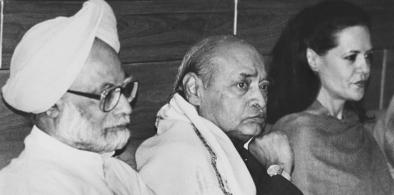
It is to Rao's credit that within a short period of time he not only arrested the decline of his party but was able to unite the country on the most productive political platforms since the freedom movement - the pursuit of prosperity, writes Tarun Basu for South Asia Monitor
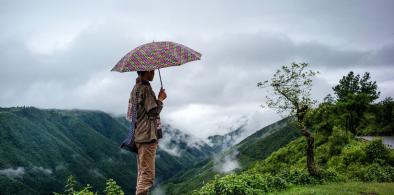
The southwest monsoon’s impact is felt throughout South Asia. Above-normal rainfall is likely over Pakistan, the Maldives, and Sri Lanka, while it could be less than normal in Bangladesh, writes N Chandra Mohan for South Asia Monitor

The Chabahar connectivity project envisages uninterrupted access and movement of goods and services via the sea route and road-rail facilities, making it cost-effective, convenient, and feasible for all parties and boosting the regional economy, writes Vishakh Krishnan Valiathan for South Asia Monitor

From lockdown, we learned that there is a big opportunity for cities to support non-motorised transport to achieve sustainable cities and a non-polluting environment, writes George Cheriyan & Amar Deep Singh for South Asia Monitor