The non-compliance of court orders would not only lower the public confidence on the judiciary in Nepal, but it will also pose threats to judicial credibility and rule of law, writes Jivesh Jha for South Asia Monitor



The borderland TTP now exploits is the same terrain that Pakistan's own security establishment worked for decades to create as "strategic depth." The world of proxy-war infrastructure seldom remains directed towards where its architects have aimed.

A significant factor that emerged after India launched Operation Sindoor against Pakistan in May 2025 was the strain in the India-US relationship under the Trump administration, driven by aggressive tariff disputes and policy friction. This indirectly accelerated India’s push to diversify partnerships, prompting New Delhi to lean more pragmatically into closer economic and strategic ties with middle powers such as Australia.

India and China need not share identical geopolitical visions to agree that a stable border, prosperous border communities and transparent rules are preferable to uncertainty. The most useful measure of Nathu La’s success may therefore be not how many tonnes cross the pass, but how routinely two neighbouring systems learn to work together.
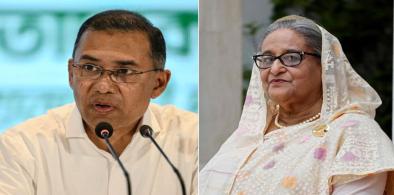
December could therefore become much more than Victory Month. It could become a test of whether Bangladesh's next chapter will be written through democratic accommodation or another round of political vengeance. The danger is that a leader returning to face her past could inadvertently reopen the country's deepest wounds.
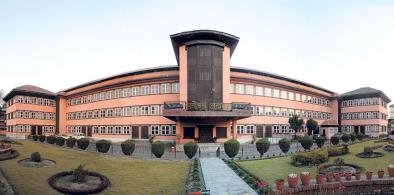
The non-compliance of court orders would not only lower the public confidence on the judiciary in Nepal, but it will also pose threats to judicial credibility and rule of law, writes Jivesh Jha for South Asia Monitor
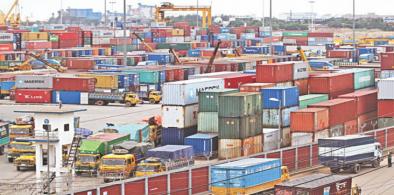
South Asian nations would see a bilateral advantage in establishing trade and economic relationships with each other and the formal association of economic cooperation - SAARC- which they have set up would gain strength by giving each other more trade access and tariff concessions to their goods and services, writes Partha Pratim Mitra for South Asia Monitor
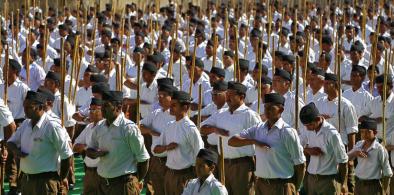
It is clear that in the subcontinent, colonialism is a convenient bogey for the anti-English lobby, writes Amulya Ganguli for South Asia Monitor

For the kind of person she has shown to be in the little time she has shot into prominence, Senator Harris will be a leader in her own right pushing for the national interests of America, not of any other country, writes Dr. Sridhar Krishnaswami for South Asia Monitor
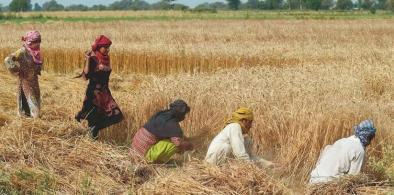
In the pandemic period while the Pakistan government is providing temporary relief to many sectors in the country why is this key area of agriculture being ignored, writes Muhammad Abbas Khaskheli for South Asia Monitor

While Pacific and South China Sea are important, the Indian Ocean remains fundamental for India, writes Lt. Gen (Dr) Yash Malhotra (retd) for South Asia Monitor
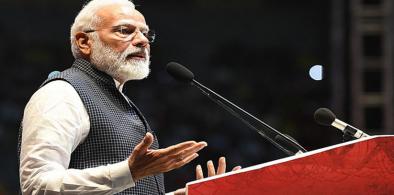
India has major power ambitions. A strong strategic culture must be developed to guide India to fulfill such ambitions, writes Aneek Chatterjee for South Asia Monitor

The Rajapaksas have entertained several projects with Chinese support and money, which is bound to cost Sri Lanka its sovereignty dearly in the coming years, if corrective steps are not taken, writes N.S.Venkataraman for South Asia Monitor
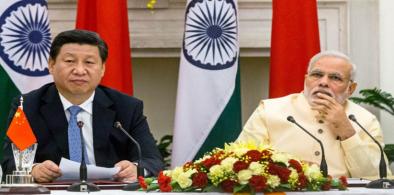
It is high time the Chinese political and military leadership are made to realise that chronic hegemonism and doggedness in constantly trying to crawl and clutch Indian territories are not going to work anymore and that the LAC must be clarified, writes Anil Bhat for South Asia Monitor
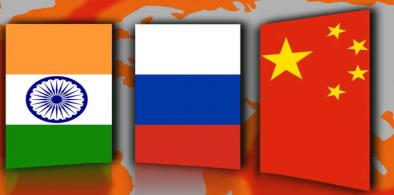
For India, however, questions arise whether the RIC fits New Delhi’s objectives as it increases its strategic engagement with the United States, Japan, and Australia which goes against the RIC’s objective to undermine a growing American presence in the Indo-Pacific, writes Shantanu Roy-Chaudhury for South Asia Monitor
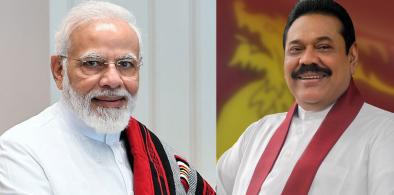
Given Sri Lanka’s strategic location in the Indian Ocean, India seeks to exert all its influence to rebalance the island nation away from the dragon’s embrace, writes N Chandra Mohan for South Asia Monitor

Changing our transport behaviour is therefore the need of the hour. It becomes imperative that cycling and pedestrian walking is fully integrated with our existing public transport systems, writes Pankaj M Munjal for South Asia Monitor

The struggle for building a Ram Temple should be seen as a clash between civilizational values, writes Arun Anand for South Asia Monitor

India’s current policy reorientation suggests that for it to overcome its continental and regional challenges vis-à-vis China’s increasing assertion, it must also involve itself in Beijing’s geographic neighborhood, writes Don McLain Gill for South Asia Monitor

Is the Hindu rashtra already here, marking the end of Nehruvian secularism? Just as Turkey’s Recep Tayyip Erdogan is said to be keen on reviving the Islamic Ottoman empire, forsaking Kemal Ataturk’s secularism, is Modi leading India towards the pre-Muslim period of ancient India?, writes Amulya Ganguli for South Asia Monitor