Pakistani media and celebrities from the entertainment world cannot help but follow Bollywood shenanigans, writes Mahendra Ved for South Asia Monitor


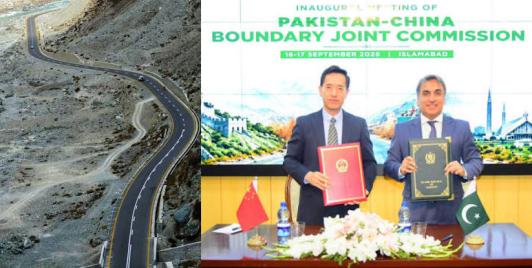
The Pakistan-China Boundary Joint Commission needs to be viewed in backdrop of the fast-changing geopolitics of South Asia and its military implications. The Shaksgam Valley sits immediately north of the Siachen Glacier and just west of Aksai Chin under China's control. By controlling Shaksgam, China can jointly monitor Indian military movements from the north while Pakistan does so from the south.

The question, therefore, is not whether Bangladesh could have secured a particular agreement simply by attending. There is no guarantee that participation in a summit automatically produces investment or diplomatic breakthroughs. The question is whether Bangladesh benefited by being absent.
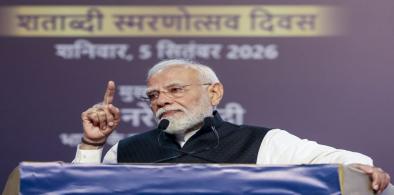
For China to achieve its hegemonic ambitions in Asia, weakening democracies is essential. India, therefore, stands as an iron wall against illiberal encroachments, positioning itself as both a regional hegemon and a defender of democratic order.
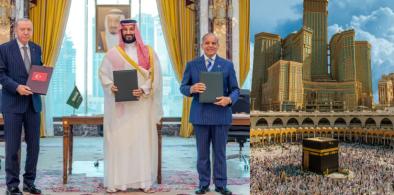
The Mecca Pact, barely a month old, has already been discredited. Its authenticity is in question, its efficacy doubtful. The very notion of an “Islamic Nato” has been exposed as a mirage. Collective defence requires not just declarations but capabilities, coordination and political will. None of these are evident in the pact’s functioning.

Pakistani media and celebrities from the entertainment world cannot help but follow Bollywood shenanigans, writes Mahendra Ved for South Asia Monitor
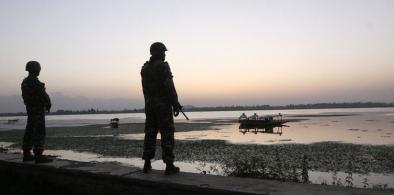
Pakistan has begun introducing new pawns in its old chessboard through The Resistance Front (TRF); intending to trigger mass unrest in the valley by enhancing the insurgents' legitimacy through a 'secular' approach and creating strong militant footholds while keeping the Indian armed forces pre-occupied, writes Aditya Gowdara Shivamurthy for South Asia Monitor
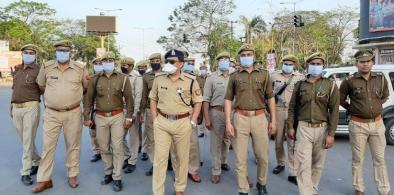
All is not well with India's police forces – in fact, there has been professional incompetence and callous insensitiveness in handling critical situations. The police leadership did not rise to the occasion, writes Prakash Singh for South Asia Monitor
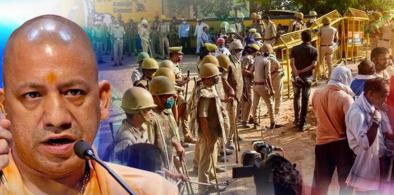
What now appears pretty loud and clear is that the tables have turned in the manner most foul, and the official guns are trained on the victim and her family instead of perpetrators of the monstrous crime, writes Sharat Pradhan for South Asia Monitor

The Indian American community has propelled its way to relevance in American politics over the past two decades. The representation of the community has increased at every level with each election cycle, writes Frank F. Islam for South Asia Monitor
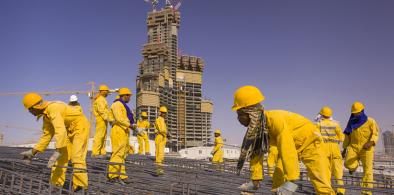
South Asians account for 15 million workers in these countries. The prospect now is for return migration back to India, Pakistan, Bangladesh, Nepal, and Sri Lanka which can only deepen the existing economic gloom in the region, writes N Chandra Mohan for South Asia Monitor
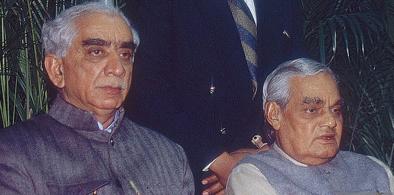
One of Jaswant Singh's finest meetings was with the New York Times editorial board, where members extensively asked about the Indian nuclear programme and why India wasn’t signing the Non-Proliferation Treaty. He patiently and firmly placed India’s position, writes Sanjoy Hazarika for South Asia Monitor
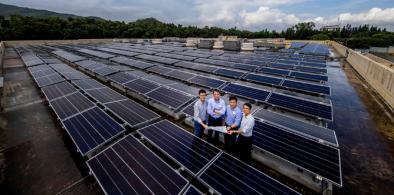
The energy situation in South Asia has been that it is primarily energy fuel deficient as all countries in the region are dependent on substantial imports of fuel, including coal, oil, and natural gas, to meet their growing energy needs, writes Partha Pratim Mitra for South Asia Monitor
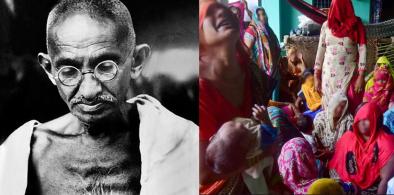
Even as India has marked 70 years of the Republic in January, the closure of the 150th birth anniversary of Bapu reveals the degree to which the nation has moved away from the Gandhian spirit and ethos, writes C Uday Bhaskar for South Asia Monitor

In the past few years, radical extremists have countered Mahatma Gandhi and his teaching and his preaching with acts of ‘war,’ ‘hate,’ and ‘violence,’ writes Frank F. Islam for South Asia Monitor

Gandhi said, means are foreseeable, ends are not. Thus, means can be controlled, managed and guaranteed, writes Ram Krishna Sinha for South Asia Monitor

Churails reflects the voice of Pakistani women against the repressive traditional patriarchal societal norms, writes Azeemah Saleem for South Asia Monitor
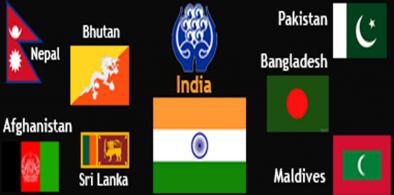
If India is to defend its turf against China in the SAARC region, it must contribute to greater flows of intra-regional trade and investments by accepting “asymmetrical responsibilities” in opening its market to neighbours without insisting on reciprocity, writes N Chandra Mohan for South Asia Monitor
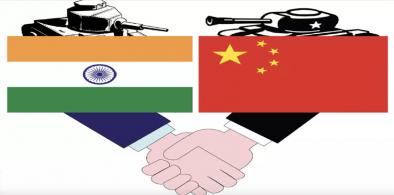
While there is a common belief that the tit-for-tat game that India is playing with China is petty and self-destructive, this strategy has been proven to be pretty useful in the current faceoff, writes Akshat MIttal for South Asia Monitor
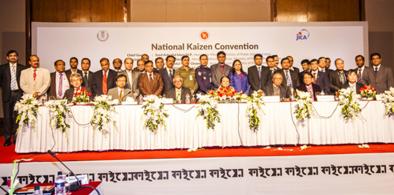
The Cabinet Division of Bangladesh, the executive office of the Prime Minister, has included kaizen in the annual performance agreement (APA) with the allocation of some weightage, writes Dr. Mohammad Rezaul Karim for South Asia Monitor