India's Prime Minister Narendra Modi meets Bangladesh's interim government head Muhammad Yunus

Bangladesh–India Relations at a Crossroads: Needed Recalibration, Not Rupture

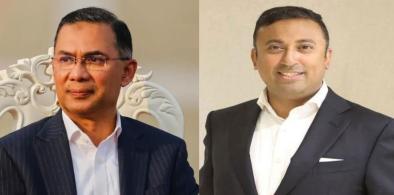
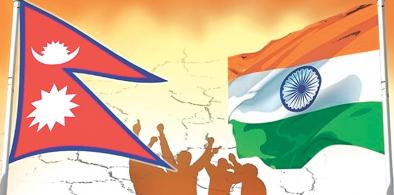
The current strains in Bangladesh–India relations should therefore be seen not as an inevitable deterioration, but as a test of diplomatic maturity. Bangladesh and India share more than geography and history; they share a responsibility to ensure that temporary political frictions do not harden into structural mistrust. In a time of regional uncertainty, neither country benefits from a relationship defined by grievance or miscommunication. 

A Dangerous Power Grab in Pakistan; Unpredictable Consequences For Region

The 27th Amendment, celebrated by its proponents as a security reform, is in reality a political coup executed through constitutional means. It marks not only Munir’s personal triumph but the institutional victory of the military over all other state authorities. As history warns, empowering any unelected institution above the republic’s elected will invites instability—not strength. Pakistan may soon discover that consolidating military power does not secure the nation’s future, but instead places it at greater risk

How Foreign Digital Influencers Are Tarnishing India’s Global Image

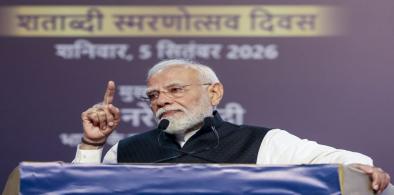
India must now transition from conventional soft-power thinking to visibility governance—the systematic management of how the country appears, circulates, and is emotionally interpreted across global platforms. Failure to do so will leave India’s global image increasingly shaped by commercial incentives outside Indian control.  

Afghanistan Should Not Get Caught In The India-Pakistan Strategic Rivalry

The strengthening of Taliban-India ties runs counter to Pakistan’s interests. The more border clashes intensify between the Taliban and Pakistan, the more secure the Kashmir region and the Line of Control (LoC) become for India. Under such conditions, Pakistan will remain preoccupied with its northwestern border, giving India a unique opportunity to consolidate its control over Kashmir and potentially weaken, drive out, or eliminate Kashmiri militant groups 

More on Spotlight

Why education was a game-changer in the Delhi elections

For years Delhi government schools were known for their indifferent pedagogy, rundown buildings, large dropout percentages and were synonymous with all that was wrong with the country's public-sector education system, writes Tarun Basu for South Asia Monitor

Trump visit: US can help India shore up its naval power

Just before the American  president  sets  course for India, a senior US official noted  that  the US wants an India that is strong with a capable military that supports peace, stability, and a rules-based order in the Indo-Pacific region, writes Cmde C Uday Bhaskar (retd) for South Asia Monitor 

Despite intense efforts, Pakistan remains on FATF grey list

Having understood the American game plan, India acted swiftly to minimise the danger by ensuring that Pakistan did not get off the 'grey list' till its compliance is fully confirmed, writes Brig Anil Gupta (retd) for South Asia Monitor

Trump visit may be high on optics, low on substance

The visit will be high on optics and low on substance as both Trump and Indian Prime Minister Narendra Modi seek relief from domestic pressures and revalidation before their citizens, writes Arul Louis for South Asia Monitor

To win war against polio, Pakistan must first win war against extremism

The issue of polio eradication has taken a perilous form in Pakistan due to the deadly mixture of militancy and developmental issues, writes Sanchita Bhattacharya for South Asia Monitor

When Trump comes calling, tech collaboration should be high on agenda

Technology collaboration by removing tariff and non-tariff barriers, specifically in the high technology segment, could be great lever of strategic and public policy partnerships for both countries, writes Kumar Deep (@kumar_deep) for South Asia Monitor

Can India enhance foreign investor confidence?

India may have jumped the rankings in The World Bank’s Ease of Doing Business but foreign and domestic investors seek improvements in the ease of doing business on the ground, especially in the states, writes N Chandra Mohan for South Asia Monitor

Modi government balancing structural reforms with ideological commitments

The 'tax charter' ushers India into a new era where the rights of taxpayers in terms of imposition and payment of taxes are recognized for the first time, writes Arun Anand for South Asia Monitor

For India's growth to revive, needed deep-going structural reforms

India Inc’s confidence will certainly be boosted with a more transparent and non-adversarial tax regime and a business-friendly policy framework that improves the conditions for doing business on the ground, especially in the various states, writes N Chandra Mohan for South Asia Monitor 

For a place at the global high table, India’s maritime strength needs bolstering

The IN has been at the forefront in supporting the country’s security and diplomatic initiatives in the region through extensive bilateral and multilateral interaction, writes Cmdre Anil Jai Singh (retd) for South Asia Monitor
India should take the lead in regional connectivity and integration

If India has to progress towards deeper engagement under the ‘Neighborhood First’ policy, it has to integrate some of the genuine concerns of its strategic regional partners, writes Kumar Deep for South Asia Monitor 

India's 'Neighbourhood First' policy: Need to put money where its mouth is

The enthusiasm Modi has shown towards the neighbourhood, through his numerous visits has not got translated in overall policy during these years, writes Alakh Ranjan  for South Asia Monitor

Popular apathy towards elections a sign of institutional shortcomings in Bangladesh?

Fracturing political institutions like the Election Commission, Parliament and the Judiciary are also responsible for the popular apathy and political decay in Bangladesh, writes Akmal Hossain for South Asia Monitor

Delhi defeat is BJP's fourth successive state loss: Is there a lesson in it for PM Modi?

The BJP may have also harmed itself by its poisonous communalism which cannot but have put off some of the party’s own sensible supporters, not to mention the Left-Liberals, writes Amulya Ganguli for South Asia Monitor

US pullout from Iraq will embolden Taliban in Afghanistan

The US pullout from Iraq, which will be perceived as withdrawal under pressure, will have a fallout in Afghanistan, writes Lt Gen PC Katoch (retd) for South Asia Monitor