
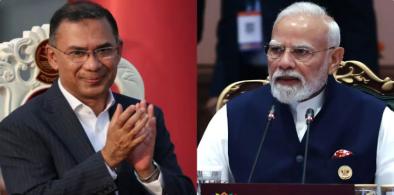
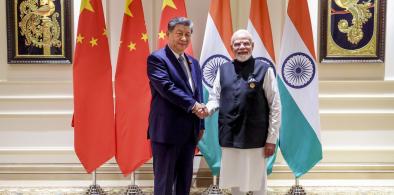
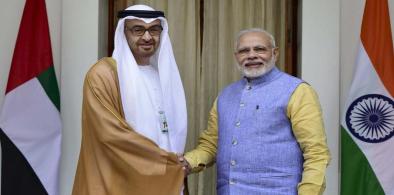
India's Prime Minister Narendra Modi meets Bangladesh's interim government head Muhammad Yunus

Bangladesh–India Relations at a Crossroads: Needed Recalibration, Not Rupture

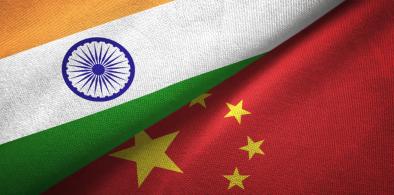
The current strains in Bangladesh–India relations should therefore be seen not as an inevitable deterioration, but as a test of diplomatic maturity. Bangladesh and India share more than geography and history; they share a responsibility to ensure that temporary political frictions do not harden into structural mistrust. In a time of regional uncertainty, neither country benefits from a relationship defined by grievance or miscommunication. 

A Dangerous Power Grab in Pakistan; Unpredictable Consequences For Region

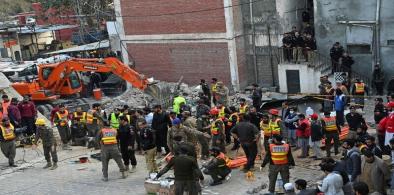
The 27th Amendment, celebrated by its proponents as a security reform, is in reality a political coup executed through constitutional means. It marks not only Munir’s personal triumph but the institutional victory of the military over all other state authorities. As history warns, empowering any unelected institution above the republic’s elected will invites instability—not strength. Pakistan may soon discover that consolidating military power does not secure the nation’s future, but instead places it at greater risk

How Foreign Digital Influencers Are Tarnishing India’s Global Image

India must now transition from conventional soft-power thinking to visibility governance—the systematic management of how the country appears, circulates, and is emotionally interpreted across global platforms. Failure to do so will leave India’s global image increasingly shaped by commercial incentives outside Indian control.  

Afghanistan Should Not Get Caught In The India-Pakistan Strategic Rivalry

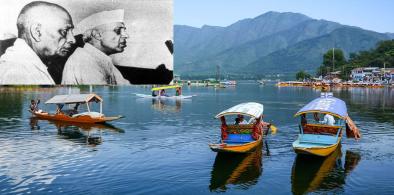
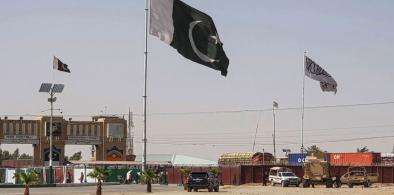
The strengthening of Taliban-India ties runs counter to Pakistan’s interests. The more border clashes intensify between the Taliban and Pakistan, the more secure the Kashmir region and the Line of Control (LoC) become for India. Under such conditions, Pakistan will remain preoccupied with its northwestern border, giving India a unique opportunity to consolidate its control over Kashmir and potentially weaken, drive out, or eliminate Kashmiri militant groups 

More on Spotlight

Don’t trust Pakistan on wheat to Afghanistan; Iran option can be explored

As Pakistan may play dirty with Indian aid to Afghanistan transiting its territory, India could consider the Iran route, writes Lt Gen P. C. Katoch (Retd) for South Asia Monitor

The unprecedented rise of the Indian-American CEO in corporate America

There’s no doubt we will see a growing number of Indians leading companies in America and around the world. And we hope that more of these leaders will be women, writes Raj L Gupta for South Asia Monitor

CPEC: A harbinger of utopia or misery for the people of Gwadar?

The success of the CPEC project, which is dubbed as a “game-changer” for the region, will be in question if the concerns of the people of Gwadar are not dealt with practically by the Pakistani establishment, writes Nizam Hassan for South Asia Monitor

Pakistan exploiting Gwadar in the garb of CPEC

Disregarding Gwadar in particular and forsaking Balochistan in general is causing a sense of alienation among the people, writes Mannan Samad for South Asia Monitor

Why Ghani failed Afghanistan: Culture of corruption, mismanagement and disrespect

Many competent and high qualified individuals refused to work in Ghani's administration and quit their jobs in frustration, writes Qudratullah Karimi for South Asia Monitor 

Work-life conflict in Covid era: Is ICT a boon or a curse?

Technological domination by developed nations emerges as a new form of colonization as developing countries are the markets, writes Dr Mohammad Rezaul Karim for South Asia Monitor 

Omicron and vaccine inequity: How to fix a broken system

Covid-19 led to disconnected efforts of governments, severely damaging global supply chain linkages, now leading to Omicron strain, writes Akshat Singh for South Asia Monitor

Ending global fishery subsidies: India leads the fight

Overfishing by highly subsidized distant water fishing fleets threaten the low-income countries that depend on fish for food sovereignty, hurting livelihoods of fisherfolk of this region like India, Sri Lanka, Bangladesh and Pakistan, writes N. Chandra Mohan for South Asia Monitor

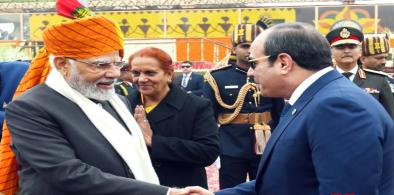
Why no Bangladesh leader as chief guest at India's Republic Day yet?

It remains unclear why no leader from India’s closest neighbour Bangladesh has ever been a chief guest at the Republic Day parade, writes Nilova Roy Chaudhury for South Asia Monitor 

Pakistan's headaches multiplying: Afghan spillover, Chinese pressure compounding economic woes

Pakistan seems headed to greater instability with Taliban cadres joining ISIS-K against China for genocide against Muslims in Xinjiang, writes Lt Gen P. C. Katoch (retd.) for South Asia Monitor

Post-Glasgow, India should become a leader in the green energy drive

By becoming a leader in the green energy movement now, India can reap economic and climate change benefits for the nation and its citizens in the future, writes Frank F Islam for South Asia Monitor 

Playing with fire: Communal flames in India pose a national threat

It is a sad picture of India of the 21st century that communal fires have erupted in states as far apart as Tripura and Maharashtra, writes Jagdish Rattanani for South Asia Monitor 

Why Sri Lanka and Bangladesh need a FTA

Sri Lanka and Bangladesh must sign a Free Trade Agreement (FTA) and, if needed, a Preferential Trade Agreement (PTA) to boost trade and connectivity, writes Pathik Hasan for South Asia Monitor 

Why a strategic turnaround by Modi on the farm laws

The Modi government in India has repealed farm laws as it does not want to pay a political price in coming state elections, writes Jagdish Rattanani for South Asia Monitor 

How bad is Afghanistan’s economy? Recipe for a failed state

Extractive institutions ensured that the limited gains of growth in Afghanistan were cornered by political elites like warlords, writes N. Chandra Mohan for South Asia Monitor