Thousands protest in PoJK's Rawalakot

Pakistan: Oppressor at Home, Peace Broker Abroad

This contradiction—peace abroad, repression at home—defines Pakistan’s current posture. While Islamabad seeks international recognition as a mediator, its domestic record is marred by bloodshed and denial of democracy. The JAAC movement, rooted in basic economic grievances, has become a symbol of resistance against this hypocrisy. 

Myanmar, India and the Northeast: Balancing Security, Connectivity and Geopolitics

The strategic significance of the offensive lies in control over Kachin State’s heavy rare-earth deposits, which account for roughly half of the world’s supply and are critical for electric vehicles and wind turbines. The KIA took control of these lucrative mining areas near Pangwa and Chipwi in late 2024 and has since heavily fortified its positions.

Xi Jinping’s Loosening Leverage Over North Korea Amid Shifting Indo Pacific Security Dynamics

China in recent times has elevated some of its key bilateral relations, Vietnam, Pakistan, North Korea, to the level where they are now considered by Beijing as  consequential to regional and global peace and stability. China’s foreign and 'grand strategy' is aimed at realizing a shared destiny for mankind and nurturing a new type of great-power relations within a multipolar world. This requires a strategic alignment between China’s strategy and others.

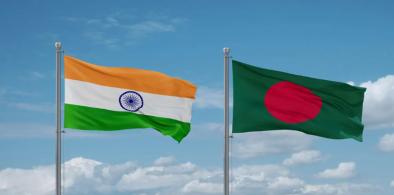
Bangladesh's 'Red Telephone' Breach: More to it Than Meets the Eye?

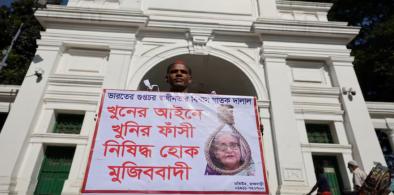
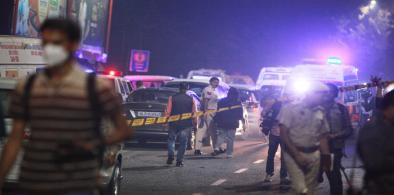
More importantly, the alleged sabotage occurred during a period of political transition following the developments of August 2024. Institutional loyalties, political rivalries, and competing networks of influence continue to shape Bangladesh's political landscape. In such a context, any breach involving the Prime Minister's secure communications infrastructure deserves careful examination.

More on Geopolitics and Strategic Affairs

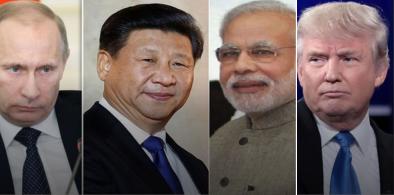
The Art of Losing Friends: Modi’s 21-Day Gamble with Donald Trump

The unintended winner in this drama may well be China. Not just because Modi plans to travel to Beijing. If the trade standoff continues, Indian exporters—particularly in labor-intensive sectors like textiles, pharmaceuticals, electronics, and jewelry—will lose market share to Chinese and Vietnamese rivals, not to speak of South Asian rivals like Bangladesh and Pakistan, at least on textiles.

Who Is Leading the AI Innovation Race? India Can Lead New Wave of AI Innovation for Global South

India has many of the core ingredients necessary for AI leadership: A large and growing pool of STEM graduates (over one million annually). Pioneering digital public infrastructure, including Aadhaar, UPI, and CoWIN.Rich linguistic and cultural diversity to train context-sensitive, globally adaptable AI models.

US-India ties under Trump tariff strain: Major challenge for Modi government

In the light of his calculated avoidance of any media interaction in the last 11 years, it is unlikely that he would be asked what he meant by “personal price”. For a prime minister to say something that serious in such categorical terms requires attention. Conversely, it may just be in keeping with his penchant for political theater to keep his opponents and supporters guessing what he meant.

India's GDP Numbers: The Myth of Prosperity and the Reality of Inequality

According to the World Inequality Lab, the top 1% own over 40% of India's total wealth. The starkness of this trend is apparent: a "rising India" for a few, but ongoing deprivation for the majority.

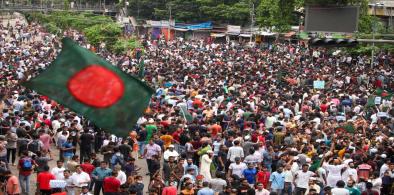
Bangladesh a Year After Hasina: A Nation in Search of an Identity

Which is why, the recent attacks on the ancestral homes of Tagore and Satyajit Ray, who are Indian but are also both global icons of Bengali culture, indicate considerable confusion in the thinking that is guiding Bangladesh policy since Hasina fled Dhaka. Has Islam and the Islamic identity subsumed the Bengali identity and culture of Bangladesh?

Democracy on Deadline: How Electoral Bureaucracy Disenfranchises The Marginalised in Bihar

Bihar's 2025 electoral revision controversy is not only a national alarm bell but reveals how easily democratic process can be exclusionary under the guise of order; how silence can mask erasure. To preserve democracy, India must reimagine governance not as a gatekeeper of rights but as a facilitator of justice; it must transition from exclusionary governance to one rooted in dignity, justice, and participation, as voting is not just a right but recognition.

Trump’s Tariffs, India, And The Misreading Of America

A hug, even an awkward or forced one, between Modi and any world leader, particularly Trump will have no bearing on his policy however much he continues to refer to both India and the prime minister as his friend. At best, it is a lip-deep expression that so many Indians, both here in America and in India, have treated as an article of faith. It is anything but that.

Why Pakistan Remains Relevant For International Community

This client-state relationship is critical for the illusionary perseverance of Pakistani relevance. Pakistan becomes indispensable not because it is reliable, but because it's situationally useful. The US, China, and Gulf states don’t expect consistency, they expect deliverables. As long as Pakistan delivers (or threatens to disrupt), it retains leverage.

India’s Strong Economic Fundamentals Shield It from Trump’s Tariff Threat — and Challenge Vietnam

Trump’s renewed tariff war may upend the global trade landscape once again, but India is well-positioned to weather the storm. Its strong domestic economic fundamentals, relatively low dependence on merchandise exports for GDP growth, and diversified export base put it at a strategic advantage—particularly over export-heavy rivals like Vietnam and China.

Taliban's Rejection of the ICC Warrants Undermines Global Justice

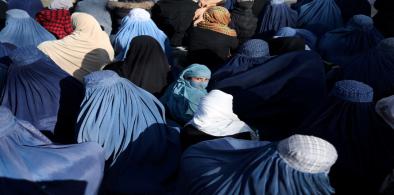
The repressive nature of the Taliban government along with the absence of a credible international enforcement mechanism for human rights have left Afghan women in despair. Publicly rejecting the ICC ruling and lack of enforcement mechanism of such organizations might set an example to other ideologically resistant countries that global norms can be discarded without consequences.

India remains central to Sri Lanka’s economic stability, strategic objectives

India has extended a $1 billion credit line for Sri Lanka by one year. Given these realities, Sri Lanka’s path to stability must be built in close collaboration with India. This is more than an economic necessity; it is a strategic recalibration. Working with India also brings Sri Lanka closer to meeting U.S. expectations while balancing regional interests.

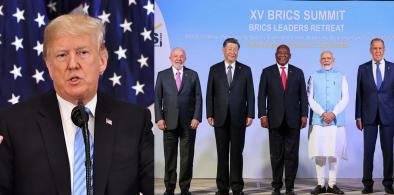
BRICS: Pitching for Multilateralism in a Changing Global Order

The recent India-Pakistan conflict, China’s support for the latter, and China’s growing footprints in South Asia – clearly aimed at undercutting India and keeping New Delhi tied down in its immediate neighbourhood -- cannot be overlooked. Recently, China has proposed an alternative to the defunct SAARC organisation Beijing is also trying to build up a China-Bangladesh-Pakistan trilateral.

As Nepal's Democracy Falters, People Romanticise The Past

If Nepal’s political parties cannot provide a functioning and trustworthy alternative, the longing for the past—however problematic—will continue to grow. For democracy to survive and thrive in Nepal, it must deliver not just procedures and elections, but stability, accountability, and a renewed social contract with the people.

Establishing Narrative and Perception Dominance in Modern Conflict: A National Security Imperative for India

A nation's power today is judged not just by its military or economy but also by the credibility, speed, and resonance of its narrative. As adversaries evolve their hybrid warfare strategies to target public opinion, social trust, and international perception, India must develop a narrative response architecture that is anticipatory rather than reactive

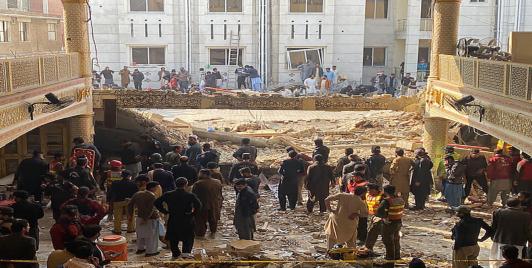
From Dhaka to Balochistan: Pakistan's Recurring Tragedies That It Draws No Lessons From

Flashforward from 1971 to 2025 to a Pakistan facing almost the same kind of problems that it was facing in 1971: same intrusions of military in public affairs, same hopelessness, same corruption, same or more inflation and, most importantly, the same threat of rebellion.