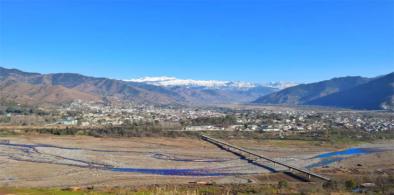
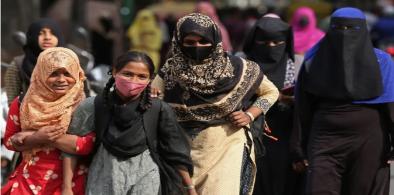
Bhutan and its people

Where Happiness is a Measure of Governance: What Bhutan’s Democratic Consolidation Can Teach Global South Nations

As democracies around the world confront public dissatisfaction, Bhutan reminds us that the health of a democracy cannot be measured only through the ballot box.  It must also be evaluated through the well-being, dignity, security, and trust experienced by citizens.

India's Education Deficit: Real Reforms Lie in Making Coaching Redundant

India's digital infrastructure can certainly deliver free coaching to millions. But an even greater achievement would be to build an education and employment system in which families no longer feel compelled to buy coaching in the first place. Making bottled water cheaper is useful. Making the water from taps trustworthy is the real solution.    

India’s Education Report Card: Student Retention, not Enrolment is Key to Success

The message is clear. India needs not merely more children entering classrooms, but more children staying, completing and learning. Achieving the ambitions of NEP 2020 and SDG 4 will require sustained public investment, stronger secondary-school retention, better support for vulnerable learners and a sharper focus on completion.

For a Developed India, Its Young Need to Be Instilled with Civic Values First

The virtues like civic discipline or gender sensitivity in India are not at premium. Basic civic sense is conspicuous by its absence. It gets manifested as indiscriminate littering, spitting, traffic indiscipline, vulgar or derogatory comments against women etc. Such attitudes find manifestation in foreign destinations as well.

More on Education and Gen Z Voices

Protecting families from ruinous healthcare costs

With the very limited government money on offer and the need for protection being almost universal, the states would do well to use that money instead to offer an insurance plan that covers their entire population (the poor and the non-poor) for only a limited number of very expensive and very rare conditions.

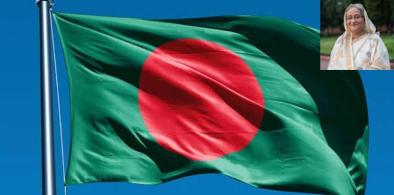
Bangladesh has become a role model for other LDCs

Prime Minister Hasina has repeatedly said that infrastructure development has been happening at a massive rate in Bangladesh that will attract foreign investors.

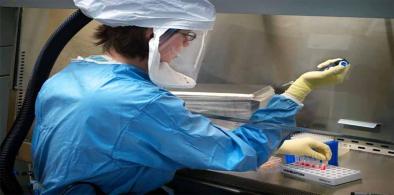
Covid, Chinese lab 'leaks', and the risks of playing with nature

Traditional Indian wisdom teaches us that we are not separate from nature, that all forms of life are connected and inseparable from the rhythm of the planet – the air, the mountains, the forests, the seas and the sun. If this thinking is allowed to take root again, sustainability is already achieved.

Improved connectivity an imperative to realise intra-regional trade potential in the BBIN subregion: CUTS

CUTS report launch - "Multimodal Connectivity for Shared Prosperity - Towards Facilitating Trade in th BBIN Subregion"

IMF loans and the perils of post-truth politics in Bangladesh

An economic crisis should not become a matter of party polemics unless the problem lies in management. Bangladesh’s economic recession is largely attributed to the pandemic and the Ukraine war and has the least to do with economic management. As a result, it is a state matter, and requires a consensus among the political parties to deal with it effectively.

To overcome economic crisis, does Sri Lanka need a little less democracy?

If the postponement of local body polls means less democracy for some time, let it be so, and it is in the interest of Sri Lanka.

Despite high-profile anti-corruption drives, corruption is rampant across India

While campaigns for honesty in public and private life by various sources have been taking place for a long time in the country, this has not seen any reduction in the level of corruption in India. The repeated catching of corrupt persons by the vigilance department has also not yielded many benefits as they are only the proverbial tip of the iceberg.

How to reduce fear in children: Encourage reading; expand mental horizons

Thus reading, listening to great stories, discussing interesting issues in schools, will help children learn to focus and will help them to reduce their fears and make them better citizens.

The eco chamber syndrome: Controlling minds is not what democracy needs

Authoritarian party leaders and military or religious dictators do not wish to confront alternative ideas or opinions; so there is always an attempt to suppress the ‘other’ voices,  both offline and online. These often lead them to put citizens into an eco-chamber where only praising of the power structure gets heard and echoed. Tolerance is the first victim of this, and the next is free speech, and then freedom in general.

Channelling religion in the cause of climate justice: When faith actors combined forces with climate activists

‘Can Interfaith Collaboration Contribute to Climate Justice?’ -- the discussion was the fifteenth in the Sapan series ‘Imagine! Neighbours in Peace’.

Need to inculcate reading habits in children in this age of audio-visual addiction

Love for book reading cannot take place overnight. All of us need to work together to make our children get into the habit of reading books. So on every occasion, we should gift books to children.

The second anniversary of Myanmar's audacious military coup: International community found wanting

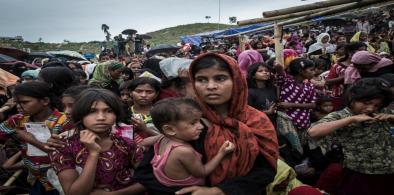
The Tatmadaw's violence, repression, and civil war in Myanmar have left people living in perpetual fear and uncertainty. The international community must restore democracy to Myanmar's youth and give displaced people like the Rohingyas new hope.

BBC has been biased in its India coverage

BBC has since decades been projecting the Indian Army and security forces who have been bearing the brunt of terrorism in J&K and the Northeast for decades as violators of human rights, very often at the behest of terrorist organisations through their overground representatives and separatists.

Hard work or Harvard: What India needs is more educational autonomy

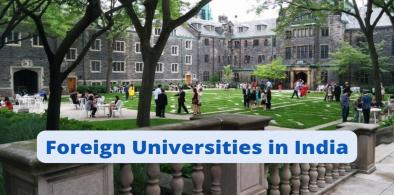
If autonomy, creativity, freedom to design curriculum, the appointment of faculties, and incentivization of research are used as a sales pitch to lure world-acclaimed institutions, why not set your own house (Indian universities) in order first? Why not harness the potential of Indian universities like the JNU instead of stigmatising them? 

Netaji Subhas Bose and his concept of nationalism

But unfortunately, the entire history, struggle, and ideas of nationalism of Netaji are restricted to a few paras in history textbooks.