Representational Photo

India's Labour Reforms Appear More Industry-Friendly, Than Labour-Friendly

The problem in the Indian context is not about the legal codes but about the on-ground working conditions that remain markedly at odds with what is professed from the corridors of power and from the boardrooms of owners and directors. When this market reality meets with a government that has not built capital with the workers and is further seen as working in favour of business lobbies, then in effect trust disappears and the government has hurt itself and the so-called reforms by pushing through measures that could trigger fierce resistance.

India’s Path To Global Standing And National Wellbeing: Need To Sustain Momentum Of Reforms

The real taste of the pudding, the real measure of progress, will be revealed only when the average Indian experiences opportunity, fairness and security as everyday realities. When a dispute is resolved in weeks instead of years, when a farmer receives fair price directly, when a start-up gets clearance swiftly, when a citizen is treated with respect in a government office, then only the transformation will have occurred deep down.

क्या भारत की औपनिवेशिक शिक्षा उसकी पारंपरिक ज्ञान-व्यवस्था के विपरीत है?

क्या अंग्रेज़ी ने क्षेत्रीय भाषाओं को दबाया? इतिहास इसके विपरीत संकेत देता है। शिक्षा के विस्तार ने क्षेत्रीय भाषाओं को भी मज़बूत किया। लोकमान्य तिलक ( केसरीमहारत्ता ) और गांधी ( नवजीवन ) ने क्रमशः मराठी और गुजराती में प्रभावशाली अख़बार शुरू किए। रवींद्रनाथ टैगोर (बंगाली) और मुंशी प्रेमचंद (हिंदी) जैसे साहित्यिक दिग्गज इसी दौर में फले-फूले।

Is India's Colonial Education At Odds With Its Traditional Knowledge?

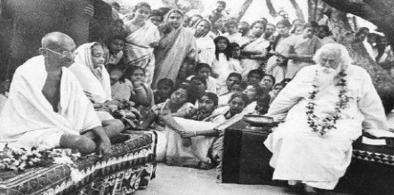
Did English suppress regional languages? History suggests otherwise. The expansion of education strengthened regional languages as well. Lokmanya Tilak (Kesari, Maratha) and Gandhi (Navjivan) launched influential newspapers in Marathi and Gujarati respectively. Literary giants such as Rabindranath Tagore (Bengali} and Munshi Premchand (Hindi) flourished during this very period.

More on Perspective

Shackled Indian deportees expose US hypocrisy on human rights

The Trump administration is now redefining the migrant policy and methodology of dealing with the migrant issues for the rest  of the world to observe, evaluate and practice.It is likely that those from South Asia and a few other countries would  think several times before trying to enter the USA in an illegal manner and perhaps would stop indulging in such misadventure.

Modi in US: India must draw a clear line with Trump

The planned deportation of 20,000 Indians from the US will require an endless stream of flights, if all of them are to be sent back, not to speak of more who are being caught as raids by US immigration continue. None of them should be allowed to be detained without access to lawyers, medical aid and humane conditions in the facilities they are kept. None of them should be allowed to be sent back in chains.

Journalists in South Asia must speak up loudly for justice and freedom

Three journalists were murdered in Bangladesh last year, and authorities detained four journalists seen as supporters of erstwhile Prime Minister Sheikh Hasina, unseated by the ‘monsoon revolution’ last August after a despotic 15-year rule. The subsequent caretaker government has targeted dozens of journalists, whose reporting was considered favourable toward Hasina’s government, in criminal investigations.

PECA 2025: Pakistan attempts to regulate and shape the digital space

While no legal framework is entirely immune to exploitation, democratic societies must continuously refine their regulations to balance security and individual freedoms. Rejecting PECA 2025 outright ignores the fact that unregulated digital spaces can be just as detrimental as overly restrictive regulations.

Whither Viksit Bharat? Country's rising inequality not addressed in budget

Overall, India needs 7.0 to 8.0 % growth for 25 years continuously to become a developed economy. This does not seem to be plausible or possible at present.  It appears that the government is neither able to define the term Viksit Bharat clearly and in detail nor has it been able to design the pathway to Viksit Bharat. 

Women in Indian politics: Need for foundational changes to address gender disparity

In the recent 2024 Lok Sabha elections, only 797 women filed nominations, out of a total of 8,360 candidates, and only 74 women were elected (Lok Sabha Elections 2024, Association of Democratic Reforms). From 2019 to 2024, the share of female candidates increased by only 0.5%, and their winning share remained below average, regressing to 13% of total MPs, a decrease that contrasts starkly with the legislated reservation of 33% of seats for women

Myth and reality of India's independence history

The massive foundations for economic, educational, scientific and industrial prosperity were laid much before the divisive politics of Ram Temple got a boost in the decades of 1980 and 1990s. Bhagwat’s statement totally ignores the massive anti colonial movement. The reason for this is that those who stood for Hindu and Muslim nationalism were not part of it.

Is India’s slow indigenous production hampering its air defence preparedness?

With China having around 1800 fighter aircraft and Pakistan about 400, India’s tally of approximately 530 combat aircraft amounting to 31 squadrons (each with 16 to 18 aircraft) means that it is woefully short of combat aircraft in view of the threat it faces from its two principal adversaries and two wide borders.

Extended work hours and the forgotten quest for a good life

A recent study by the World Inequality Lab reports that India’s top 1% income share is among the very highest in the world. According to it, 1% of the population holds 22.6 % of the county's income and has access to a staggering 40.1% of national wealth. Hurun Global Rich List 2024 reports that India has 271 billionaires and ranks third, next to China and the USA. 

Harsh truth behind California wildfires are policies valuing profit over people: A Pakistani American rights attorney speaks out

For decades, we’ve allowed corporations to poison our planet, exploit our labor, hoard our resources, and abandon us in times of crisis. The flames we’re seeing today are the direct result of those choices.

90-hour work week: Who cares about work-life imbalance!

While it is naive to expect a strong welfare system for the working class population in an intense and competitive business environment, what really bothers the proponents of social equity is that the physical and mental health of the working class have been hardly given thought to both by the state as well as the business class. 

Transforming Bangladesh's urban landscape: Need to embrace risk-based thinking and public-private partnerships By Bipasha Rani Paul

Bangladesh's real estate industry has evolved significantly over the past few decades, driven by rapid urbanization and increased economic activity. Dhaka, the capital, remains the epicenter of real estate development due to its role as the primary hub for commerce, education, and government services. However, land scarcity in Dhaka and other major cities has driven property prices to unprecedented levels

Should Indian politicians have a retirement age?

In fact, the decision to hang on in public life has given rise to the perpetuation of political dynasties. Successors like their parents or grandparents are not trained at the grassroots to understand the nuances of politics and often are not competent to occupy the seat of authority. Their politics produce suboptimal outcomes, and society is deprived of the benefits of the democratic franchise.

Are growth numbers more important than the people? The Indian economic story begs some hard questions

Communal divides are bad, Economic divides being created can be equally so, with increasing concentration of wealth in the hands of fewer people so that we have a nation split, literally and metaphorically, between the few within gated communities and the majority who cannot step in. 

Romanticizing overwork: How corporations blur market and social norms in India

The BJP, time and again, has highlighted how PM Narendra Modi works 24X7 and sleeps for four hours, symptomatic of his due diligence pertaining to work. The idea of overworking is often draped as self-sacrifice, a cultural phenomenon typically revered in Indian society.