According to the World Inequality Lab, the top 1% own over 40% of India's total wealth. The starkness of this trend is apparent: a "rising India" for a few, but ongoing deprivation for the majority.
India’s calibrated reopening to Chinese FDI is a step forward, but its restrictive framework may limit the inflow of capital, technology, and expertise needed to boost high-tech manufacturing. If the objective is to transform India into a global manufacturing hub and reduce the trade deficit with China, a more nuanced approach may be required—one that balances security concerns with economic imperatives.
What is unfolding across South Asia’s cities is not just an urban crisis, it is a reflection of deeper tensions within development itself. Growth is happening, but it is not translating into stability. Opportunities exist, but they are unevenly distributed. Systems are expanding, but not fast enough to keep up with demand. Cities, which have long been seen as places where people come to improve their lives, are increasingly becoming spaces where people struggle to sustain them.
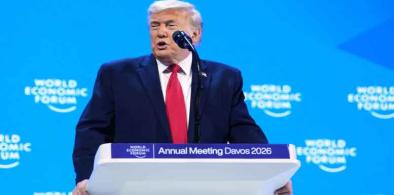
South Asia’s tragedy is not geography or lack of industrial capacity. It is the failure to convert proximity into predictable partnerships. Trump’s tariff threats could remain episodic political theatre, or they could signal a more protectionist global environment. Either way, South Asia’s dependence on Western concessions exposes it to recurring uncertainty. Reviving SAFTA in spirit and substance would not eliminate trade with the West. It would diversify risk and embed value creation within the region.
The current war has exposed Bangladesh’s structural vulnerabilities: dependence on imported energy, fragile reserves, and narrow fiscal space. For the new government, the stakes are clear—stabilize fuel and food supplies now while building resilience through diversified energy, broader exports, and stronger social protection. Wars in the Gulf may be fought thousands of miles away, but their economic shockwaves reach Bangladesh within days. In the end, the crisis will be felt in three simple pressures shaping everyday life: oil prices, food costs, and migrant jobs.
According to the World Inequality Lab, the top 1% own over 40% of India's total wealth. The starkness of this trend is apparent: a "rising India" for a few, but ongoing deprivation for the majority.
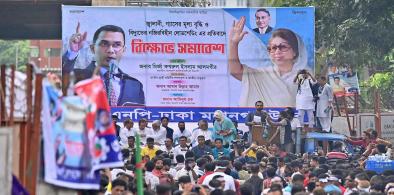
Which is why, the recent attacks on the ancestral homes of Tagore and Satyajit Ray, who are Indian but are also both global icons of Bengali culture, indicate considerable confusion in the thinking that is guiding Bangladesh policy since Hasina fled Dhaka. Has Islam and the Islamic identity subsumed the Bengali identity and culture of Bangladesh?
Bihar's 2025 electoral revision controversy is not only a national alarm bell but reveals how easily democratic process can be exclusionary under the guise of order; how silence can mask erasure. To preserve democracy, India must reimagine governance not as a gatekeeper of rights but as a facilitator of justice; it must transition from exclusionary governance to one rooted in dignity, justice, and participation, as voting is not just a right but recognition.
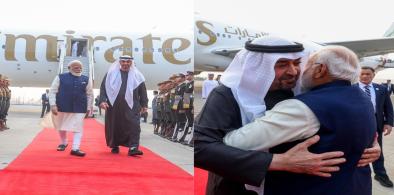
A hug, even an awkward or forced one, between Modi and any world leader, particularly Trump will have no bearing on his policy however much he continues to refer to both India and the prime minister as his friend. At best, it is a lip-deep expression that so many Indians, both here in America and in India, have treated as an article of faith. It is anything but that.
This client-state relationship is critical for the illusionary perseverance of Pakistani relevance. Pakistan becomes indispensable not because it is reliable, but because it's situationally useful. The US, China, and Gulf states don’t expect consistency, they expect deliverables. As long as Pakistan delivers (or threatens to disrupt), it retains leverage.
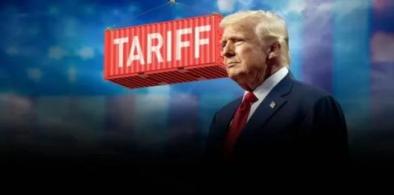
Trump’s renewed tariff war may upend the global trade landscape once again, but India is well-positioned to weather the storm. Its strong domestic economic fundamentals, relatively low dependence on merchandise exports for GDP growth, and diversified export base put it at a strategic advantage—particularly over export-heavy rivals like Vietnam and China.
The repressive nature of the Taliban government along with the absence of a credible international enforcement mechanism for human rights have left Afghan women in despair. Publicly rejecting the ICC ruling and lack of enforcement mechanism of such organizations might set an example to other ideologically resistant countries that global norms can be discarded without consequences.
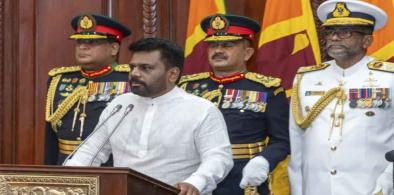
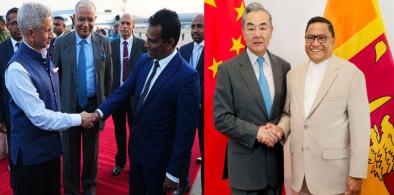
India has extended a $1 billion credit line for Sri Lanka by one year. Given these realities, Sri Lanka’s path to stability must be built in close collaboration with India. This is more than an economic necessity; it is a strategic recalibration. Working with India also brings Sri Lanka closer to meeting U.S. expectations while balancing regional interests.
The recent India-Pakistan conflict, China’s support for the latter, and China’s growing footprints in South Asia – clearly aimed at undercutting India and keeping New Delhi tied down in its immediate neighbourhood -- cannot be overlooked. Recently, China has proposed an alternative to the defunct SAARC organisation Beijing is also trying to build up a China-Bangladesh-Pakistan trilateral.
If Nepal’s political parties cannot provide a functioning and trustworthy alternative, the longing for the past—however problematic—will continue to grow. For democracy to survive and thrive in Nepal, it must deliver not just procedures and elections, but stability, accountability, and a renewed social contract with the people.
A nation's power today is judged not just by its military or economy but also by the credibility, speed, and resonance of its narrative. As adversaries evolve their hybrid warfare strategies to target public opinion, social trust, and international perception, India must develop a narrative response architecture that is anticipatory rather than reactive
Flashforward from 1971 to 2025 to a Pakistan facing almost the same kind of problems that it was facing in 1971: same intrusions of military in public affairs, same hopelessness, same corruption, same or more inflation and, most importantly, the same threat of rebellion.
The warm reception given to Pakistan's Army Chief in Washington is more than symbolic. It indicates Washington's strategic calculation—that India, despite its rhetoric, is becoming a more problematic partner. Washington, while not forsaking India, is hedging its bets. Its embrace of Pakistan is a backup plan.
India’s states play an outsized role in public spending accounting for nearly +/- 60% of total government expenditure. However, their fiscal health varies greatly across pan India. As someone closely observing both macroeconomic trends and grassroots governance models, I notice a growing divide between states that follow prudent fiscal practices and those still trapped in populist spending cycles.
When democracies embrace the traits of war economies and view peace as a sign of weakness, we need to question not about those who benefit from war, but rather about those who continue to engage in it. Not only does it include safety, but it also includes power, contracts, careers, and control.