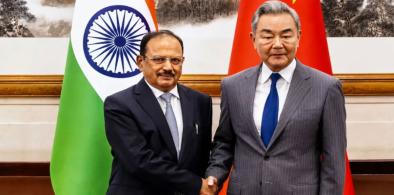

Representational Photo

Jaish-e-Mohammed's Female Brigade: ISI-Backed New Jihadi Units Intensify Counterterrorism Challenges in South Asia

Unlike earlier jihadist cells dominated by Pakistani nationals, this unit deliberately recruits women from Indonesia, the Philippines, Uzbekistan, and other foreign countries. Reason behind recruiting non-Pakistani nationals serves a dual purpose: it complicates attribution and shields Pakistan’s security apparatus from direct accountability. Such operational sophistication reflects ISI’s continued role not merely as a passive enabler but as an active architect of jihadist adaptation.

Securing The Digital Frontier: A Unified Call For Cybersecurity In South Asia

South Asia has the potential to be a global digital leader. It has a young population and a booming tech industry. However, this potential will only be realized if the region is secure. We must treat cybersecurity as a pillar of national security, just like border defense. This requires better technology, smarter laws, and stronger regional ties. The digital threats of 2026 are fast and complex. To meet them, South Asia must be faster and more united. The time to build a collective digital shield is now, before the next major crisis occurs.

Aid, Ports, And The Limits of Incrementalism: What India’s Budget Says About Its Foreign Policy

Yet the strategic costs are real. Reduced engagement in Bangladesh risks ceding influence at a moment when Dhaka is actively diversifying its partnerships. Hesitation over Chabahar weakens India’s leverage in Iran and Central Asia and underscores its vulnerability to US pressure even as it seeks a more multipolar foreign policy. The 2026–27 Budget does not signal a dramatic shift in Indian foreign policy. There is no abandonment of neighbours-first rhetoric or of connectivity-led diplomacy. What it reveals instead is a narrowing circle of feasible economic action.
 

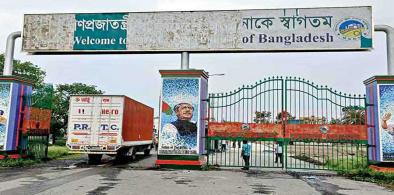
Mob Rule As Political Strategy: Reshaping Bangladesh's Secular Memory And Pluralistic Bengali Culture

The ideals of 1971 represent inclusivity, human dignity, and resistance to oppression. Baul and Sufi traditions reject radical views and promote humanism and coexistence. Islam in Bengal arrived largely through Sufis—from Persia, Arabia, and Central Asia—who emphasized spirituality, tolerance, and accommodation. These traditions resonated with local Hindu practices and gave rise to syncretic forms such as Baul philosophy. Rabindranath Tagore and Nazrul Islam embodied this civilizational synthesis.     
 

More on Spotlight

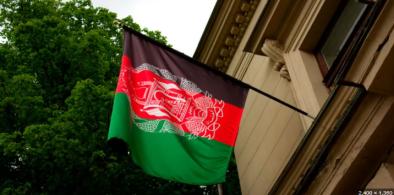
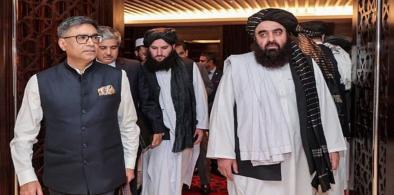
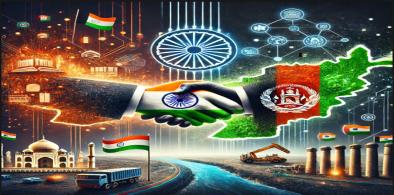
Isolating Afghanistan is not the answer

Militant groups are proliferating at an alarming rate. The last U.N. report on Afghanistan named scores of militant groups setting up house in Afghanistan, destabilizing an already fragile region. Well known among them is the Islamic State and the Tehrik -e-Taliban Pakistan as well as scores of lesser known militant groups. These groups are populated by militants with a grudge against China, Pakistan, the United States, Russia and India.

Tussle over power: Will Bangladesh renegotiate its PPA with India's Adani Group?

The problem with the payment started following the ouster of the Sheikh Hasina government in August. Amid economic and political instability, forex-starved Bangladesh was paying around $20-40 million against a monthly bill of $90-100 million. This impacted Adani’s ability to procure coal for power generation and make obligatory payments. Adani had warned Dhaka to settle the bills  

Sri Lanka's election poised to herald a new youthful surge in nation's politics

With almost all the senior politicians out of the poll arena, this election represents a generational shift in Sri Lankan politics with a surge of young leaders and a voting population increasingly vocal about breaking free from established political figures and their entrenched practices. The results of the election will likely set the stage for a broader transformation of Sri Lanka’s governance, reflecting the growing demand for new political dynamics led by the country’s younger generation.

Spanish PM's visit will enhance regional security cooperation between Europe and India

The trip - coming as it does on the heels of German Chancellor Olaf Scholz's visit to New Delhi with a large delegation - is a reflection of Europe's increasing desire for greater collaboration with India. And growing Indo-Spanish trade and economic ties may expand further cooperation in commerce, investment, research, technology, education, defense, and security between Europe and India.

Political violence in India: Criminalisation of politics or politicisation of crimes?

Money is an integral part which ensures criminalisation of the political space remains dominated by many such non-state actors without much criticism and conflict. Corruption and the flow of money into politics, therefore, becomes codependent enabling a seamless structure that is vulnerable to uncontrolled hegemony and unlawful domination. 

Is multiculturalism dead? Restrictive immigration would impair cultural diversity and sharpen global polarization

A new narrative then emerges and multiculturalism starts to be perceived as a disruptive force with a contrary ideology that poses a credible threat to the Western worldview. Immigrants are perceived as foreigners, who are disrespectful of the prevailing cultural unity by asserting – even imposing – an alien way of thinking and behaving.

US-India ties: Trump has established track record on India ties, but Harris record is sparse

The Biden administration has taken a relatively low-key approach compared to Canada, but it will continue to be an irritant in India-US relations and could balloon in a Harris administration.

The shadow of the caliphate: Hizb-ut-Tahrir a threat to India's national security

In India, HT's message poses particular risks. India has a sizable Muslim population which exceeds 200 million, and around 47 percent of it consists of a young population under the age of 19. Socio-economic challenges of the community make the youth population vulnerable to the group's radical propaganda. This is especially concerning as India grapples with its own extremist threats.

South Asia: Redistributive growth needs to be the mantra for policymakers

It is estimated  that about 37% percent of the world’s 1.1 billion multi-dimensionally poor people live in  South Asia. And an estimated 272 million poor people in the region live in households with at least one undernourished person. 

Business and bonhomie in Kazan: The significance of the BRICS Summit 2024

For India, its adoption of The Kazan Declaration represents yet another significant turning point. The Kazan Declaration is anticipated to support the BRICS countries' joint endeavours to tackle global concerns, ranging from security to economic development, and to demonstrate the group's increasing global clout.

China-India agreement: West will need to adapt to a new reality

The broader message of the Sino-India pact is clear: the world is moving toward a multipolar order where the dominance of Western powers is increasingly being challenged by the rise of nations like China and India. This agreement exemplifies the ability of non-Western nations to resolve their conflicts without Western interference

India-China military disengagement in Eastern Ladakh: New Delhi should always be ready for a surprise

China has been saying that the border question should be left separate from the bilateral relationship, implying it should be kept on the back burner. Resumption of patrolling in Ladakh, in whatever form, will be good, But the reversion to pre-April 2020 posture by China is out of the question. 

Nepal Supreme Court’s landmark ruling sets benchmark for LGBTQI+ rights

Nepal made history with its 2007 judgment, becoming the first South Asian nation to formally register same-sex marriage, with a trans woman and a gay man legally marrying in the Lamjung district. It also passed affirming laws regarding sexual orientation and gender identity, including the legal recognition of a third gender over ten years ago, placing Nepal ahead of many other countries.

Building climate resilience in Pakistan: The SAFER project’s role in addressing water and ecosystem vulnerabilities

The SAFER project achieves two goals, by prioritizing participation of women, children, youth, and resilience of vulnerable communities, and by achieving gender equality and social justice. This ambitious project by Pakistan sets a precedent for other developing nations to follow, showing the importance of community driven, ecosystem based approaches to climate adaptation.