
Khamenei and his successor Mojtaba Khamenei, Trump and Netanyahu

Khamenei's Assassination and a Fractured Iran: Regional and Global Ramifications of a War of Attrition

Khamenei’s assassination terminates an epoch of ideological confrontation, yet inaugurates profound uncertainty. Legally and normatively, it imperils protections for sovereign leaders; strategically and politically, it probes Iran’s institutional fortitude; religiously and narratively, it unveils unifying and divisive societal forces. Diplomatic containment—through intermediaries such as Oman or Qatar—must prioritise the transition's fragility without incitement. Absent such prudence, this strike risks catalysing a wider regional conflagration, where initial tactical triumphs yield enduring strategic costs.

Reimagining a Cooperative South Asia: A Next-Gen Agenda to Revive SAARC

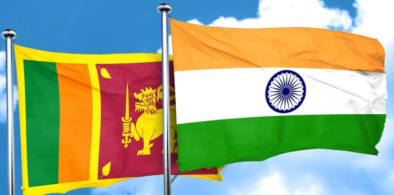
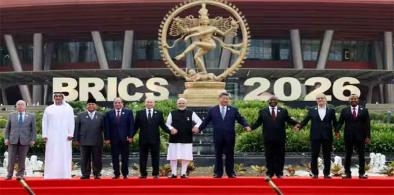
The revival of SAARC will not come from dramatic diplomatic breakthroughs. Instead, it will emerge through incremental cooperation in education, digital infrastructure, disaster response and trade facilitation. Crucially, the future of South Asian regionalism may depend on a generation that increasingly experiences the region not through borders but through shared digital, economic and cultural networks.

US–India Tariff Framework: Trade Concessions Should not Dictate Foreign Policy Choices

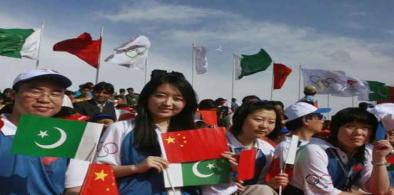
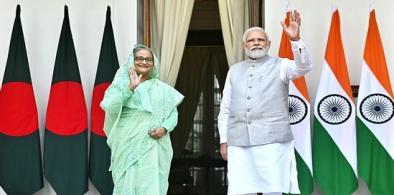
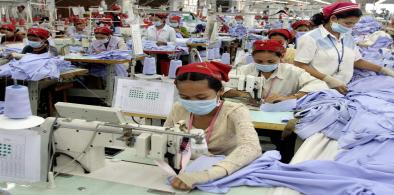
Trade adjustments between major economies inevitably reverberate beyond bilateral channels. Bangladesh’s potential tariff advantages in textiles could redirect labour-intensive supply chains. Pakistan, operating within the China-Pakistan Economic Corridor framework, may use India’s perceived alignment with Washington to advance its own strategic narratives. China itself will interpret these developments within the broader context of great-power competition and recalibrate its economic and strategic posture accordingly.

Why Nepal’s Gen Z Succeeded Where Bangladesh’s Failed

A more comprehensive lesson about 21st-century youth politics can be learned from the story taking place between Kathmandu and Dhaka. Gen Z has extraordinary mobilization skills. Protests can grow quickly and upend established power structures thanks to social media networks. But mobilization is insufficient on its own. Successful political transformation requires organization, leadership, and institutional strategy. Nepal’s youth built those structures quickly. Bangladesh’s did not.

More on Spotlight

Can Air India become world class again? Can Tatas live up to expectations?

What is the future of civil aviation and Air India? The immediate outlook is that it will take beyond 2022-23 to return to any semblance of pre-pandemic normalcy, writes N. Chandra Mohan for South Asia Monitor

For a more harmonious and cooperative South Asia, India must lead by example

India with its huge numbers and relative political stability can play an influential role in the South Asian region, writes Nirupama Sekhri for South Asia Monitor 

Debt management crucial for pandemic-hit economic recovery in India and South Asian nations

The pandemic is estimated to have caused 48-59 million people to become or remain poor in 2021 in South Asia, writes V.K. Varadarajan for South Asia Monitor

India, Bangladesh must settle Teesta issue in mutual interest

India should act quickly to reach an amicable solution to the Teesta dispute before Bangladesh embraces Chinese cooperation on the issue, writes Anup Sinha for South Asia Monitor

New supply chain dynamics post-Covid: Advantage India or Vietnam?

Even though Vietnam is reckoned as having an edge over India in the global supply chain, India’s demographic advantages override Vietnam, writes S. Majumder for South Asia Monitor

Can India and France work to shape a new world order?

With a French Presidency, the strategic partnership between India and the EU could finally bloom to its full potential, writes Amb Bhaswati Mukherjee (retd.) for South Asia Monitor

Deepening Indo-Saudi ties will see major investments, strategic energy partnership

During a visit to India in 2019, the Saudi Crown Prince announced that the kingdom would be investing $100 billion in diversified sectors in India, writes N. Chandra Mohan for South Asia Monitor

Pakistan’s National Security Policy: Old thoughts in new packaging

The NSP tosses a heads-I-win-tail-you-lose option for India; it announces its intent of seeking peace but leaves the onus on India, writes Mahendra Ved for South Asia Monitor 

Bringing peace to India's Northeast: Greater engagement with Bangladesh and Myanmar holds the key

Using the Army to control insurgency in the Northeast has failed as a model, writes B.L. Vohra for South Asia Monitor

Bangladesh has a key role in combating maritime threats in Bay of Bengal

The US, Sri Lanka, India, the Maldives and others can work together with Bangladesh to deal with regional maritime problems, writes Jubeda Chowdhury for South Asia Monitor

India’s export of Brahmos missiles to the Philippines has larger geopolitical significance

The Integrated Guided Missile Development Programme that began in 1983 under the stewardship of Prime Minister Indira Gandhi is an island of Indian perseverance and quiet success, writes Cmde C. Uday Bhaskar (retd,) for South Asia Monitor

Why Pakistani media now lavishes praise on Bangladesh

While the Pakistani media is now asking its government to follow the Bangladesh model, it remains a sore point that Bangladesh was an exploited colony of Pakistan, writes Pathik Hasan for South Asia Monitor

In a changing South Asia, India, Pakistan must reach middle ground to converge mutual interests

NGOs like South Asia Peace Action Network (SAPAN) and Aaghaz-e-Dosti deserves mention for relentlessly trying to end enmity and distrust between the two countries, writes Anondeeta Chakraborty for South Asia Monitor

Why Gotabaya is battling a crisis no Sri Lankan leader has faced

As Sri Lanka descends deeper into economic chaos, the popularity of the President and his government have declined to levels never seen before for any political regime reaching midterm, writes Indika Hettiarachchi for South Asia Monitor

In the intricate web of the Islamist terror network, growing calls for jihad against China

In the face of jihadi threats against it, it remains to be seen how China responds; or will it continue to fund and support nations like Pakistan that are the terror factories of many jihadist designs? writes Aparna Rawal for South Asia Monitor