

Representational Photo

Disruptive Diplomacy: Why India and China Must Lead Humanity Beyond Fossil-Fuel Chokepoints

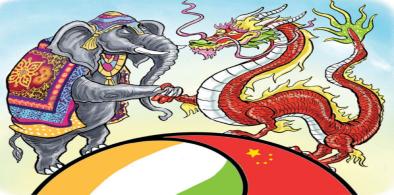
If India and China choose collaboration by setting aside strategic suspicion in the climate domain, they could fundamentally reshape the trajectory of the 21st century, as they have already demonstrated individually through their pursuit of clean energy over the past decade. More importantly, such a coalition could revive the COP28 fossil-fuel phase-down pledge, which stalled at COP29 in Baku and appears to be drifting further at COP30 in Belém.

Bridging Oceans, Building Regions: India–New Zealand FTA and Potential of South Asian Integration

Increased industrial activity in India could generate demand for raw materials, intermediate goods, and services from countries such as Nepal, Bhutan, Bangladesh, and Sri Lanka. Bangladesh’s textile industry could strengthen its links with Indian manufacturing networks, while Sri Lanka may gain from expanded opportunities in tourism, logistics, and services.

A New Era in India–ADB Relations: Will Play a Defining Role in Shaping Asia's Economic Future

ADB’s role has evolved beyond financing into shaping India’s structural transformation into a high-growth, technology-driven, and climate-conscious economy. Compared to other multilateral institutions, it offers a more agile, implementation-focused, and regionally attuned approach. As India moves toward becoming one of the world’s largest economies, this partnership will play a defining role in shaping not only India’s growth trajectory but also the broader economic future of Asia.

Trump-Xi Reset Could Leave India Strategically Exposed

New Delhi now occupies an awkward middle space: not fully trusted by the West, yet no longer fully aligned with the broader Global South consensus either. That ambiguity becomes riskier if Washington and Beijing move into even a temporary phase of strategic stabilisation.

More on Indo Pacific - China Watch

Dealing With China: Negotiation, Deterrence And Strategic Choices for India

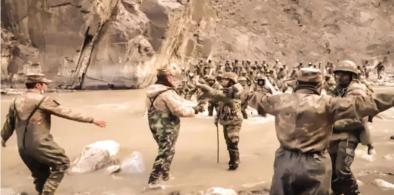
Open war with India is not in China’s interest. It would jeopardize its Belt and Road Initiative, alienate global markets, and push India closer to the United States and other like-minded partners. Moreover, the Himalayan terrain offers no guarantee of quick victory. Still, China might employ limited conflicts or sudden skirmishes to test India’s resolve, create psychological pressure, or distract from internal challenges. 

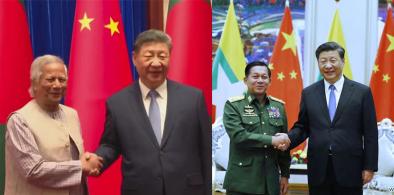
China’s Endorsement of Myanmar Rebranding Will Widen Regional Geopolitical Faultlines

China’s Myanmar policy highlights a core strategic contradiction. While Beijing positions itself as a champion of peace, development, and regional connectivity, yet its explicit support for the military regime entrenches coercive rule to safeguard its strategic and economic interests.

China's Grand Military Parade: A New Balance of Power on Display in Beijing

Strategically, the display went beyond the immediate region. The unveiling of long-range nuclear platforms and hypersonic missiles positioned China as a peer competitor to the United States in global deterrence. No longer confined to regional defense, the People’s Liberation Army (PLA) signaled its readiness to project power across continents.

Tianjin and After: A Pragmatic India-China Playbook to Turn SCO Outcomes into Indian Jobs

The debate in Delhi will inevitably ask whether engagement through the SCO dilutes India’s other partnerships or rewards China without resolving the frontier. That binary misses the point. The right question is: can we turn multilateral statements into Indian payrolls while holding our security lines? The answer is yes, if we focus on execution.

As Beijing Reshapes Regional Dynamics, India Needs to Recalibrate China Strategy

While Wang Yi’s India visit and PM Modi’s upcoming China visit may signal a degree of creeping normalcy at the bilateral level, Beijing’s expanding footprint in South Asia is set to intensify regional competition, requiring careful assessment of its implications for the overall India-China relationship

Asia's Balance of Power Depends on India's Ability to Face China’s Strategic Challenge

Over the past decade, India’s strategic landscape has grown increasingly complex. Beijing has not diluted its consistent strategy of constraining India. Whether through deepening ties with Pakistan, or expanding influence in India’s periphery, China’s approach remains adversarial. Beijing’s assertive regional posture underscores the urgency for India to rethink both its economic and security policies. 

Myanmar's Collapse Will Have Consequences Far Beyond Asia

What began with a coup in 2021 has devolved into a theater for China’s energy security, India’s border anxieties, Russia’s arms sales, and America’s China strategy. Each external actor pursues its narrow interests; none has the incentive to restore genuine stability. The losers, inevitably, are Myanmar’s people.

The Tibetan Buddhist Reincarnation System and China's Political Weaponization

Chinese emperors, especially those of the Manchu-led Qing Dynasty, recognized that control over Tibetan Buddhism offered a powerful form of soft power. By leveraging religious authority, they could exert indirect political influence over Buddhist populations beyond China's borders.

India’s Indian Ocean Strategy Harnesses Civilisational Depth With Blue Economy Cooperation

Development diplomacy remains India’s strongest soft-power tool in the Indian Ocean. The contrast between India’s low-interest, grant-based infrastructure projects and China’s debt-heavy Belt and Road Initiative (BRI) has not gone unnoticed. The Maldivian pivot back to India is partly driven by this contras

China’s 'Project of the Century' and its Implications for South Asian Ecological and Geopolitical Stability

It risks turning a bilateral infrastructure issue into a trilateral diplomatic flashpoint, where India would have to thereafter balance its upstream anxieties with downstream responsibilities. In this context, Beijing’s growing hydrological footprint is not only being viewed as a strategic challenge in New Delhi, but also as a potential disruptor of its regional diplomacy in South Asia.

India–UK Free Trade Agreement: A Blueprint for Forward-Thinking Global Commerce

The broader strategic ramifications of the India–UK FTA are profound. It strengthens bilateral cooperation in areas such as defence, technology, renewable energy, and education, reinforcing both countries’ strategic footprints in the Indo-Pacific region.

South Asian Nations Recalibrating Role, Balancing Trade Ties with US and China

China’s presence in South Asia has expanded considerably since the launch of the BRI in 2013. Beyond trade and infrastructure, it has emerged as a provider of military hardware and a key influencer in education, media, and policy discourse. China's outreach in smaller South Asian countries is multifaceted, ranging from party-to-party diplomacy to soft power tools like Buddhist cultural ties and influence operations.

Is India Upping The Ante on Tibet?

In a media interview, Khandu strongly refuted Beijing’s territorial claims and emphasized Arunachal’s historical relationship with Tibet, a nation forcibly occupied by China in the 1950s. He pointed out that Arunachal Pradesh shares roughly 1,200 km of border with Tibet, around 100 km with Bhutan, and 550 km with Myanmar. His remarks were a pointed rebuttal to China’s repeated claims over Arunachal Pradesh, including renaming it as “Zangnan” or “South Tibet.”

Dalai Lama's Declaration A Turning Point For Tibetans

The Tibetan diaspora must now take the lead in mobilizing global opinion. The Dalai Lama has issued a clarion call — not only to uphold Tibet’s spiritual and cultural values, but to defend the right of a people to decide their own destiny.

Why is India equivocating on the Dalai Lama's succession?

There are multiple reasons why the MEA doesn’t dare to say “no one except Dalai Lama can decide his successor”, some of which could include External Affairs Minister S Jaishankar fears getting snubbed during his coming visit to Beijing