Sri Lanka is also allowing Chinese research vessels in its ports. China has big plans for the region, not just spy ships.



But the choice test applies to India as much as to the countries it hopes will follow its lead. If BRICS genuinely widens India's menu of markets, technology partners and financing sources without deepening its dependence on any one of them, it becomes a credible model for the rest of the Global South.
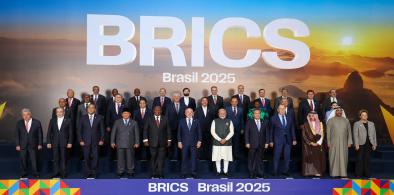
India’s stand for a dollar-based system is not a rejection of BRICS alignment or unity, but it is a determined choice to act in favour of self-interest like any other founding member. The key difference is India’s position has been the most transparent of all founding members rather than standing behind the collective rhetoric.

The evidence indicates that the increase in state borrowing over the past decade is best understood as the outcome of a changing fiscal federal system rather than simply an expansion of welfare politics.

For India, delays in its strategic projects are not merely bureaucratic setbacks but a matter of national security. Colombo’s motives remain opaque, but for New Delhi, a presence in Sri Lanka’s North and East is non-negotiable.
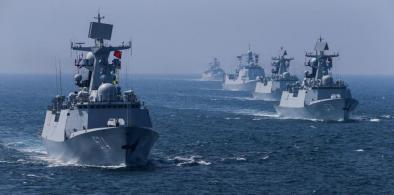
Sri Lanka is also allowing Chinese research vessels in its ports. China has big plans for the region, not just spy ships.
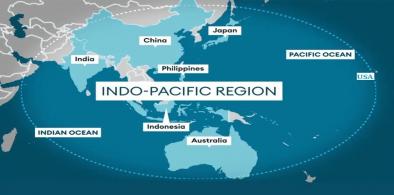
India’s inevitable regional and global leadership provides a welcome new opening for the country and the region in their security calculations. It remains the region’s most important Asian partner in providing the economic and security fallback that is based on values, trust and proven expectations.
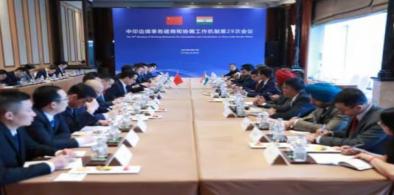
Why no heads rolled for the surprises in 2020 with PLA exercising in Aksai Chin and a new road constructed five km short of Galwan?
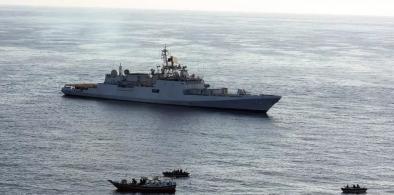
The establishment of a second naval base in Lakshadweep, INS Jatayu is a key part of this strategy. It's a calculated move to counter China's influence in the Indian Ocean Region.

China has tried to set up a hybrid renewable energy system mixed with solar, wind, and other renewables on three islands in the Jaffna Peninsula. It was later cancelled. There is no economic reason for hosting such a project in a place so close to India.
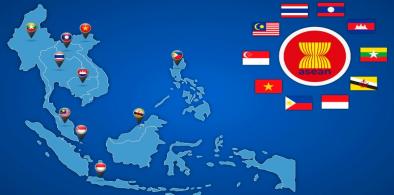
Australia has succeeded in sending a strong message to both ASEAN and China. To ASEAN, Canberra has communicated its commitment both in economic and security terms. The keyword will be a free and open Indo-Pacific, which is in line with the overall security vision of the West.
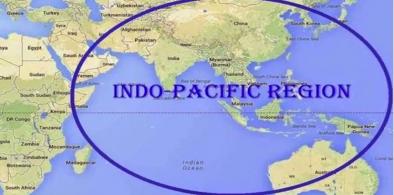
The US meanwhile, remains resilient in its future demographic and economic growth projection and stability, alongside the prospects of India. The so-called rise of China is now reversing, and the perceived decline of the US and the West is not happening.

Among other things, the bill, which is now an act, dismisses as inaccurate the Chinese claim that Tibet has been part of China since ancient times and empowers the State Department to actively counter China’s disinformation about Tibetan history, people and institutions.

The critical mineral supply chain in the Indo-Pacific is undergoing transformative changes through new deals, reforms, and negotiations facilitated by the strategic partnership of QUAD.

The belligerence by the PLA also exposes the futility of continuing Corps Commander-level military-to-military talks when China has repeatedly indicated there will be no more PLA pullback.
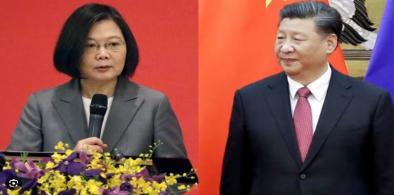
Beijing might still use this election victory for President Tsai as a pretext to increase aggression and to justify that peaceful reunification is a lost cause, portraying the DPP as the cause of increasing cross-Strait tensions.

As traditional geopolitics transforms, with the Gulf regaining centrality in the larger Indo-Pacific arena, India, Japan, and Southeast Asia see their strategic perspectives increasingly converge. The Big-B plan has significant implications for India, Bangladesh's Look East policy, and Thailand's Look West policy.

It would be prudent to establish a joint working mechanism with Myanmar at the diplomatic and military levels for managing the borders - unless we want China to keep winning.
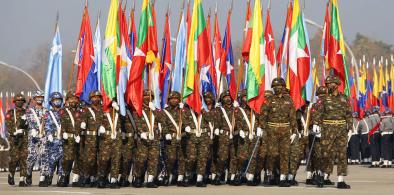
China and Russia have shown their support for Myanmar despite the dire situation there, and their interest in the region is evident by their growing naval presence in the Indian Ocean and Bay of Bengal.
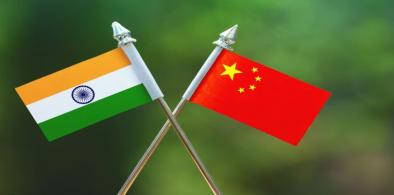
As far as China is concerned, the so-called buffer zones are now a permanent arrangement and it knows India can do precious little about it. That is why China has been saying keep the border issue separate and get on with the bilateral relations.