Against the backdrop of the very intimate Qatar-US relations and the US-led West supporting Israel, the charge against Indian naval veterans of spying for Israel is absurd.


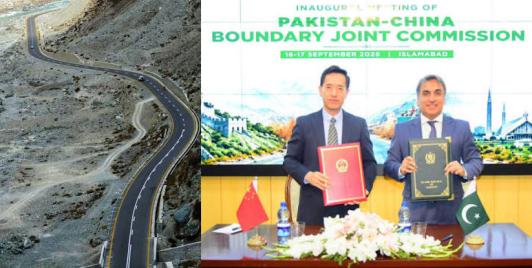
The Pakistan-China Boundary Joint Commission needs to be viewed in backdrop of the fast-changing geopolitics of South Asia and its military implications. The Shaksgam Valley sits immediately north of the Siachen Glacier and just west of Aksai Chin under China's control. By controlling Shaksgam, China can jointly monitor Indian military movements from the north while Pakistan does so from the south.

The question, therefore, is not whether Bangladesh could have secured a particular agreement simply by attending. There is no guarantee that participation in a summit automatically produces investment or diplomatic breakthroughs. The question is whether Bangladesh benefited by being absent.
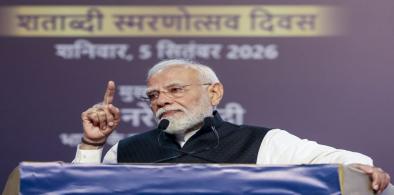
For China to achieve its hegemonic ambitions in Asia, weakening democracies is essential. India, therefore, stands as an iron wall against illiberal encroachments, positioning itself as both a regional hegemon and a defender of democratic order.

The Mecca Pact, barely a month old, has already been discredited. Its authenticity is in question, its efficacy doubtful. The very notion of an “Islamic Nato” has been exposed as a mirage. Collective defence requires not just declarations but capabilities, coordination and political will. None of these are evident in the pact’s functioning.

Against the backdrop of the very intimate Qatar-US relations and the US-led West supporting Israel, the charge against Indian naval veterans of spying for Israel is absurd.
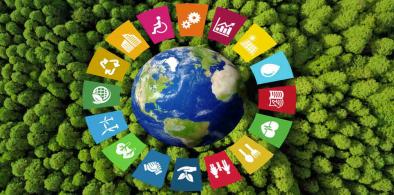
In conclusion, it may be said that while South Asia, Central and West Asia and Pacific Asia showed improvement in sustainability indicators for environment and energy in 2020, they did not do so well in social and governance indicators.

The COVID-19 crisis has showcased global cooperation and a shared sense of humanity. Nations collaboratively navigated the pandemic, emphasizing a collective response and coexistence during challenging times
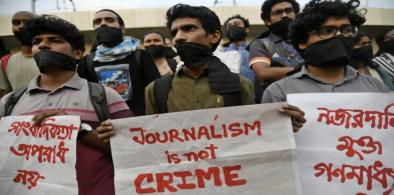
The imposition of draconian laws in Bangladesh and the government’s strenuous efforts to defend itself against the smear campaign and attacks against journalists and media persons reflect a familiar picture across South Asian nations like India and Sri Lanka where electronic surveillance and stifling dissent have become all too common

As Durga Puja approaches and the country's Hindu communities prepare themselves to embrace their beloved goddess, the leaders of the Bangladesh Hindu, Buddhist, and Christian Unity Council, a religious minority organisation, are concerned about a possible outbreak of communal strife in the nation.
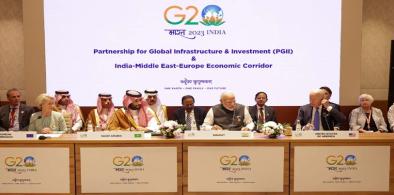
For India, IMEC is a strategic move to lessen dependency on its traditional trading partners while opening up a horizon of opportunities in markets ranging from technology to energy. Also, India is poised to countervail growing Chinese influence in South Asia if successful implementation of IMEC becomes possible.
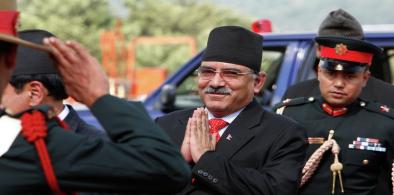
Nepal’s participation in bilateral infrastructure projects with China exemplifies its aspiration for mutual economic growth. Yet its decision to distance itself from the GSI indicates its commitment to remain neutral, given its deep-rooted ties with India.
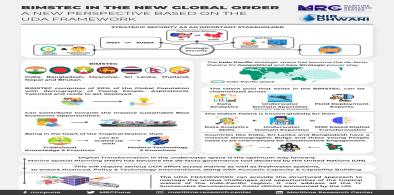
The talent pool that exists in the BIMSTEC - in countries like Bangladesh, Sri Lanka, and Thailand - can be channelized across areas of data analytics, underwater domain (acoustic signal processing) and for field deployment. Indian talent is known globally for its data analytics skills, and coupled with the underwater domain expertise, can work on the MSP-based digital transformation for the region.
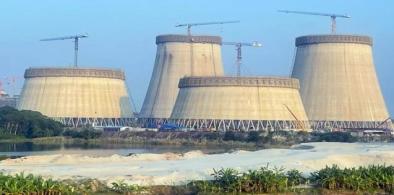
The successful operation of the Rooppur plant will underscore the commitment of Bangladesh to responsible and secure nuclear energy utilization
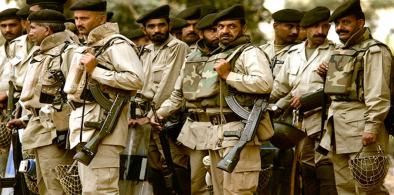
History has shown that whenever Pakistan sought peaceful relations with India, India responded positively. This held true during democratic governments and even during dictatorships in Pakistan.
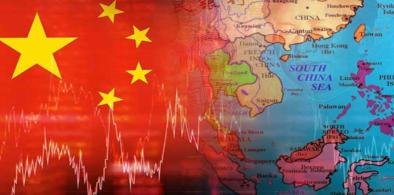
Muizzu’s regime in the Maldives in conjunction with Pakistan could be potentially sitting on China’s lap for decades, along with a pro-China government in Nepal, and Myanmar annyway drawn into China’s strategic sphere since the military coup in Nay Pyi Taw in February 2021.
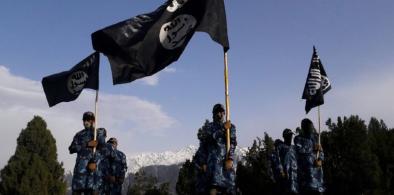
While Pakistan continues to blame India for the bombings in Balochistan and Khyber Pakhtunkhwa, it fails to introspect on its own internal crisis stemming from its policies against its citizens and the military/political support being given to certain radical outfits or groups.
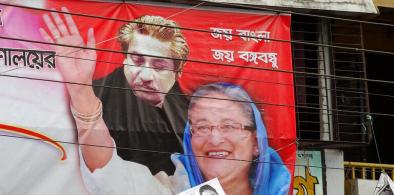
Due to the lack of established regard for the democratic system, elections held after the 1990s have been marred by political turmoil and civic unrest. The absence of a solid democratic foundation has hindered the institutionalization of democracy in national life and politics.

The China-funded Sinamale Bridge connecting the capital Male and the airport island Hulhule, is a boon to the Maldivian people, who readily relate to the project, and hence to China as a development partner. But China is seen only as a developmental supplementary to long-term friendly neighbour India and not as an alternate in any way.

What we see in Kota today is deeply rooted in middle-class aspirations for social mobility, considering meritocracy a fair and promising system. But, the ‘merit ladder’ for upward mobility is not equally tangible and accessible to all. The material, social and psychological resources available for these students depend on their social location.