Representational Photo

Crunch Point For World Cricket: Power Politics And Double Standards Unfairly Rob Bangladesh Of Participation

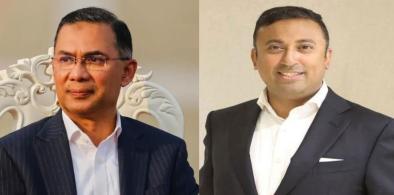
Ultimately, Bangladesh’s absence from the 10th edition of the T20 World Cup was the result of the BCCI’s ego and the ICC’s double standards where power politics and selective decision-making outweighed fairness and sporting integrity. Although many view the Pakistan Cricket Board’s support for Bangladesh positively, in reality it is also a strategic move to counter India for its own strategic benefit. If the match is boycotted, Bangladesh will suffer even greater financial and administrative losses. 


Jaish-e-Mohammed's Female Brigade: ISI-Backed New Jihadi Units Intensify Counterterrorism Challenges in South Asia

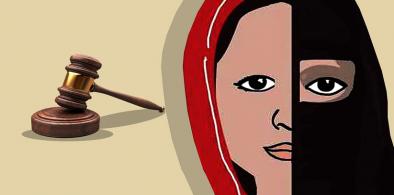
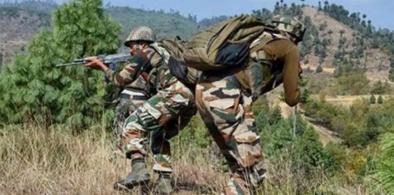
Unlike earlier jihadist cells dominated by Pakistani nationals, this unit deliberately recruits women from Indonesia, the Philippines, Uzbekistan, and other foreign countries. Reason behind recruiting non-Pakistani nationals serves a dual purpose: it complicates attribution and shields Pakistan’s security apparatus from direct accountability. Such operational sophistication reflects ISI’s continued role not merely as a passive enabler but as an active architect of jihadist adaptation.

Securing The Digital Frontier: A Unified Call For Cybersecurity In South Asia

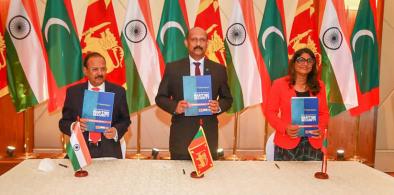
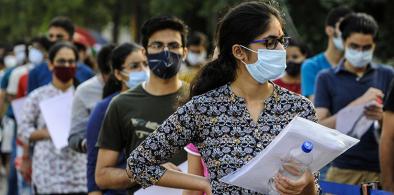
South Asia has the potential to be a global digital leader. It has a young population and a booming tech industry. However, this potential will only be realized if the region is secure. We must treat cybersecurity as a pillar of national security, just like border defense. This requires better technology, smarter laws, and stronger regional ties. The digital threats of 2026 are fast and complex. To meet them, South Asia must be faster and more united. The time to build a collective digital shield is now, before the next major crisis occurs.

Aid, Ports, And The Limits of Incrementalism: What India’s Budget Says About Its Foreign Policy

Yet the strategic costs are real. Reduced engagement in Bangladesh risks ceding influence at a moment when Dhaka is actively diversifying its partnerships. Hesitation over Chabahar weakens India’s leverage in Iran and Central Asia and underscores its vulnerability to US pressure even as it seeks a more multipolar foreign policy. The 2026–27 Budget does not signal a dramatic shift in Indian foreign policy. There is no abandonment of neighbours-first rhetoric or of connectivity-led diplomacy. What it reveals instead is a narrowing circle of feasible economic action.
 

More on Spotlight

Are we observing World Environment Day or World Emergency Day on June 5?

State of the environment today is certainly in a state of emergency. Many would call June 5, 2020, as World Emergency Day. In reality, today environment and emergency have indeed become synonyms, writes Rajendra Shende for South Asia Monitor

Nations should not discriminate against refugees, migrants during pandemic

This outbreak and the requirements of precautionary measures have emerged as an extra health threat to migrants who work abroad to keep their families well and also to asylum seekers. These people play a crucial role both in the economy of the countries they live in and in their countries of origin too,  writes Abdul Alim for South Asia Monitor

India's COVID-19 stimulus package: Will it revive the economy?

There seems to be a strong argument that the singular focus of the stimulus package should have been a fiscal stimulus, which would have increased public spending in physical or human capital, raised money in the hands of residents by direct cash transfers and subsidies and provided safety nets like job guarantee and unemployment benefits, writes Partha Pratim Mitra for South Asia Monitor

As corona rages in Bangladesh, opposition eyes opportunity

Leaders of the BNP and Jamat-E-Islami are thinking that the corona pandemic will totally change the political situation in the country and will help them seize power once again, writes Swadesh Roy for South Asia Monitor 

Will Gilgit-Baltistan become a new regional flashpoint?

With India–China military tensions already high in parts of eastern Ladakh, the construction of the Diamer-Bhasha dam will add to new security challenges for India, writes Nilova Roy Chaudhury for South Asia Monitor

India-Bangladesh waterway project will herald a new chapter in bilateral cooperation

This inland waterway route looks all set to ensure efficient and effective cargo movement between the two neighbours and herald a new chapter in bilateral cooperation in South Asia, writes Sreeradha Datta for south Asia Monitor

With the world in turmoil can India seize the historic moment?

India has a pool of talented diplomats but their skills will be expended on putting lipstick on a pig if the government at home promotes narrow, sectarian ideologies that are at variance with accepted international norms, writes  E. D. Mathew for South Asia Monitor

Modi @ 6: Popular and committed but is there a need to review statecraft?

Modi may not be getting the kind of feedback and reality check that is vital for effective and empathetic governance and this is where, apart from Chanakya, the Canute principle acquires relevance, writes C Uday Bhaskar for South Asia Monitor

Relocation of global supply chain: Bangladesh should seize the opportunity

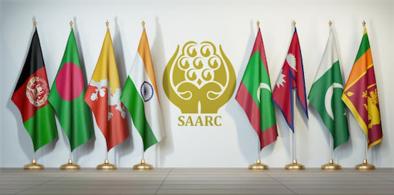
From the South Asian Association for Regional Cooperation (SAARC) countries, India is emerging as one of the top alternative manufacturing destinations, writes Dr. Mohammad Rezaul Karim for South Asia Monitor

China understands and respects only the language of power

China is sure that India would initiate back-room talks and negotiate some face-saving device to disengage. But, there lies the danger, writes Brigadier Deepak Sethi (retd) for South Asia Monitor

International community should recognize Pakistan as a responsible nuclear state

Pakistan has used its Centres of Excellence to promote and share best practices in nuclear security through three affiliated institutes: the Pakistan Centre of Excellence for Nuclear Security (PCENS), the National Institute of Safety and Security (NISAS), and the Pakistan Institute of Engineering and Applied Sciences (PIEAS), writes Rabia Javed for South Asia Monitor

Pakistan's 'diminishing democracy': Where dissent is a crime

Thirty prominent human rights advocates and peace activists, who disagree with a lot that is happening in Pakistan. Either living at home, but most of them exiled abroad, participated in the conference titled Enforced Disappearances, State-sanctioned killings, & Diminishing Democracy in Pakistan, writes Mahendra Ved for South Asia Monitor 

Has Rahul Gandhi stolen a march on the BJP?

The BJP found itself on the back foot was when Congress leader Rahul Gandhi was pictured sitting on a pavement, talking to a group of migrants. It was a Haroun al-Rashid moment of a privileged person closely interacting with the unwashed masses, writes Amulya Ganguli for South Asia Monitor
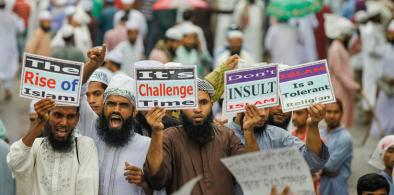
Maldives will seek a balance in its foreign policy

With the support of the United Arab Emirates, the Maldives not only prevented Pakistan from targeting India as Islamophobic during the OIC meeting, but also defended India’s record as a democratic, multicultural society, writes Shubha Singh for South Asia Monitor

India should push for relocating WHO headquarters to New Delhi

This is a time when India should fashion itself as a new global health hub and provide global leadership in health. Pushing a new agenda for the WHO’s relocation from Geneva to India would make immense sense, writes Ram Krishna Sinha for South Asia Monitor