On the face of it, exiting RCEP definitely represents a setback to India’s economic ambitions of engaging with the Indo-Pacific, including attracting supply chains away from China, writes N Chandra Mohan for South Asia Monitor


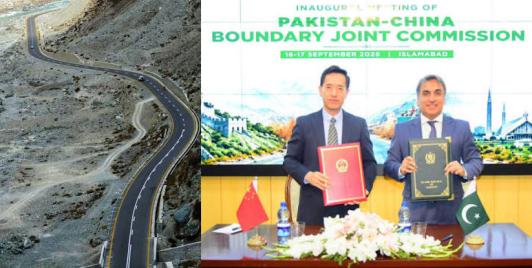
The Pakistan-China Boundary Joint Commission needs to be viewed in backdrop of the fast-changing geopolitics of South Asia and its military implications. The Shaksgam Valley sits immediately north of the Siachen Glacier and just west of Aksai Chin under China's control. By controlling Shaksgam, China can jointly monitor Indian military movements from the north while Pakistan does so from the south.
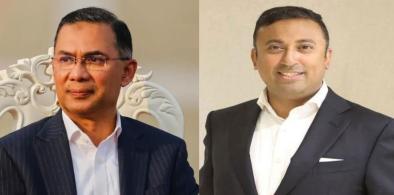
The question, therefore, is not whether Bangladesh could have secured a particular agreement simply by attending. There is no guarantee that participation in a summit automatically produces investment or diplomatic breakthroughs. The question is whether Bangladesh benefited by being absent.
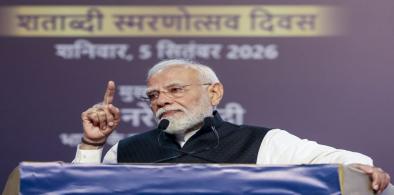
For China to achieve its hegemonic ambitions in Asia, weakening democracies is essential. India, therefore, stands as an iron wall against illiberal encroachments, positioning itself as both a regional hegemon and a defender of democratic order.
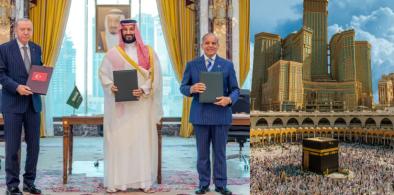
The Mecca Pact, barely a month old, has already been discredited. Its authenticity is in question, its efficacy doubtful. The very notion of an “Islamic Nato” has been exposed as a mirage. Collective defence requires not just declarations but capabilities, coordination and political will. None of these are evident in the pact’s functioning.
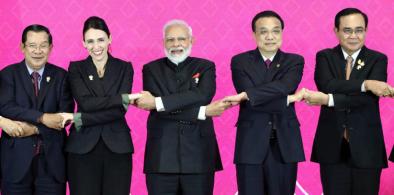
On the face of it, exiting RCEP definitely represents a setback to India’s economic ambitions of engaging with the Indo-Pacific, including attracting supply chains away from China, writes N Chandra Mohan for South Asia Monitor
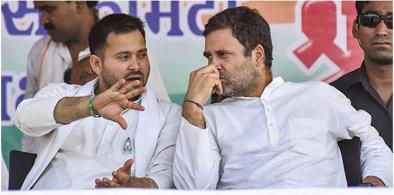
There is little doubt that the Congress will have to pay a heavy price for its blunder in Bihar, writes Amulya Ganguli for South Asia Monitor
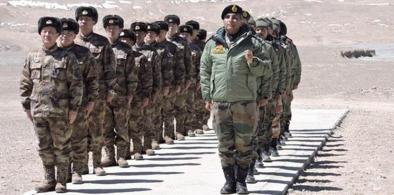
By not accusing China of intrusions and putting the onus for talks on the army, External Affairs Minister S. Jaishankar and National Security Advisor Ajit Doval, who is the special representative for border talks, are shirking their responsibilities. This could be by design to blame the army for any territorial compromise forced by the government, writes Lt Gen Prakash Katoch (retd) for South Asia Monitor

EU is now acknowledging what India, through its counter-terrorism dialogues with the West, had been warning for years, that Islamic fundamentalist networks and sleeper cells are active across the EU, writes Amb Bhaswati Mukherjee (retd) for South Asia Monitor
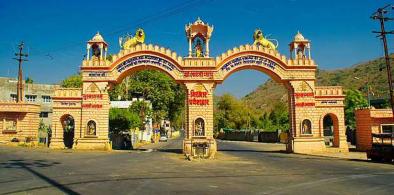
Today, there is nothing in Junagadh and its recent history to indicate the one-time, albeit brief, aspirations of its ambitious and misguided erstwhile Nawab to accede to Pakistan, writes Mahendra Ved for South Asia Monitor

Interestingly, the current focus on encouraging inland water transportation along the Ganges and Brahmaputra only reactivates defunct commercial arteries of yesteryear when inland waterways linked Nepal, Bhutan, India, and Bangladesh, writes N Chandra Mohan for South Asia Monitor
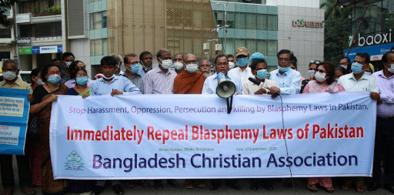
Bangladesh has witnessed many instances of mass lynchings, which is a major cause for concern as it looks that respect for rule of law has vanished, writes Aashish Kiphayet for South Asia Monitor
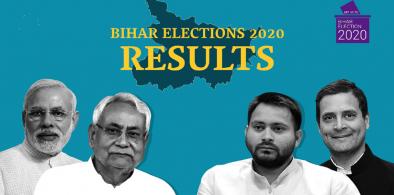
Because of the Congress’s failure to get its act together, the entire opposition in India appears to be in a moribund condition while the BJP has cleverly combined its pitch for vikas or development with an occasional dose of communal animosity to propel itself forward, writes Amulya Ganguli for South Asia Monitor
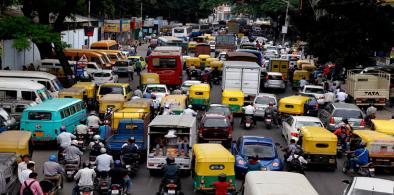
India is witnessing the arrival of a new generation of mobility discourses, which are nuanced enough to provide sustainable urban mobility, says Hardeep Singh Puri, India's Urban Development Minister

In this year’s election Joe Biden won and so did the American democracy. That is a good thing for the United States, for India and indeed for the world, writes Frank F Islam for South Asia Monitor

Joe Biden may not drastically reverse foreign policy decisions of his predecessor like Donald Trump did of Barack Obama but Biden’s novel approaches to issues and regions could have ramifications for South Asia even as India-US relationship continues to grow, writes Lt Gen Prakash Katoch (Retd) for South Asia Monitor
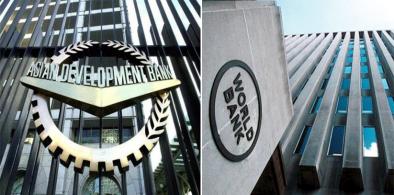
Of the 176 million people expected to be pushed into poverty at the $3.20 per day poverty line, two-thirds are in South Asia. The addition is due to the raising of the poverty estimating line, which has been termed as the new poor, writes Partha Pratim Mitra for South Asia Monitor

India’s timely help to the Maldives is not without detractors, especially the political opposition that has been protesting the presence of the Indian military, writes N Chandra Mohan for South Asia Monitor

Despite recurrent political chaos, often fuelled by cultural and religious clashes, there are some human rights organisations that are working for the welfare and dignity of each individual in South Asia, writes Reeti Prakash for South Asia Monitor
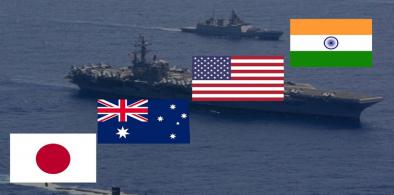
It would be prudent for Quad to organize itself as a coherent force in an early timeframe to counter the increasing Chinese aggressiveness, writes Lt Gen Prakash Katoch (retd) for South Asia Monitor